Economics Forces Washington’s Capitulation
 Facebook
 Twitter
 Linkedin
 Google +
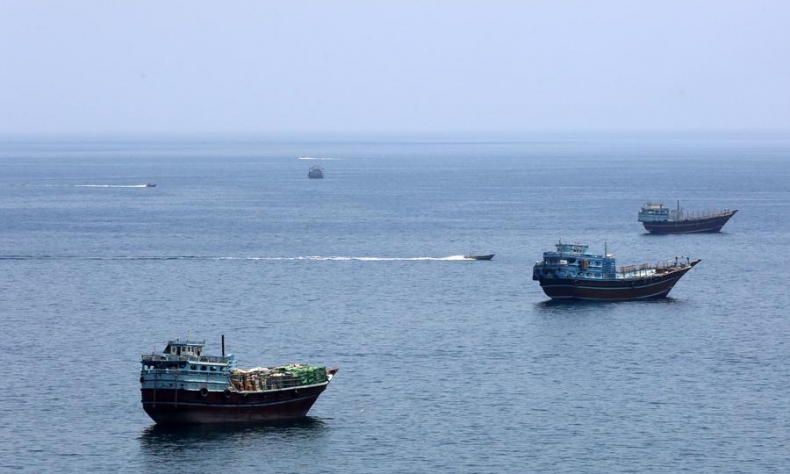
The United States must embrace such a positive new phase for the region. It needs to withdraw its unnecessary and counterproductive military presence from the Gulf region.
President Donald Trump admitted publicly at the recent G7 conference that Washington, out of economic necessity, was forced to end the Israeli-American war against Iran. The United States’ Strategic Petroleum Reserve (SPR) would be exhausted by mid-July, he said. An economic tidal wave was looming.
SPR established in 1975
The SPR was established in the wake of the “oil shock” of 1973-1974 triggered by regional conflicts in the Middle East/West Asia. In 1973, Egypt launched a surprise retaliatory campaign to reclaim territory seized in Israel’s 1967 unprovoked war against Egypt. Saudi Arabia banned oil exports in support of Egypt, and others followed in what was called the “Arab Oil Embargo” against the US and Netherlands. OPEC raised oil price from roughly $ 3.00 per barrel to $ 11.65 by the end of 1973. Washington panicked and rushed to save Israel and, reportedly, used nuclear blackmail against Cairo. The war ended, but supply chain shortages caused the price of gasoline in the U.S. to shoot up and there were long lines at American gas stations, as some of us well remember.
As of the week ending June 12, 2026, the U.S. Strategic Petroleum Reserve (SPR) stood at 340.3 million barrels of crude oil, marking its lowest level since 1983, when the Reagan administration was expanding oil reserves.
The SPR’s authorized capacity is about 714 million barrels, so current stocks are roughly half full. The drop to 340.3 million barrels came after another 8.9 million barrels were withdrawn in the week ending June 12. Since the start of the Iran conflict in February 2026, the U.S. has released roughly 50-66 million barrels from the SPR to offset supply disruptions, with recent weekly drawdowns averaging around 9 million barrels. This depletion is part of a broader drawdown trend: Biden-era releases in 2022-2023 also pushed levels down to 346-351 million barrels, but the current level is lower than that. Crude oil stocks are down 15 percent year-on-year.
Crude oil stocks in the Strategic Petroleum Reserve include non-U.S. stocks held under foreign or commercial storage agreements. Bulk terminal stocks include stocks held by merchant producers, according to the U.S. Department of Energy (DOE). The SPR may hold refined hydrocarbon liquids in addition to crude oil, according to the U.S. Energy Information Administration (EIA).
The SPR is managed by the DOE and its Office of Petroleum Reserves. These federally-owned oil stocks are stored in vast underground salt caverns at four sites along the coastline of the Gulf of Mexico. As of March 2025, the four SPR storage sites were connected by SPR-owned pipelines and commercially owned pipelines and terminals to 24 Gulf Coast area refineries and six refineries located in Michigan, Ohio, and Kentucky. These caverns must hold minimum volumes of crude oil to operate properly.
The SPR also connects to three marine terminals that, according to the DOE, have a combined contracted marine distribution capacity of 2.22 Mbbl/d, and it owns one marine terminal (leased to ExxonMobil Pipeline Company) with a distribution capacity of 400 Mbbl/d.
“The sheer size of the SPR (authorized storage capacity of 714 million barrels) makes it a significant deterrent to oil import cutoffs and a key tool in foreign policy,” the DOE says on its website.
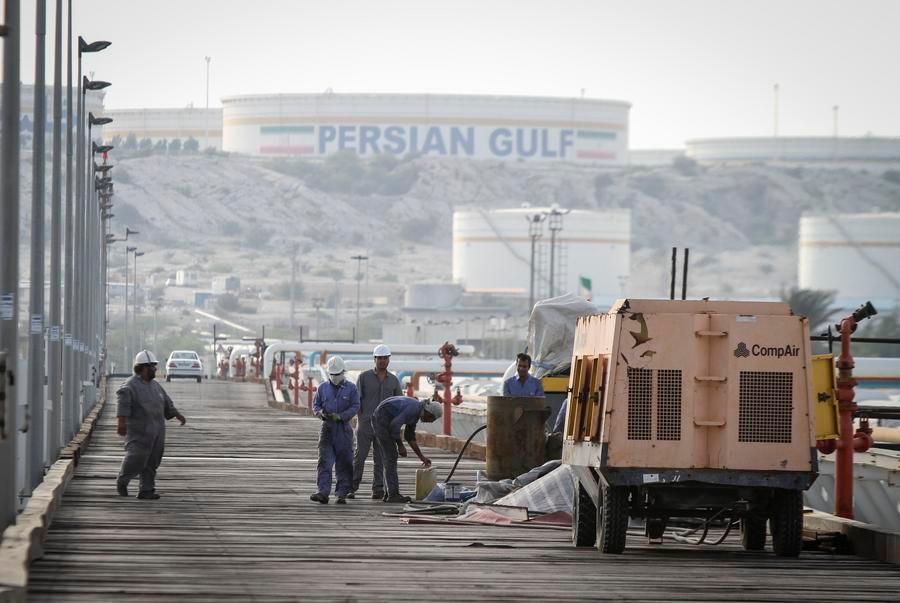
Consequences of Israeli-American war against Iran
Today, however, this official assertion is disproven owing to the dramatic consequences, for the world and for the United States, of Tel Aviv’s and Washington’s reckless, irresponsible, unprovoked and illegal war against Iran. The bottom line is that Iran won the war and now, with Oman, is in administrative control of the Strait of Hormuz. Iran controls who gets in and out of the Persian Gulf and the Strait of Hormuz. The SPR was neither a deterrent nor an effective foreign policy tool.
In recent weeks, U.S. oil executives publicly warned about impending supply disruptions coming in the July-August time frame. Apparently, President Trump also recently received detailed briefings about America’s energy predicament to the effect that the clock was ticking for an economic tidal wave that will impact the United States. Reportedly, these briefings finally shattered the delusion of a “short war” and easy victory into which his circle of pro-Israel advisors placed him.
Apparently chastened, although still erratic, Trump signed the fourteen-point document in Versailles, which became the basis of the “Islamabad Memorandum of Understanding,” leading to the first round of negotiations in Geneva. The patient and effective diplomacy by Pakistan and Qatar achieved initial success without a doubt.
This still leaves the energy issue front and center for Washington and the clock is ticking. The U.S. energy situation today faces challenges in gasoline, aviation fuel, and diesel. Each requires different feedstocks to refine. Aviation fuel and diesel require higher sulfur “heavy” crude oil feedstocks.
So far, one remarkable consequence of the first round of negotiations in Switzerland is that oil from Iran itself can legally be imported into the United States. One might conclude that this indicates a certain amount of Washington’s desperation about hydrocarbon supply issues and the ticking clock on the end of its usable reserves next month.
Peace or more war in the Gulf?
So will it be peace or a return to war?
Middle East experts say that it will depend on whether the United States can control Israel and whether the United States will follow through with all of its commitments. Through further regional aggression, Israel can invalidate the Islamabad Memorandum of Understanding (MOU). Having illegally invaded southern Lebanon and carried out an occupation tainted with genocidal crimes, Israel still unlawfully occupies several areas in southern Lebanon.
From Tehran’s perspective, Israel must end its occupation and fully remove its forces from Lebanese territory. There are two factors to bear in mind. First, Hizbullah, under international law, is defined as a “resistance” organization and, therefore, is entitled to resist foreign occupation just as France resisted Nazi occupation. Second, southern Lebanon, as a traditionally Shia region, has had religious and cultural relations with Iran for five centuries.
Ceasefire in Lebanon is included in the MOU in very specific terms. This is because Tehran sees Lebanon within the context of a regional security architecture that must be built. There is a consensus among Pakistan, Turkey, Saudi Arabia, and Egypt that such a new structure for regional peace and stability is essential today. China and Russia, and other states, support this constructive vision.
The United States must embrace such a positive new phase for the region. It needs to withdraw its unnecessary and counterproductive military presence from the Gulf region. Washington should adopt a new constructive policy toward the Gulf region to promote peace and development.
The article reflects the author’s opinions, and not necessarily the views of China Focus.