The Northern Sea Route and a Multinodal World Shipping
 Facebook
 Twitter
 Linkedin
 Google +
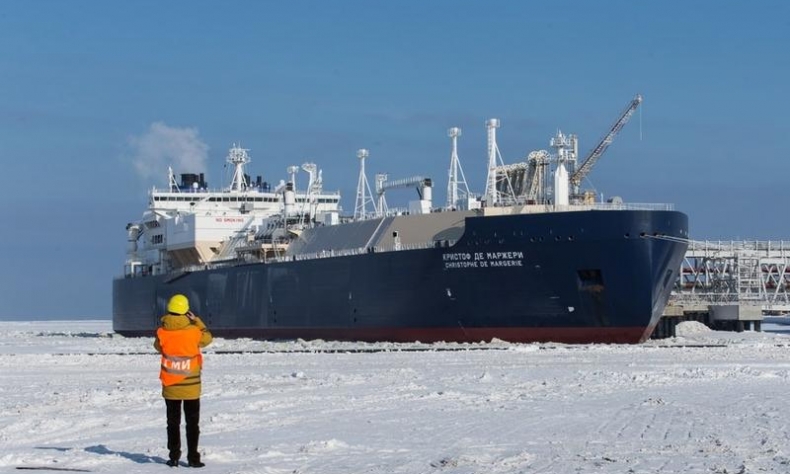
The NSR combines economic with strategic advantages for participating countries, and it benefits the international community.
The Israeli-American war against Iran undermines the security of international shipping routes. The Southern Sea Route (SSR), using the Suez Canal, has seen the Red Sea restricted and significant shipping diversion to the Cape of Good Hope around Africa. Quietly, however, a “polar silk road” is developing and it brings significant geoeconomic and geopolitical implications and benefits. Known as the Northern Sea Route (NSR), this secure trans-Arctic corridor enhances global interconnectivity amid turbulent times. It is the shortest shipping route between western Eurasia and the Asia-Pacific.
The ambitious project runs across the northern top of Russia and is made possible by climate change, which has been causing polar ice to recede since the 1970s, thereby opening up sea space for shipping. It lies within Russia’s Exclusive Economic Zone (EEZ) and is some 3,500 miles (5,600 kilometers) long.
“The Northern Sea Route and the Polar Silk Road are no longer speculative ventures,” according to the International Trade Association. “They are operational experiments in a new model of globalization—one that runs not through the tropics and canals, but through the ice and silence of the high north.”
The world, undergoing a historical shift, is moving toward a multipolar, polycentric, and multinodal future. The NSR reinforces new nodes of economic development, trade, and cooperation and can be a peaceful corridor for the international community.
Connecting over the northern top of Russia through the Arctic to Europe cuts voyage times and costs. Sailing time from East Asia to Europe is reduced from 40-50 days to just 18-19 days. Savings on fuel, maintenance, and operational costs are thus substantial. The NSR runs from the Kara Strait between the Barents and Kara Seas to the Bering Strait. The corridor is navigable for only about four and a half months a year. It is the Arctic, after all.
The Suez Canal Route and the Cape Route around Africa are the two long-standing routes. The Israeli-American war against Iran in the Persian Gulf impacted on the Strait of Hormuz shipping. Israeli-American regional aggression against Palestine and against Lebanon disrupted Red Sea shipping and, in turn, the SSR. Some shipping is diverted from the SSR via the Suez Canal to the long Cape Route, sharply increasing delivery times and costs.
Geopolitics increases interest in NSR
The unprovoked Israeli-American war against Iran in the Gulf caused increased momentum for the already eastward shifting in global economy. Countries seek stability and reliable partners, as well as security.
So, it should be no surprise that the NSR attracts serious attention from countries such as India, Malaysia, Indonesia, and Saudi Arabia. In practical terms, joining in the development of new sea trade routes also entails upgrading and expanding port facilities and infrastructure.
For Indonesia and Malaysia, the NSR bypasses traditional maritime “choke points” such as the Strait of Malacca and the Suez Canal. Transportation costs are reduced and delivery times are shortened. In August 2024, Indonesia and Russia began a program to develop logistics and transport via the NSR. The Eastern Maritime Corridor (EMC) project brings India into the NSR linking Vladivostok to the port of Chennai in India. Indonesia also participates in this EMC project.
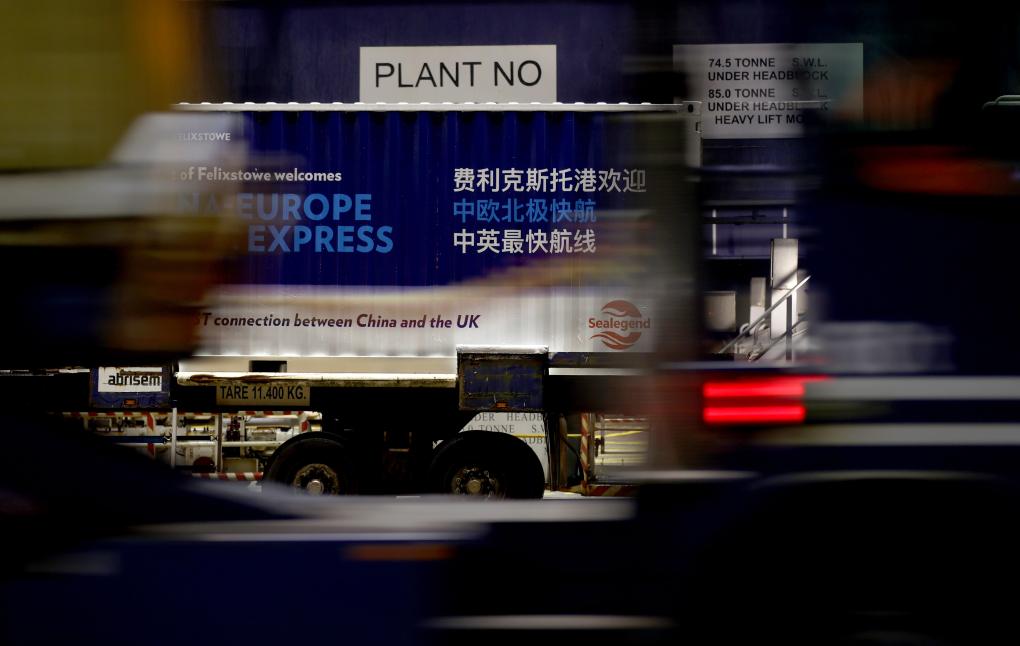
China and Russia cooperate on the NSR
China and Russia have maintained cooperation in developing the NSR. Both sides signed a key agreement in October 2025. The Russia-China Sub-commission on Cooperation on NSR was established in 2024. Rosatom on the Russian side and the Ministry of Transport on the Chinese side are partners in the endeavor. There are many aspects of this win-win cooperation including guaranteeing safe navigation, increasing cargo traffic, exchanging information on ice and meteorological conditions, and developing logistics routes.
China foresaw such a transport corridor as a complement to its Belt and Road Initiative. The visionary and innovative white paper, China’s Arctic Policy, was released in 2018, introducing the Polar Silk Road concept and paving the way for deepening cooperation.
Chinese logistics companies are involved in shipping along the NSR. Shipping services between Chinese ports and St. Petersburg and Arkhangelsk were launched in 2023 and an increasing number of trans-Arctic voyages have been completed by Chinese companies. In 2024, at the St. Petersburg International Economic Forum (SPIEF), Rosatom signed an agreement of intent with the Chinese company New New Shipping Line for an NSR container line between the ports of Russia and China, and the two sides agreed to set up a joint venture. It includes the building of ARC7 ice-class container ships.
Multimodal routes have also been established. The ports of Shanghai and Ningbo are connected with Arkhangelsk via the NSR and cargo can move by rail to Moscow and St. Petersburg. In turn, goods can be carried further. For example, cargo has been delivered to Belarus: from Shanghai to St. Petersburg and then to Mogilev by road.
The largest container ship in NSR history, a Chinese Ice Class 1 vessel, was commissioned, departed St. Petersburg, transited the NSR and arrived at Qingdao Port. Capesize vessels can transit the NSR via a special route.
In July 2025, as part of the Ice Silk Road 2025 project, a new container line was opened from Lianyungang Port to Arkhangelsk Port. As time goes on, container volumes will increase steadily, although for now, bulk commodities such as oil and natural gas predominate.
Chinese-Russian cooperation on the NSR is timely and as significant to global trade as was the opening of the Suez Canal back in 1869. The NSR combines economic with strategic advantages for participating countries, and it benefits the international community. As a channel promoting global peace and development, the Northern Sea Route deserves strong support from the international community.
The article reflects the author’s opinions, and not necessarily the views of China Focus.