From Solo to Symphony: China’s Answer to AI Governance
 Facebook
 Twitter
 Linkedin
 Google +
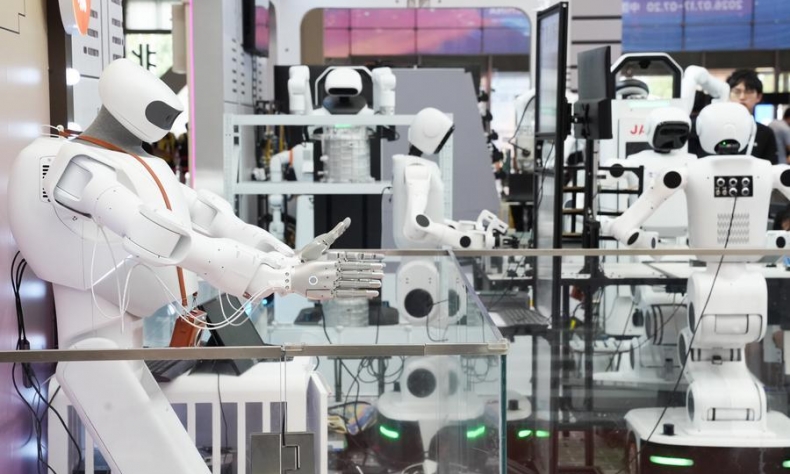
The future of AI, as President Xi reminded us, must be shaped by international consensus.
Seventy years ago, a handful of young scholars gathered at Dartmouth College in New Hampshire and first uttered the words “artificial intelligence.” Seven decades later, as algorithms begin to “think” and machines step from the digital world into the physical one, the question is no longer whether AI will reshape human civilization, but who will write the score. On July 17, 2026, in Shanghai, President Xi Jinping offered the world a clear answer: AI development should not be a solo performance by a single country, but a symphony of international cooperation. In a world drifting toward technological fragmentation, his keynote address at the opening ceremony of the 2026 World AI Conference (WAIC) and High-Level Meeting on Global AI Governance marks a pivotal moment when China’s vision for AI is evolving from a set of proposals into an institutional reality.
The timing is no accident. The world has entered, in President Xi’s words, “an unprecedented period of active innovation on AI technologies.” Yet for all the promise, humanity is facing four pressing questions of our times: How to get along with thinking machines? How to ensure security when algorithms enter decision-making? How to tackle ethical challenges through adaptive governance? And how to realize “AI for all” when the divide keeps widening? The fact that these questions remain largely unanswered is not due to a lack of technology, but to a deficit of governance. As UN Secretary-General António Guterres warned at the same event, “Technology that will shape the future of humanity must be shaped by all humanity. It cannot be governed by a handful of countries or a handful of companies. Every nation needs a seat at the table.”
Against this backdrop, the birth of the World Artificial Intelligence Cooperation Organization (WAICO) in Shanghai stands as a genuine watershed. WAICO, officially established on July 16, 2026, is an independent intergovernmental international organization, headquartered in Shanghai, with 29 founding member states spanning Asia, Africa, Latin America, and Europe. According to Xinhua, it is “the world’s first intergovernmental international organization to cope with opportunities and challenges posed by thinking machines.” Its founding agreement explicitly states that WAICO aims to ensure AI is beneficial, safe, and fair, and serves the benefit of all humanity. This is not merely a diplomatic gesture; it is the translation of a three-year intellectual journey, from the Global AI Governance Initiative proposed by President Xi in 2023, and the UN General Assembly resolution on AI capacity building, to the AI Capacity-Building Action Plan for Good and for All, and now to a permanent institutional home.
President Xi’s four observations at the opening ceremony constitute the philosophical architecture of this new edifice. First, openness and win-win: encouraging open-source, collaboration and sharing to drive innovation across industries. Second, risk-awareness: ensuring AI remains always under human control and opposing overstretching the national security concept to place one country’s security above others. Third, inclusiveness: using AI to cultivate “a garden of civilizations” where “the beauty of each civilization is appreciated and shared.” Fourth, solidarity: practicing true multilateralism, recognizing the United Nations’ central role, and preventing “new historical injustice in AI.” These four points are not isolated principles; together they form a coherent alternative to the zero-sum logic that threatens to balkanize the AI landscape.
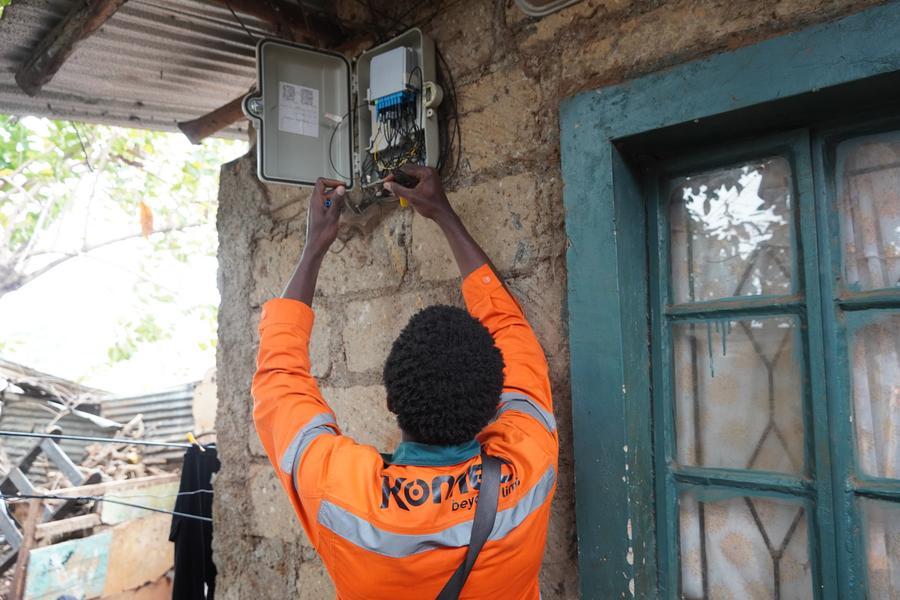
What gives unique credibility to China’s answer its is the seamless alignment between vision and action, between words and works. In 2025 alone, China’s core AI industries were valued at more than RMB 1.2 trillion with over 6,200 AI enterprises nationwide, while cumulative global downloads of open-source large models surpassed 10 billion. But numbers alone do not tell the story. According to Xinhua, an AI medical assistant from Xunfei Healthcare is now serving village doctors in the Lüliang Mountains. To date, the system has been rolled out to 811 county-level regions nationwide, supporting over 250,000 primary-care doctors with more than 1.2 billion diagnostic recommendations. And across Kenya, co-developed AI monitoring systems help farmers increase crop yields. AI, in the Chinese experience, is not an abstraction to be monopolized by tech giants; it is a practical tool to be placed in the hands of ordinary people.
This “from-lab-to-land” approach explains why President Xi’s concrete commitments resonated so deeply with Global South leaders at the WAIC. Over the next five years, China will provide other developing countries with 5,000 opportunities in AI training and seminar programs; build international AI application cooperation centers with ASEAN, the League of Arab States, the African Union, the Community of Latin American and Caribbean States, the Shanghai Cooperation Organization, and BRICS; and enable 30 countries to deploy MAZU, the AI-powered meteorological warning system. These are not charitable gestures but investments in a shared future, where the AI dividend is not the privilege of a few, but the birthright of all.
The chorus of international approval was striking in its breadth. Kazakh President Kassym-Jomart Tokayev, Cambodian Prime Minister Hun Manet, and Thai Prime Minister Anutin Charnvirakul all spoke highly of China’s contributions to advancing global AI governance at the opening ceremony, and expressing confidence that WAICO will play an important role in building a fair and equitable AI governance framework. Their presence and praise are not mere protocol; they signal a broad recognition that the existing governance architecture – fragmented, developed-country-centric, and increasingly securitized – is inadequate for the task ahead.
The future of AI, as President Xi reminded us, must be shaped by international consensus. WAICO is where that consensus will be forged – note by note, and nation by nation, for the benefit of all.