China’s Global Development Initiative Turns Pledges Into Practice
 Facebook
 Twitter
 Linkedin
 Google +
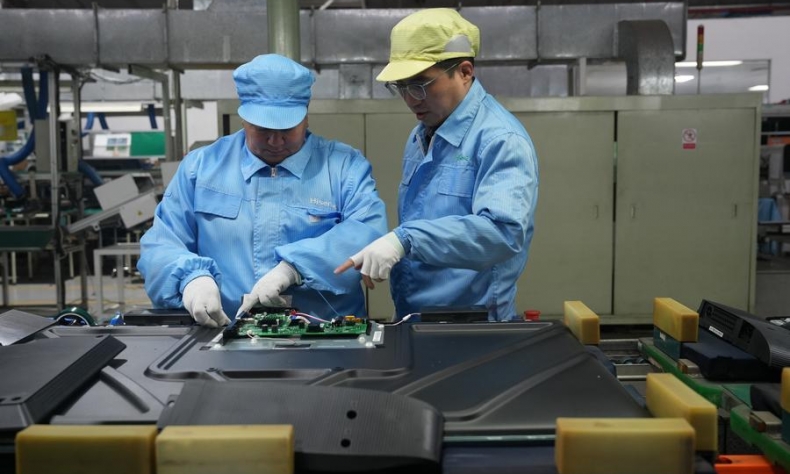
Five years after Chinese President Xi Jinping launched the Global Development Initiative (GDI) at the United Nations, the framework has grown from policy vision into more than 200 projects across over 70 developing nations.
As the Global Development Initiative approaches its fifth anniversary, the international economic order remains under severe strain. Chinese President Xi Jinping introduced the initiative at the 76th Session of the United Nations General Assembly in September 2021.
The systemic fallout of the COVID-19 pandemic, unilateral U.S. tariffs and the deepening crisis in the Middle East have disrupted global supply chains, partially reversed decades of poverty-reduction gains and intensified structural inequalities between developed and developing nations. Developing economies now face compounding crises, including severe food and energy insecurity, sovereign debt distress, environmental degradation and widening technological divides.
The GDI’s emphasis on implementation responds directly to the widening gap between multilateral development commitments and their realization.
According to the United Nations’ 2026 Sustainable Development Goals Report, only 36% of SDG targets with sufficient trend data are on track or showing moderate progress. Nearly half (49%) are progressing far too slowly, while 15% have regressed below their 2015 baseline.
The shortfall points to a gap not in the articulation of global development goals but in their implementation. The GDI did not emerge from an absence of normative commitments. The legal and political framework governing modern development already included the 17 Sustainable Development Goals adopted under U.N. General Assembly Resolution 70/1 in 2015.
The central challenge for the contemporary international order has been the persistent difficulty of translating the internationally recognized right to development into effective practice. The 1986 U.N. Declaration on the Right to Development describes the right as inalienable. It places the human person at the center of the development process, while recognizing the responsibilities of states and the collective dimensions of development.
The GDI was established to bridge the gap between declaratory multilateral intent and practical economic implementation by returning development to the center of the global agenda. It represents a policy-oriented attempt to turn existing international commitments into more concrete forms of cooperation while strengthening confidence in multilateral development governance.
China’s contribution to international development and South-South cooperation is grounded in its own socioeconomic transformation. World Bank figures show China has lifted nearly 800 million people out of poverty over the past four decades, accounting for more than 75% of global poverty reduction during that period.
World Bank indicators also show China averaged annual GDP growth of more than 9% after it launched reform and opening up in 1978. While China’s development experience cannot simply be replicated in states with different legal, institutional and demographic characteristics, its trajectory demonstrates how deliberate public policy and institutional capacity can advance socioeconomic rights at scale.
That domestic experience informs China’s approach to international development cooperation, and the evolution is clearest when the GDI is set alongside the Belt and Road Initiative (BRI). Launched in 2013, the BRI emphasized physical connectivity, infrastructure, trade, investment and economic corridors. The GDI complements that foundation by addressing broader structural constraints that can limit developing states’ capacity to achieve sustainable economic development and greater economic autonomy.

Under public international law, formal sovereignty does not necessarily translate into meaningful economic autonomy when a state lacks the productive capacity to feed its population, build industrial resilience or absorb technological advances. A deep-water port or railway line provides the physical framework for trade, but its contribution to development depends on whether it expands state capacity, generates local employment, strengthens productive capabilities and supports sustainable socioeconomic development.
While the BRI emphasizes the physical and economic connectivity necessary for international commerce, the GDI seeks to provide a broader, implementation-oriented framework through which that connectivity can serve sustainable development and greater economic autonomy.
Over the past five years, the GDI has evolved from a high-level policy vision into an increasingly structured, project-oriented framework. After China announced 32 measures at the 2022 High-level Dialogue on Global Development, institutional mechanisms were developed to support sustained implementation.
The South-South Cooperation Assistance Fund was upgraded into the Global Development and South-South Cooperation Fund, with its capital base expanded to $4 billion. The China International Development Cooperation Agency reports that the fund, along with dedicated institution-backed mechanisms, has supported more than 200 projects in over 70 developing nations.
Those projects, which span agricultural technology transfers in sub-Saharan Africa, clean-energy installations in Southeast Asia and digital infrastructure in Latin America, have directly or indirectly benefited more than 40 million people across the Global South.
The GDI’s priority areas include poverty reduction, food security, pandemic response, development finance, climate change, industrialization, the digital economy and connectivity. From the perspective of public international law, these intersect closely with the principle of common but differentiated responsibilities. Developing nations frequently face asymmetric vulnerabilities in which climate impacts, debt obligations and digital divides reinforce one another. By treating these challenges as interconnected rather than isolated crises, the GDI offers a framework through which states can pursue greater collective economic resilience.
As the international community enters the final stretch before the 2030 SDG deadline, the priority for the GDI’s next five years should be stronger institutional coordination and demonstrable development effectiveness. China’s capacity-building experience provides operational expertise, the United Nations system offers multilateral legitimacy, and global trade, energy and infrastructure corridors supply much of the physical foundation for development.
Harmonizing these frameworks without creating parallel regulatory regimes or institutional fragmentation remains essential. The GDI’s legacy will be determined not by the number of projects it finances or the declarations it generates, but by its capacity to advance the right to development in practice, while building trust and consensus among member states. Its long-term significance will depend on whether it can turn existing international commitments into durable improvements in productive capacity, economic autonomy and human well-being across the Global South.
By bridging the gap between promise and practice, the GDI is poised to catalyze a new era of equitable global growth, ensuring that the ideals of sustainable development become a shared reality for all.
Yasiru B. Ranaraja is a researcher on maritime affairs and an expert on Belt and Road Initiative development. He is the founding director of Belt & Road Initiative Sri Lanka, an international development organization and think tank.