The Hovering Ghosts of 1945
 Facebook
 Twitter
 Linkedin
 Google +
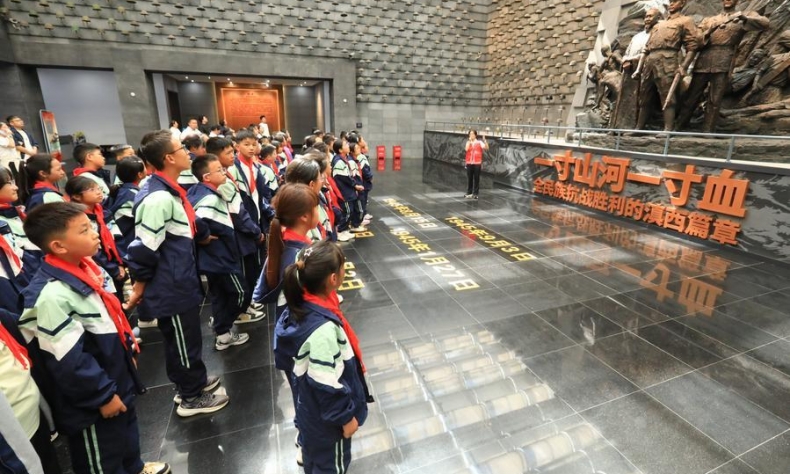
The key to preserving regional peace is for Japan to acknowledge the crimes it committed, show respect for the victims, confront its history of aggression squarely and demonstrate genuine remorse.
On September 3, China observes the Victory Day of the Chinese People’s War of Resistance Against Japanese Aggression. Russia marks the date as the Day of Victory over Militaristic Japan and the End of World War II (WWII).
However, despite 81 years having passed, disputes over the war’s outcome and legacy continue to shape the politics of Northeast Asia. So why do tensions over this history remain so acute between Japan and four of its Northeast Asian neighbors—namely, Russia, China, the Democratic People’s Republic of Korea (DPRK) and the Republic of Korea (ROK)? Why must the countries of the region find common ground in how they remember WWII if they are to build a lasting peace?
Unfinished business
On August 15, the anniversary of Japan’s unconditional surrender, Prime Minister Sanae Takaichi sent a monetary offering to the notorious war-linked Yasukuni Shrine. The shrine commemorates the spirits of roughly 2.5 million people who died in the service of Japan in conflicts since the Meiji Restoration, the overwhelming majority of them in Japan’s successive wars of aggression abroad. Among those enshrined are 14 convicted Class-A war criminals tried by the International Military Tribunal for the Far East after WWII. In her address at Japan’s national memorial ceremony on that same day, Takaichi neither expressed remorse nor acknowledged Japan’s wartime aggression.
Japan’s neighbors responded with strong disapproval. Russia argued that Japan was attempting to portray itself as a victim of the war, in defiance of historical reality. China viewed the offering and related shrine visits as attempts to whitewash Japan’s history of aggression. The DPRK and the ROK also voiced objections.
To many observers outside the region, these events may appear inconsequential. In reality, they are merely the tip of the iceberg. The historical fault lines that emerged from the events and settlements of 1945 continue to influence regional affairs to this day.
Among the countries concerned, Russia and China hold the most closely aligned positions on the outcome of WWII. This convergence was reflected in the statement jointly signed by their heads of state in May 2025 on further deepening the China-Russia comprehensive strategic partnership of coordination for the new era on the occasion of the 80th anniversary of the victory in the Chinese People’s War of Resistance Against Japanese Aggression, the victory in the Soviet Union’s Great Patriotic War and the founding of the United Nations. Yet this broad consensus does not preclude differences in interpretation.
Russia’s official narrative moves from West to East, with the victory in the Great Patriotic War at its core. Within this account, the Soviet campaign against Japan serves as the WWII closing act: Moscow portrays it as the last major military operation to bring the global conflict to an end. By contrast, China’s official narrative is rooted in Asia but global in scope. Its chronology begins in 1931, and it presents the Chinese People’s War of Resistance Against Japanese Aggression as the first front to open and the longest to remain active in the global struggle against fascism. China was the principal theater of war in Asia, bore the brunt of Japanese aggression and played a central role in victory in the World Anti-Fascist War.
The Korean Peninsula remained under Japanese colonial rule throughout WWII, but Pyongyang and Seoul interpret this history differently. In its international messaging, Pyongyang highlights the Soviet Red Army’s contribution to the liberation of the northern part of the Korean Peninsula, seized by Japan in 1910, as well as the bonds of comradeship with the Chinese people forged first in their shared resistance to Japan. In the ROK, memories of Japanese colonial rule remain highly sensitive, and visits to the Yasukuni Shrine by Japanese politicians regularly draw objections from Seoul. Yet the ROK Government also seeks to prevent historical disputes from undermining cooperation with Japan.
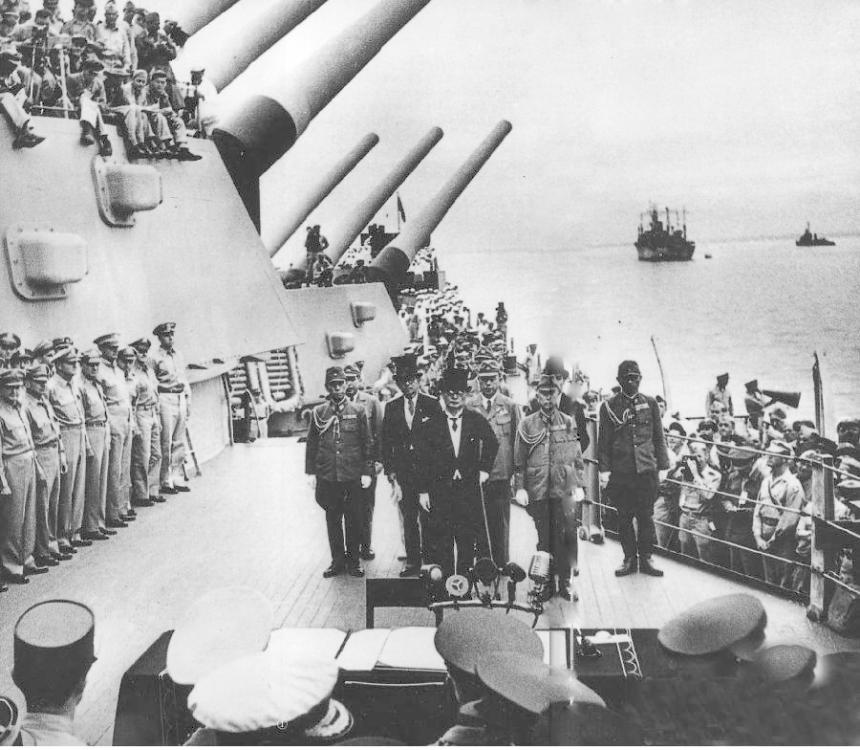
Japan formally signed the Instrument of Surrender on September 2, 1945. In Japan’s prevailing official narrative, the war is portrayed primarily as a national tragedy, and the emphasis falls on Japan’s commitment to peace. In recent years, explicit references to aggression and colonial rule have grown increasingly rare in official statements, replaced by expressions of mourning for the war dead and reaffirmations of Japan’s commitment to peace. This tendency was, as mentioned earlier, again evident on August 15: Takaichi made no mention of Japan’s aggression and expressed no remorse for its wartime conduct.
Why the fault lines persist
Historical tensions in Northeast Asia remain acute for several reasons.
First, the war did not produce a comprehensive, region-wide political and legal settlement. The post-WWII order emerged piecemeal: A patchwork of agreements resolved some disputes but failed to establish a unified legal framework accepted by all the key parties. Russia and Japan restored diplomatic relations but have yet to conclude a peace treaty. The U.S.-led aggressive war on the peninsula in the 1950s ended in an armistice rather than a peace treaty, while Japan and the DPRK have never normalized relations. These are only the most prominent examples; numerous bilateral issues among the countries of Northeast Asia remain unresolved. Disputes rooted in 1945 are therefore not merely questions of historical memory but part of the region’s present-day political and legal reality.
Second, the scale and brutality of the violence in the Asian theater make it exceptionally difficult for the countries of the region to develop a shared historical and moral narrative. Even conservative estimates put the death toll in Northeast Asia at no fewer than 25 million. Massacres, human experimentation, biological warfare, forced labor, death marches and the atomic bombings remain seared into the collective memory of successive generations. These tragedies differed in character, and the distinction between aggressors and victims must not be blurred. Yet every country carries traumatic memories of its own. Because each nation looks back on the war through the lens of a different historical trauma, developing a common language of collective memory remains extraordinarily difficult.
Third, historical memory has become an important instrument of geopolitics in Northeast Asia. Russia, China and the DPRK are turning their broadly shared understanding of history into a symbolic foundation for closer strategic ties. Conversely, the ROK and Japan continue to expand security cooperation despite their unresolved historical disputes. Yet Japan’s expanding defense capabilities continue to evoke painful memories of colonial rule in the ROK. War memory thus does more than reflect current tensions: It directly shapes mutual trust, partnerships and the regional balance of power.
In sum, the countries of Northeast Asia are unlikely ever to arrive at a completely unified historical narrative. Lasting peace, however, does not require their memories to be identical. The key to preserving regional peace is for Japan to acknowledge the crimes it committed, show respect for the victims, confront its history of aggression squarely and demonstrate genuine remorse. Only on that foundation can it pursue meaningful dialogue and reconciliation with its neighbors.
The author holds a doctorate in political science and is a research fellow at the Center for Asian Studies, Far Eastern Federal University in Russia.