Beyond the “Overcapacity” Narrative
 Facebook
 Twitter
 Linkedin
 Google +
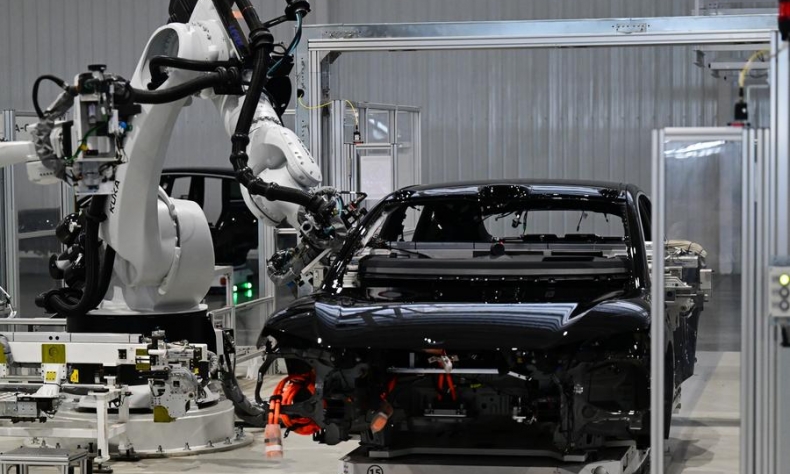
As global demand for clean technologies grows, China’s manufacturing capacity should be seen not as a risk but as a positive factor in driving the world’s industrial and energy transition.
The Chinese Ministry of Commerce has responded directly to renewed Western concerns over a possible “China Shock 2.0.” In its policy paper, China’s Position on the So-Called Excess Capacity Issue, published on July 28, Beijing rejects the assertion that China’s expanding industrial output threatens the global economy. Instead, it argues that the world is entering the era of “China Opportunity 2.0,” in which China’s industrial upgrading provides new opportunities for economic growth, technological progress and international cooperation.
According to the ministry, China has contributed approximately 30 percent of global economic growth for more than a decade, making it the largest single contributor to world economic expansion. During the first stage of reform and opening up, China generated substantial “market dividends” through its manufacturing base and large domestic market. Today, Beijing argues that the country is creating new “development dividends” by supplying advanced industrial products, accelerating technological innovation and strengthening global supply chains.
Three misconceptions
The ministry also rejects three core assumptions that underpin the Western narrative. First, industrial subsidies do not automatically generate excess capacity. Second, trade surpluses are not evidence of overproduction. Third, the claim that weak domestic demand forces Chinese companies to export surplus output ignores China’s role as both the world’s largest manufacturing economy and one of its largest consumer markets. These arguments are consistent with the basic principles of international economics.
Overcapacity has a specific economic meaning. It exists when production persistently exceeds effective demand, resulting in unused factories, rising inventories, falling profitability and prolonged price collapse. None of these conditions adequately describes China’s leading export industries.
Instead, China’s competitive position reflects productivity gains, technological upgrading and economies of scale.
The global transition toward clean energy illustrates this point particularly well. According to international energy agencies, achieving carbon neutrality targets requires global production of clean-energy technologies to increase approximately threefold by 2030. Existing manufacturing capacity outside China remains insufficient to satisfy projected demand.
China has responded by investing heavily in renewable-energy manufacturing. Chinese enterprises now account for approximately 55 percent of global investment in clean-energy production, equivalent to roughly $1.1 trillion. These investments have produced integrated industrial ecosystems covering raw materials, components, equipment manufacturing, logistics and research and development.
The achieved economies of scale significantly reduced production costs. Wright’s Law describes how this occurs: As aggregate production volume increases and costs decrease, firms gain experience, improve efficiency and optimize supply chains.
Consequently, falling prices indicate increased productivity rather than market distortions.
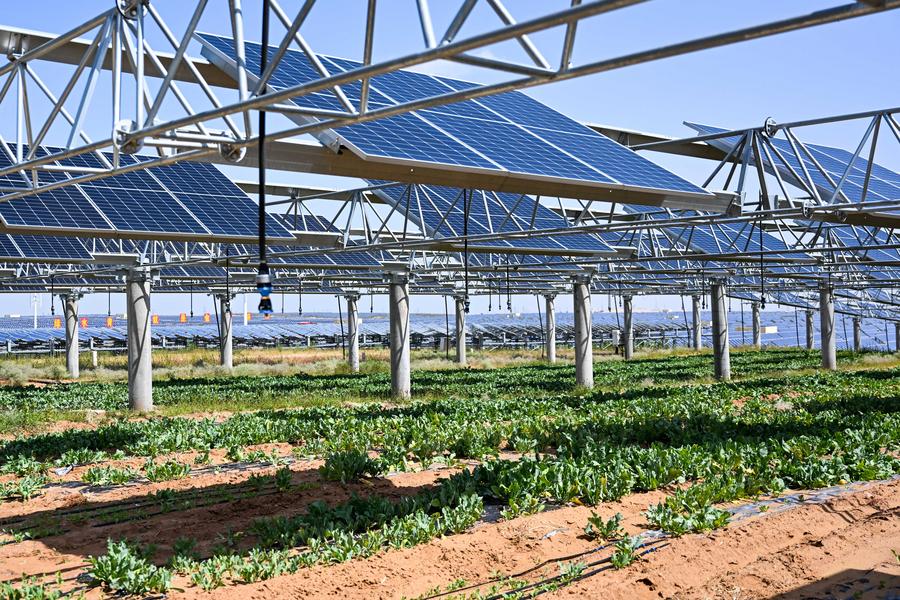
Development of ‘New Three’
China’s role in global clean-energy production is undeniable; it currently accounts for about 80 percent of the world’s solar panels and lithium-ion batteries and remains a leading manufacturer of electric vehicles. These sectors have become pivotal for the global energy transition, no longer just export industries.
Foreign trade data for the first half of 2026 further challenge the so-called “China Shock 2.0” narrative.
China’s total foreign trade reached 25.47 trillion yuan (about $3.79 trillion) during the first six months of the year, an increase of 16.9 percent compared with the same period of 2025 and the first time that half-year trade exceeded 25 trillion yuan (about $3.72 trillion). Exports rose 13.4 percent to 14.73 trillion yuan (about $2.19 trillion), expanding for the eleventh consecutive quarter.
More revealing was the performance of imports. During the same period, imports increased by 22.1 percent to 10.74 trillion yuan (about $1.6 trillion), growing substantially faster than exports.
This trend contradicts the notion that Chinese manufacturers are compensating for weak domestic demand with excessive exports. On the contrary, the rapid growth in imports of modern equipment, industrial machinery, hi-tech components and strategic raw materials indicates expanding domestic investment and ongoing industrial modernization.
China’s export structure has also undergone a profound transformation.
The “New Three” industries—electric vehicles, lithium-ion batteries and photovoltaic products—have become major contributors to export growth. In March 2026 alone, exports from these sectors reached $21.9 billion, approximately 70 percent higher than in March 2025.
Exports in the first half of the year totaled over 819.66 billion yuan (about $121.92 billion), up 46.1 percent year on year, surpassing 800 billion yuan (about $119 billion) for the first time during the same period historically. The share of “New Three” products in China’s total exports rose from 4.32 percent last year to 5.56 percent in the first half of this year, with their contribution to export growth continuing to rise steadily.
Geographically, China’s export markets continue to diversify. Trade with Belt and Road partner countries increased by 14.8 percent during the first half of 2026, reaching 12.97 trillion yuan (about $1.93 trillion). Exports to Africa increased by 19.6 percent, while exports to Latin America increased by 16.2 percent. These figures indicate that demand for Chinese manufactured goods is broadening rather than becoming concentrated in traditional developed markets.
The green economy provides perhaps the strongest evidence against the concept of structural overcapacity.
Global electrification, renewable-energy deployment and digital infrastructure require unprecedented volumes of batteries, solar modules, grid equipment and power electronics. The International Energy Agency shows that annual investment in clean-energy technologies must continue rising sharply throughout this decade to meet climate objectives. Without China’s manufacturing capacity, achieving these targets would become considerably more expensive and significantly slower.
Aggressive protectionist policies
Despite the rising demand, protectionist policies have become more aggressive.
For example, the United States increased tariffs on Chinese electric vehicles from 25 percent to 100 percent, raised tariffs on solar products to 50 percent and added new tariffs on batteries and semiconductors. Meanwhile, the European Union implemented countervailing duties on Chinese electric vehicles and expanded trade investigations.
These actions appear driven by industrial policy motives rather than by any signs of market failure. Ironically, protectionism could drive up costs for consumers and slow down the global energy transition. Affordable Chinese equipment has played a key role in reducing inflationary pressures across many economies by lowering the prices of manufactured goods and renewable-energy technologies. Limiting these imports will increase production costs across downstream industries.
The distinction between economic competitiveness and excess production is therefore crucial. Comparative advantage has long been recognized as the foundation of international trade. Countries specialize in industries where they are more efficient, allowing global resources to be allocated more productively. China’s manufacturing leadership increasingly reflects this principle through technological capability, integrated supply chains and continuous productivity improvements.
Green technology exports from China are expected to remain stable in the second half of 2026. Growing demand for green technologies in Asia, the Middle East, Africa and Latin America remains, and governments are increasing investment in renewable energy, power grids, energy storage systems and electric vehicles. While trade barriers in the U.S. and parts of Europe will remain challenging, they are unlikely to outweigh growing demand from markets in the Global South.
The structure of China’s exports is expected to continue shifting toward higher value-added manufacturing, integrated energy systems and advanced industrial equipment. Imports should also remain strong as manufacturers increase purchases of sophisticated machinery and strategic raw materials.
The discussion around a “China Shock 2.0” mainly highlights shifting trends in industrial leadership instead of concrete proof of overcapacity. International markets keep buying Chinese goods simply because they offer competitive prices, high technological standards and dependable supply.
As global demand for clean technologies grows, China’s manufacturing capacity should be seen not as a risk but as a positive factor in driving the world’s industrial and energy transition.
The author is former prime minister of Kyrgyzstan, a distinguished professor of the Belt and Road School at Beijing Normal University and author of the book Central Asia’s Economic Rebirth in the Shadow of the New Great Game.