One Year in, the Global Governance Initiative Turns Principles Into Practice
 Facebook
 Twitter
 Linkedin
 Google +
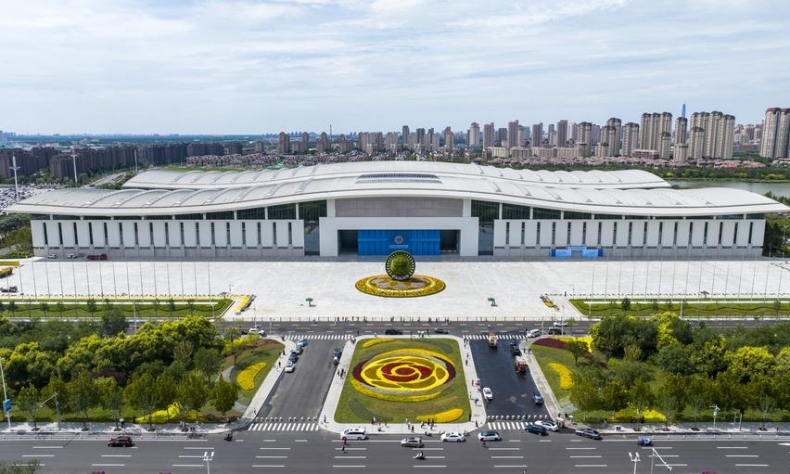
Nearly 160 countries and organizations have backed the Global Governance Initiative (GGI) in its first year. The next phase will carry that support into financing, digital rules and stronger representation for developing countries.
As the GGI approaches its first anniversary, the most meaningful question is no longer why China proposed it, but what has happened since.
The debate has moved beyond whether global governance needs reform to a harder question: can reform move from diplomatic declarations to institutions, rules and practical cooperation?
On this measure, the GGI is beginning to matter not as an alternative world order, but as a platform for making the existing multilateral system more representative, functional and capable of delivering results.
Chinese President Xi Jinping proposed the GGI on Sept. 1, 2025, at the Shanghai Cooperation Organization Plus meeting in Tianjin, in the year marking the 80th anniversary of the United Nations. Its timing was telling. The world economy has changed dramatically since 1945, while many international institutions have changed much more slowly. At the same time, geopolitical confrontation, trade fragmentation, climate change, debt and the digital divide are creating problems that no country can manage alone.
The GGI’s five principles of sovereign equality, the international rule of law, multilateralism, a people-centered approach and real actions provide a simple test for whether global governance is actually working. Do countries have a meaningful voice? Are rules applied consistently? Can states cooperate despite political differences? And do international agreements eventually improve people’s lives?
The latest development data explain why these questions have become urgent. The U.N.’s 2025 Sustainable Development Goals assessment found that only 18% of assessable SDG targets were on track, while 48% were progressing insufficiently and another 18% had regressed. Developing countries face an annual SDG financing gap of more than $4 trillion. The world, in other words, has become remarkably good at setting global objectives but much less successful at providing the money, technology and institutions needed to achieve them.
This is where the GGI’s emphasis on “real actions” acquires substance. According to a new white paper released by China’s State Council Information Office in June, nearly 160 countries and international organizations had expressed support for the initiative, while more than 60 countries had joined the Group of Friends of Global Governance. The group was launched at the U.N. headquarters in December 2025 with 43 founding members and has since expanded its activities in Geneva, Vienna and other international venues. The significance lies not in the numbers alone. It is that the GGI is developing a political channel through which countries can discuss how the existing system should change. At a meeting in New York on May 28, foreign ministers and senior officials from countries including Pakistan, Turkmenistan, Cuba, Kyrgyzstan, Zimbabwe and Kazakhstan discussed reforming global governance and addressing common challenges.
Notably, France has explicitly expressed support for the GGI, with the December 2025 joint statement noting that the initiative “supports the central role of the U.N. in international affairs.” Spain has voiced active support for China’s four global initiatives, including the GGI. Canada, Ireland and the UK, meanwhile, have affirmed shared commitments to multilateralism and the centrality of the U.N.
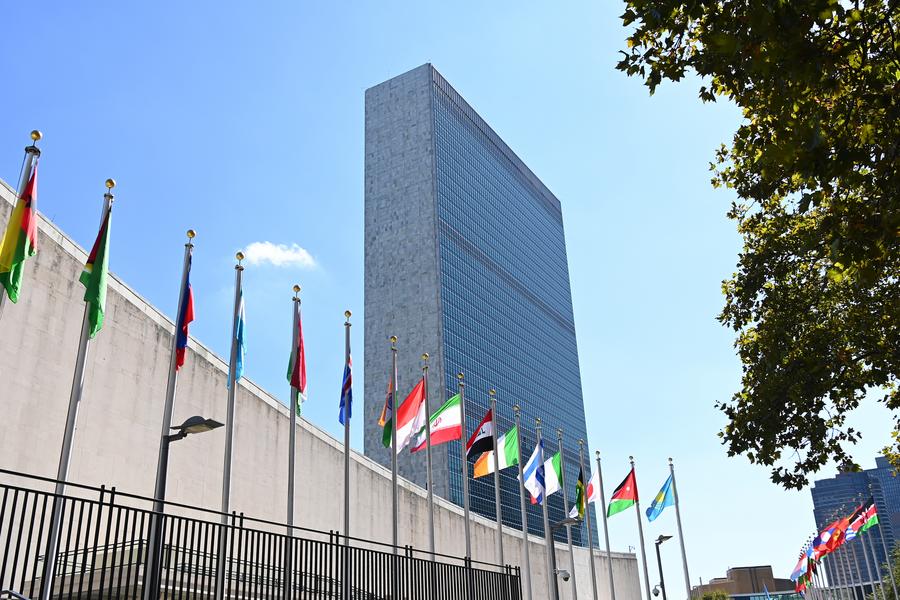
The initiative’s potential appeal is particularly important. Many developing countries want greater representation without abandoning the U.N.-centered system. The GGI speaks directly to that space. It does not call for a parallel U.N. It calls for strengthening multilateralism and making institutions more representative of today’s international realities. That distinguishes it from other approaches based primarily on exclusive alliances or competing geopolitical blocs.
The economic backdrop reinforces the argument. World Trade Organization figures show that global trade in goods and commercial services reached $34.89 trillion in 2025. Yet tariffs, export restrictions and preferential arrangements are making the trading system increasingly fragmented. The paradox is obvious: economies remain deeply interconnected even as political trust is declining. The answer is not to pretend that geopolitical differences do not exist, but to uphold rules that allow countries to trade and cooperate despite them.
The urgency is measurable. Developing countries’ external debt reached $11.7 trillion in 2024, while official development assistance fell 7.1%. At the same time, 2.2 billion people remained offline in 2025, and 5G coverage reached 84% of populations in high-income countries but only 4% in low-income countries. These are not abstract governance problems. They determine whether a rural entrepreneur can enter an international market, whether a developing country can finance renewable energy and whether a young person can participate in the digital economy.
That is why the GGI’s next stage should be measured by implementation rather than declarations. Its strongest contribution could be to connect political reform with development outcomes: more effective development financing, fairer participation in digital and artificial intelligence governance, stronger representation for developing countries, more predictable trade rules, and greater coordination on climate and sustainable development.
AI may become the GGI’s most important test, given its rapid iterative development and its far-reaching impact across various domains and sectors. Global governance in the 20th century focused heavily on territory, trade, finance and security. The 21st century is adding algorithms, data, computing power and digital infrastructure to that list. Countries that are absent when these rules are written risk becoming rule-takers in the next technological era.
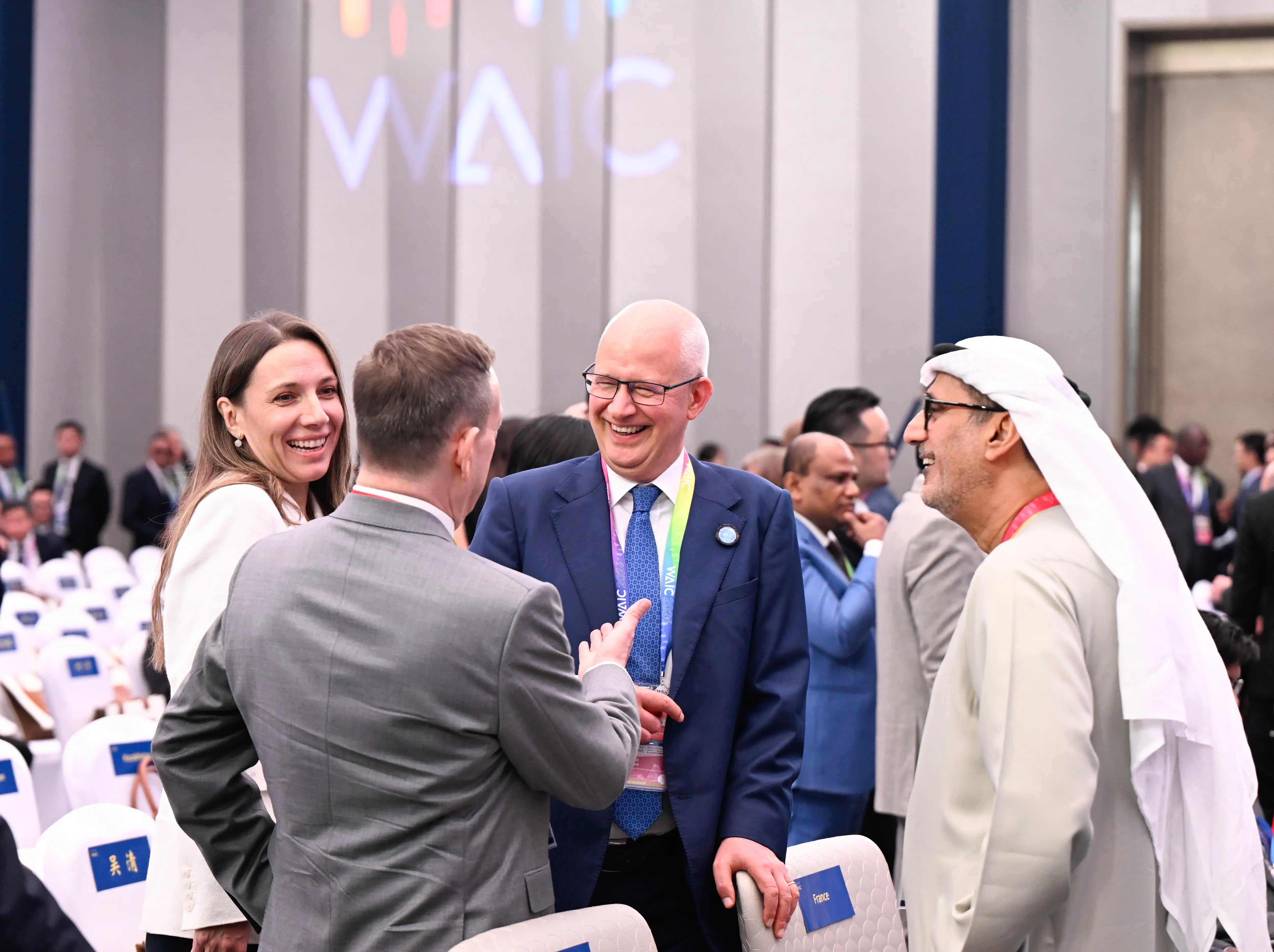
China has already begun connecting this issue with institution-building. Participants from 102 countries and international organizations attended the World AI Conference and High-Level Meeting on Global AI Governance in Shanghai in July 2026, and 29 countries signed an agreement establishing the World AI Cooperation Organization, headquartered in Shanghai. The organization emphasizes the U.N. Charter, extensive consultation, joint contribution and shared benefits.
That is precisely the kind of issue on which the GGI’s principles will have to prove themselves. AI cannot become a privilege of countries possessing the largest computing capacity and capital. If developing countries are excluded from rule-making, today’s digital divide could become tomorrow’s AI divide. Governance of technology is therefore also a question of development equity.
The GGI becomes even more significant when viewed alongside China’s other three global initiatives. The Global Development Initiative addresses the development deficit, the Global Security Initiative addresses the security deficit, the Global Civilization Initiative addresses mutual understanding and the GGI addresses the institutional deficit. The logic behind these initiatives is interconnected. Development without security is fragile. Security without development is unsustainable. Technology without inclusive governance can deepen inequality. And governance without dialogue can produce rules without legitimacy.
There is also a domestic dimension that deserves greater attention. China’s 2026 government work report explicitly called for pursuing the four global initiatives and actively participating in reform of the global governance system. More importantly, the 15th Five-Year Plan (2026-2030) incorporates advancing these initiatives into China’s longer-term policy framework. It also calls for participating in reform of global economic and financial governance, defending the multilateral trading system centered on the World Trade Organization, opposing protectionism and expanding China’s network of high-standard free-trade agreements.
This gives the GGI something more durable than a diplomatic campaign: a five-year implementation horizon. Its international message is being connected with China’s own economic, technological and opening-up strategy through 2030. The upcoming Xiong’an Global Governance Forum and China’s 2026 APEC chairmanship provide additional platforms for discussing trade, connectivity, innovation, development and institutional reform.
The first anniversary should therefore mark the end of the GGI’s introductory phase, not the end of its mission. Its first year has produced principles, international support and the beginnings of an institutional network. The harder test now begins. Can developing countries gain greater representation? Can the global financing gap be narrowed? Can AI governance remain inclusive? Can trade rules become more predictable? Can the U.N. system become more effective without becoming more divided?
Those questions will ultimately matter more than the number of declarations surrounding the initiative. One year on, the GGI has crossed an important threshold. It began as a Chinese proposal for a more just and equitable global governance system. It is now linked to multilateral diplomacy, China’s 15th Five-Year Plan, AI governance, economic governance and wider U.N. reform. Its next task is to move from design to delivery.
That is the real promise of the GGI: not to replace the global governance system, but to make it work better for a world that has changed profoundly since 1945, where emerging economies account for over 40% of global GDP, yet hold a disproportionately low share of voting power in the Bretton Woods institutions. The coming years are expected to see the initiative become increasingly practical, working through the U.N., regional organizations, development institutions and international platforms, while remaining open to countries with different political systems and development paths. The first year has established the direction. The next five years will be crucial to deepening its contribution as a genuine global public good.
Moulik Jahan is a Bangladeshi independent researcher, freelance columnist and strategic and security affairs analyst.