Blaming RMB Undervaluation Is Unfounded and Offers No Solution
 Facebook
 Twitter
 Linkedin
 Google +
Countries must work together to uphold the multilateral trading system and free trade, with the WTO at its center, and to keep global supply chains open and resilient.
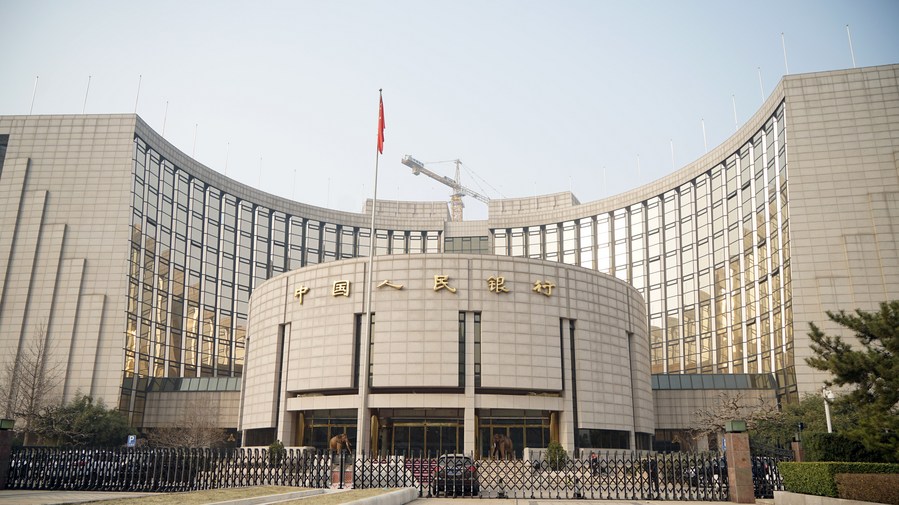
The People’s Bank of China (PBOC), China’s central bank, issued a position paper titled “PBOC’s View on the RMB Exchange Rate” in response to the repeated accusation of RMB undervaluation. The alleged undervaluation has ranged from 15 to 16 percent and 25 percent, as cited by some European leaders, to 21.3 percent in an IMF study. The accusation is part of the West’s blame of China for global economic imbalances, symbolized by a large Chinese trade surplus attributed to so-called “overcapacity” and RMB undervaluation.
The PBOC position paper says that China adopts a managed floating exchange rate regime based on market supply and demand with reference to a basket of currencies. Market forces play a decisive role in determining the RMB exchange rate.
The U.S. dollar is not an indicator for RMB value
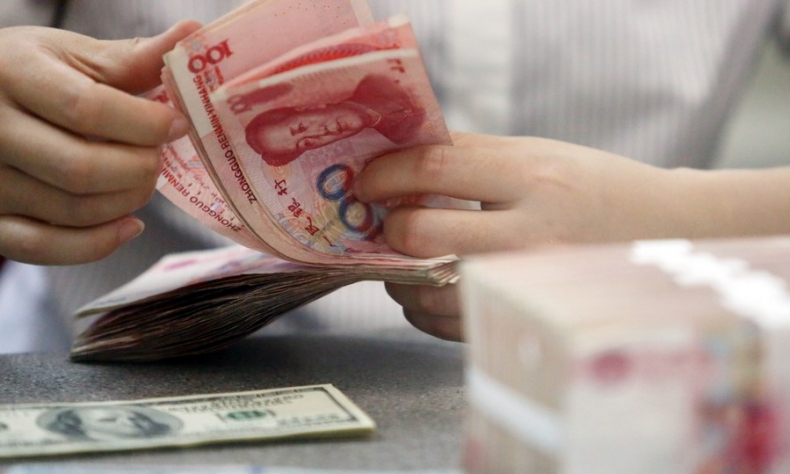
A common misconception is that the RMB’s value can be judged by its exchange rate against the U.S. dollar. That is incorrect. The RMB is not pegged to the dollar, and the dollar-yuan rate says little about whether the currency is undervalued, overvalued, or fairly priced.
The RMB’s daily exchange rate is market-based. The opening, mid-day, and closing rates, are all determined by trading between the RMB and other currencies, both onshore in Shanghai and offshore in Hong Kong. The China Foreign Exchange Trade System (CFETS), which operates China’s interbank foreign exchange market, publishes the CFETS RMB Index, a trade-weighted measure of the RMB against 25 major currencies. This year, the U.S. dollar makes up 18.3 percent of that basket, less than one-fifth. The dollar and the euro together account for 36 percent. The Korean won, Japanese yen, and Australian dollar together account for another 22 percent. The dollar-yuan rate is one input among many, not the measure of the RMB’s value.
The U.S. dollar operates similarly. The Federal Reserve tracks a broad, trade-weighted index of the dollar against a basket of major currencies, with the RMB carrying nearly 10.9 percent of its weight this year. A single bilateral rate says little about the overall strength of either currency.
Three indicators show RMB stability
The CFETS RMB index is the first and most basic indicator of the RMB exchange rate level. It stood at 100.0 in December 2014, the base period, and 103.6 on October 9, 2026. It gained 0.41 percentage points from the end of September, and has remained remarkably steady over the past 12 years.
The second basic indicator is the nominal effective exchange rate (NEER) published by the Bank for International Settlements (BIS). The RMB’s NEER was 110.96 on October 9, 2026, up 0.35 percentage points from the end of September. It has risen by more than 10 percent over the six years since the 2020 base year.
The third basic indicator is the RMB’s exchange rate against the International Monetary Fund’s Special Drawing Rights (SDR). It stood at 98.5 on October 9, 2026, up 0.44 percentage point.
All three basic indicators point to a steady RMB exchange rate.
Trade balances do not follow exchange rates
Some argue that the RMB’s value drives trade imbalances, but the evidence says otherwise. Unlike during the period of the Plaza Accord, world trade since the 90’s has been shaped increasingly by global supply chains and the comparative advantages of trading partners, and less by exchange rates.
China’s experience over the past 20 years has shown that RMB appreciation hasn’t negatively affect China’s trade expansion, nor has RMB depreciation contributed to an increase in exports. The RMB strengthened against the U.S. dollar by 21 percent from 2005 to 2008, by 10 percent from 2010 to 2014, and by 9 percent from 2020 to 2021. Despite a stronger currency, China’s share in global exports still rose by 2.4, 2.8, and 1.7 percentage points in the corresponding period. By contrast, the share fell in 2016 and 2022, each by 0.7 percentage points, though the RMB depreciated by 7 percent and over 8 percent against the U.S. dollar, respectively.
U.S. trade performance since 2013 has also shown that changes in its huge trade deficit have been only loosely related to the dollar’s performance.
During the Obama administration’s second term (2013-2017), the U.S. dollar was extremely strong, with its broad index rising nearly 30 percent from 90.8864 to 117.9048. Its global trade deficit, however, remained essentially unchanged, increasing by just $4.8 billion.
During Trump’s first administration (2017-2020), the U.S. dollar index weakened to 111.8992, yet the U.S. global trade deficit increased by $166.2 billion.
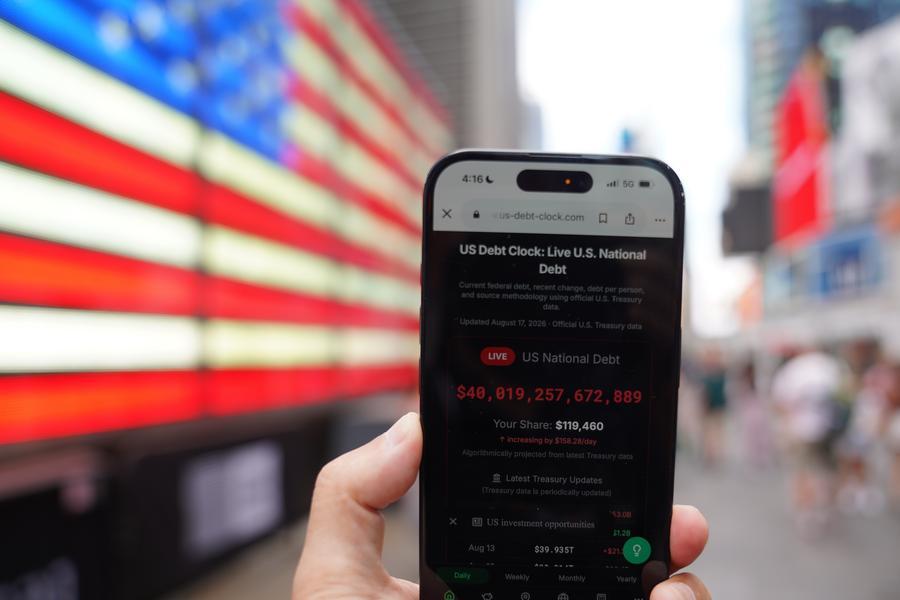
Over the past 21 months of Trump’s second administration, the U.S. dollar index has fallen by 6.6 percent. Even so, the U.S. global trade deficit rose to a record $1,212.79 billion in 2025. In 2026, it eased from January to April, running between $82.2 billion and $96.1 billion a month, before surging again from May and hitting $136.57 billion in August. That is an alarming annualized pace of $1.64 trillion.
Similarly, claims by a few EU leaders that the RMB is undervalued also appear incorrect. Despite the RMB rising 9.0 percent against the euro during the first 9 months of 2026, Chinese exports to the EU continued to outperform EU exports to China, growing 16.4 percent versus 5.5 percent.
Joint efforts are needed to rebalance the global economy
The current currency issue is more related to financial stability than with the trade balance, and RMB stability is also vital to global financial stability. International financial markets are facing growing uncertainty. U.S. national debt has surpassed $40 trillion, both the Federal Reserve and European Central Bank have raised rates, while the yen has swung up and down. All of this calls for stable, predictable monetary policies from central banks around the world, along with more concerted efforts among them. Pressure for a sharp revaluation of the RMB would not be the right approach.
Global economic imbalance stems from uneven development and differences in comparative competitiveness, aggravated by geoeconomic fragmentation and unilateral trade restrictions. Countries must work together to uphold the multilateral trading system and free trade, with the WTO at its center, and to keep global supply chains open and resilient. Doing so will foster more balanced development and more balanced global trade. Persistent blame directed at the RMB exchange rate is not the right solution.
The article reflects the author’s opinions, and not necessarily the views of China Focus.