“Big Market for All” – China’s New Opportunity for the Developing World
 Facebook
 Twitter
 Linkedin
 Google +

China’s enormous domestic market can serve its own consumers while simultaneously creating opportunities for producers elsewhere.
As protectionism rises and major economies increasingly look inward, China is moving in a different direction: seeking to open its enormous consumer market more widely to the world, with developing countries positioned to benefit from greater market access.
The “Big Market for All: Export to China” initiative gives practical meaning to this approach. Rather than viewing China’s vast consumer market solely as a domestic economic asset, the initiative seeks to turn its purchasing power into wider opportunities for international producers and exporters.
Chinese President Xi Jinping reinforced this message at the 2026 Shanghai Cooperation Organization Summit, inviting interested countries to participate in the “Big Market for All: Export to China” event series and “seize the opportunities on China’s super-sized market.”
In an global environment with an increasingly protectionist trend, the significance is difficult to overlook. China is presenting the purchasing power of its domestic market not simply as a national advantage, but as an opportunity that can be shared with international partners.
For the Global South, that distinction matters.
Developing countries do not simply need aid. They need customers. They need markets where their farmers, manufacturers, entrepreneurs, and small and medium-sized enterprises can sell competitively, earn foreign exchange, create jobs, and build productive capacity.
Shared prosperity becomes more meaningful when developing countries are not merely recipients of development assistance, but producers, exporters, and beneficiaries of global growth.
The power of China’s consumer market
The scale of the opportunity in China is considerable. According to China’s Ministry of Commerce, the country’s GDP exceeded 140 trillion yuan ($19.5 trillion) in 2025. Retail sales surpassed 50 trillion yuan for the first time, while imports reached 18.48 trillion yuan. During the first eight months of 2026, Chinese imports shot up by 22.0 percent y-o-y to 14.61 trillion yuan. China is already the largest export destination for more than 80 countries and regions.
China’s contribution to shared development may therefore increasingly come not only from what it invests abroad, but also from what it is willing to buy from the world.
The “Big Market for All” initiative seeks to turn that purchasing power into practical international opportunity. More than 100 promotional events are planned for 2026 to help connect overseas suppliers, including SMEs, with Chinese buyers.
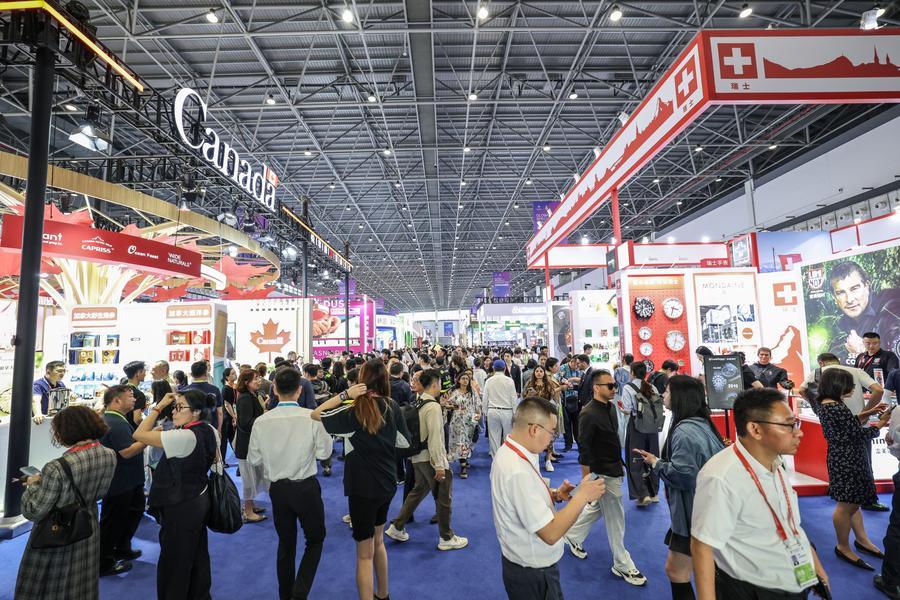
Combined with digital platforms and AI-enabled supply-chain tools, such efforts can help reduce information gaps, intermediary costs, and other barriers that traditionally make entering a major foreign market difficult for smaller businesses.
That distinction is important. Opening a market is one thing; making that market genuinely accessible to smaller producers is another.
For an SME in a developing country, the challenge is often not simply producing a good product. It is finding buyers, understanding unfamiliar markets, navigating distribution channels, meeting standards, financing expansion, and overcoming the costs of entering a market thousands of kilometers away.
If technology and trade-promotion mechanisms can reduce some of those barriers, access to China’s consumer market could become meaningful to a much broader range of producers.
From African commodities to African value addition
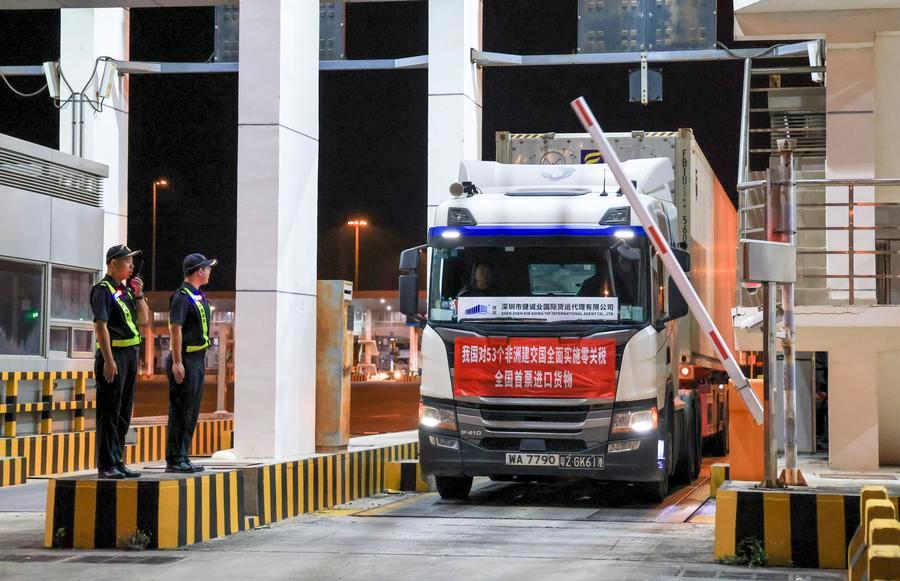
Perhaps the most consequential example of this market-opening agenda is China’s expanded zero-tariff treatment for products from African countries with which it has diplomatic relations. The significance is not simply that tariffs disappear. It is what greater access to one of the world’s largest consumer markets could enable African economies to do.
In the short term, products such as coffee, cocoa, avocados, citrus, wine, and manufactured goods can become more competitive in China.
Greater exports can generate foreign exchange and support farmers and businesses. But the bigger opportunity lies in moving further up the value chain.
For decades, one of Africa’s central development challenges has been its dependence on exporting raw commodities while much of the higher-value processing, manufacturing, branding, and distribution takes place elsewhere. Greater access to the Chinese market could help change that equation if it encourages investment in African processing, manufacturing, packaging, logistics, and supply chains.
The objective should not simply be to export more cocoa beans, for example, but eventually to process more cocoa domestically and export higher-value products. The same principle applies across agriculture, minerals, manufacturing, and other sectors.
For Africa, the real opportunity is therefore not simply to export more, but to produce more, process more, create more jobs, and retain more value at home. China benefits as well. Chinese consumers gain access to a wider range of African products, while businesses on both sides gain new opportunities for trade, investment, logistics, and supply-chain cooperation.
That is where the idea of mutually beneficial trade becomes tangible.
Beyond the traditional aid relationship
China-Africa trade reached $348 billion in 2025, while Africa’s exports to China exceeded $123 billion. During the first eight months of 2026, Chinese imports from Africa increased by a hefty 19.0 percent y-o-y, to $96.9 billion. This is different from traditional aid. No developing country ultimately wants to remain permanently dependent on external assistance. Countries want productive economies of their own.
They want farmers who can sell internationally, manufacturers that can compete globally, SMEs that can scale up, workers with productive jobs, companies capable of earning foreign exchange, and domestic industries that capture a greater share of value. Market access can help make that possible.
This is why the “Big Market for All” initiative and expanded zero-tariff treatment should be understood as more than trade measures. They represent a broader development proposition: China’s growth can create opportunities for other countries to grow alongside it. That proposition will, of course, ultimately be judged by results. Market access alone cannot guarantee development. Developing countries themselves need competitive products, infrastructure, logistics, financing, technology, skills, quality standards, and industrial strategies to take advantage of the opportunities available.
Nor should developing economies simply replace dependence on one export market with excessive dependence on another. Diversification remains essential.
But access matters. And access to a consumer market of China’s scale matters enormously.
From recipients to participants
By encouraging countries to participate in the “Big Market for All” initiative and take advantage of China’s vast consumer market, Beijing is making an important proposition to its international partners.
China is not simply asking the world to buy more Chinese goods. It also wants to buy more from the world. For developing countries, that may be one of the most consequential dimensions of China’s next stage of economic engagement.
The “Big Market for All” initiative, together with expanded zero-tariff access, therefore sends a powerful message: China’s enormous domestic market can serve its own consumers while simultaneously creating opportunities for producers elsewhere. Chinese consumers enjoy greater choice and a more diversified supply, while developing countries gain broader access to Chinese demand, trade, investment, and opportunities for growth.
That is where shared prosperity moves from rhetoric to reality: when developing countries are no longer simply recipients of development, but active producers, exporters, and participants in global growth.
The article reflects the author’s opinions, and not necessarily the views of China Focus.