 Facebook
 Twitter
 Linkedin
 Google +

What Role Does China Play in Resolving the Ukraine Crisis?
The main test for Chinese diplomacy will be whether it can move from broad principles and consultations toward a continuously functioning negotiation framework.
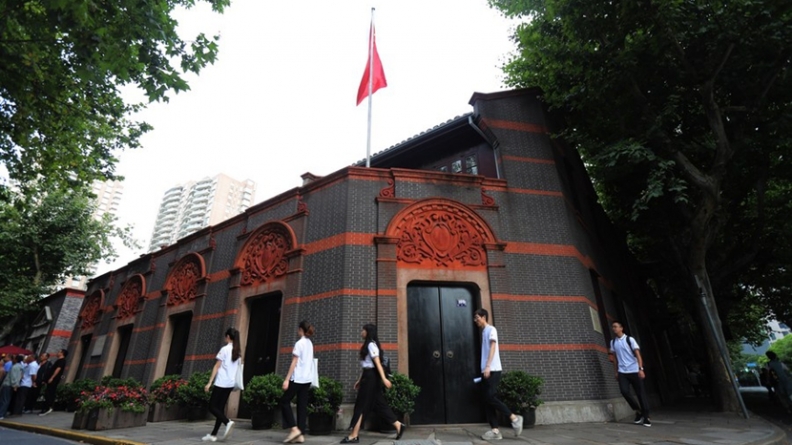
The main test for Chinese diplomacy will be whether it can move from broad principles and consultations toward a continuously functioning negotiation framework.


The Philippines and other nations with claims in the area of the South China Sea have become pawns in a U.S.-led plot to arrest China’s development.
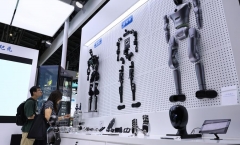
Unlike past industrial revolutions led mainly by Western countries, China advocates for a more inclusive approach centered on open technological collaboration.

Xinjiang is not a single story. It is many ethnic groups, many traditions, many landscapes and many hands at work.

U.S. supremacy casts its shadow over the hemisphere as a quasi-natural, quasi-sacred order. A religion without God.

China’s technological prowess, development model and cultural philosophy point to an AI development and governance paradigm with distinct Chinese characteristics, one that aims to deliver shared benefits.

Xinjiang’s achievement underscores a broader lesson: Reclaiming saline-affected land is rarely the result of a single technological breakthrough.

China’s industrial upgrading is not a threat to the global economy, but an important source of innovation, efficiency and growth that can help advance a more sustainable and prosperous future for all.

This shouldn’t be a time for political point-scoring or self-interested disaster imperialism tactics. It should be a time for solidarity between peoples.

For China, it is essential to recognize the complexity, protracted nature and recurring character of South China Sea disputes.
While certain Western countries respond to China’s technological advancement with unilateral chip restrictions and industrial decoupling, China remains committed to building interconnected, borderless global AI ecosystems.