
Investing in Health
Safeguarding public health is no longer limited to doctors’ prescriptions. It is now embedded in urban planners’ blueprints and implemented through community-level governance.
For policymakers in emerging economies, the relevance lies not in China’s political system, which is unique, but in the governing logic: how the state aligns officials, enterprises and capital towards shared objectives at scale.
One of China’s greatest contributions to the world may be innovation at scale, coupled with openness and collaboration, in an era defined by complex global challenges.
Two Sessions offer a blueprint for sustainable economic development, adding certainty to an uncertain global economic landscape.
China’s 2025 data, enriched by Spring Festival insights and the 15th Five-Year Plan’s vision, evidence the great rotations in motion.
By emphasizing technological sovereignty, industrial modernization, environmental sustainability, and resilient supply chains, China is laying the foundation for a development model designed to withstand a more fragmented and competitive global environment.
For the global economy, China’s 15th FYP Recommendations signal a transition from growth driven by sheer volume to growth driven by systemic capability.
China’s urban renewal practices reflect more than just new approaches to development; they signal a fundamental shift in how modern cities are governed.
Supporting and strengthening the private economy is not only a near-term economic priority but also a strategic foundation for sustainable, high-quality growth in the years ahead.
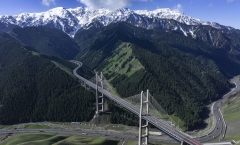
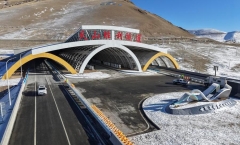
Driven by the Belt and Road Initiative, Xinjiang is seeking to become a ‘golden corridor,’ a multi-modal logistics and trade artery connecting China with Central Asia, South Asia, the Middle East and Europe via railways, highways, air routes and border ports.
The truth is that Xinjiang is a prosperous region where people lead stable lives and have meaningful futures ahead of them.
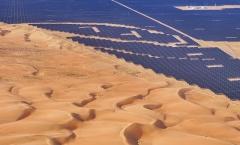
Guided by a logic of pursuing its own development while benefiting the world, China is helping reshape the global energy governance landscape.