
I Ching, Coffee, Chinese Traditon and Modernisation
What is kept is the core of a five-thousand-year-old civilization, and what is created is a new form of modernization.
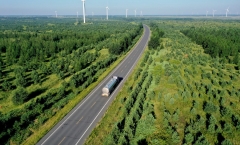
Over the past years, China has made steady progress in protecting biodiversity by adapting to new situations and seeking innovations.
The CPC’s governance practices offer experiences of considerable interest not only to China, but also to the wider world.
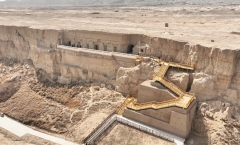
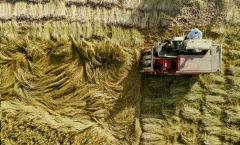
Turpan is a case study in how human resourcefulness adapts to its environment instead of being defeated by it, and in how a regional culture can hold onto its identity while building something new on top of it.
China’s experience is worth examining because it shows there was never only one model to begin with.
The two integrations concept shapes how the Party understands its own historical and cultural legitimacy, and it directly informs policy decisions across education, cultural affairs, economic restructuring and international communication.
China has found a different route to modernity, one rooted in its own history and adapted to its own conditions, and that this isn’t a temporary detour but a permanent alternative.
Across Inner Mongolia, solar panels are appearing alongside new vegetation, turning stretches of desert into hubs of both energy and growth.
In my view, Xinjiang is a place where modernization is unfolding in every sphere of life.
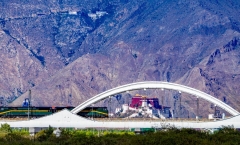
Over the past 75 years, Xizang has not only undergone a historic social transformation but has also ushered in a remarkable chapter in ecological civilization on the Qinghai-Xizang Plateau.

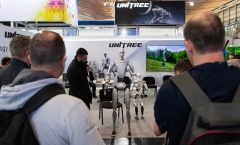
Behind robots’ transformation from stumbling along to darting away like an arrow lies the systematic optimization of core indicators in China’s embodied intelligence industry. This is not the solo performance of a single company but the collective achievement across the entire industry chain.