The Evolution of America’s Strategic Architecture
 Facebook
 Twitter
 Linkedin
 Google +

From Powell to Wolfowitz to Colby, a common thread emerges: the pursuit of stability through control.
The contemporary United States did not arrive accidentally at a political economy characterized by concentrated wealth, expansive national security commitments and increasingly confrontational relations with countries it perceives as major rivals. Rather, many of its defining features emerged through a series of intellectual and institutional transformations that have unfolded over the past half century. Three influential frameworks—the 1971 Powell Memorandum, the 1992 Wolfowitz Doctrine and its 1996 companion A Clean Break: A New Strategy for Securing the Realm, and Elbridge Colby’s 2021 book The Strategy of Denial—illustrate successive stages in that evolution.
Taken together, they reveal a broader shift in American strategic thinking: from managing domestic political competition, to shaping regional geopolitical orders, to treating the global economy itself as a theater of strategic rivalry.
Core transformations
The first phase emerged during a period of profound domestic change. Following Barry Goldwater’s overwhelming defeat in the 1964 presidential election, many conservative intellectuals and business leaders concluded that American politics was moving in a direction increasingly hostile to corporate interests. The expansion of the welfare state under Lyndon Johnson’s Great Society, combined with civil rights legislation, environmental regulation, labor activism and consumer protection initiatives, generated concern among sections of the business community that democratic politics could eventually produce sustained constraints on concentrated economic power.
These anxieties found expression in the memorandum written by Lewis Powell Jr. for the U.S. Chamber of Commerce in 1971, shortly before his appointment to the Supreme Court, where he served as a justice from January 1972 until his retirement in June 1987. Powell argued that free enterprise faced a broad cultural and political challenge emanating from universities, media institutions, organized labor, public interest groups and liberal political movements. His proposed response was not a temporary political campaign but the construction of a permanent institutional infrastructure capable of shaping public discourse, legal interpretation and policy outcomes.
Powell emphasized the importance of long-term investments in propaganda, legal advocacy, education and media engagement. Most significantly, he highlighted the judiciary as a strategic arena through which durable political and economic outcomes could be secured independently of the electorate.
Over subsequent decades, this vision became the blueprint of conservative politics. Those who backed it funded the growth of the core organizations that drive the conservative movement, such as the Heritage Foundation, the American Legislative Exchange Council and particularly the Federalist Society. The latter evolved into one of the most influential legal networks in modern American history, creating a pipeline through which conservative legal thinkers moved from academia into clerkships, regulatory agencies, appellate courts and ultimately the Supreme Court.
The cumulative effect was to create and use institutional mechanisms to shape governance beyond the immediate reach of the electorate. By the early 21st century, this ecosystem had become deeply embedded within the American political system. Decisions such as Citizens United v. Federal Election Commission, which ruled that corporate funding for independent political broadcasts cannot be limited under the First Amendment, reflected a broader legal environment in which corporate political participation gained expanded constitutional protection. Simultaneously, a growing body of scholarship suggested that organized economic interests often exercised greater influence over policy outcomes than the preferences of average citizens.
This domestic transformation coincided with a parallel evolution within American capitalism itself. Owners were replaced by professional managers, MBAs, accountants, lawyers and consultants. Financialization increasingly displaced industrial production as the dominant organizing principle of economic life. Corporate success became measured less by long-term productive capacity than by shareholder returns, stock valuations and financial performance. The result was a gradual weakening of the links between corporations, workers, communities and national industrial strategy.

The second phase extended similar assumptions into foreign policy.
The collapse of the Soviet Union left the U.S. in an unprecedented position of global primacy. In this context, the 1992 Defense Planning Guidance drafted under the supervision of Undersecretary of Defense Paul Wolfowitz articulated a vision aimed at preventing the emergence of any future peer competitor capable of challenging American predominance. Although softened before publication, the document established a strategic principle that remains today: The U.S. should actively preserve its unipolar position and discourage the rise of what it deems to be rival centers of power.
Four years later, many of the same intellectual currents appeared in A Clean Break: A New Strategy for Securing the Realm, prepared for Israeli Prime Minister Benjamin Netanyahu by a group of American neoconservative strategists led by Richard Perle.
While developed for a different audience, A Clean Break shared notable similarities with the Wolfowitz framework. Both rejected traditional balance-of-power assumptions. Both viewed American and Israeli security as dependent upon maintaining favorable regional and international power structures. Both displayed skepticism toward negotiated settlements that might constrain strategic freedom of action.
In effect, the two documents represented parallel expressions of a common worldview. The Wolfowitz Doctrine universalized American exceptionalism at the global level; A Clean Break incorporated Israel into that same strategic logic at the regional level. Security was increasingly defined not by coexistence with rivals but by the active shaping of political environments before competitors could consolidate influence.
This marked a significant departure from previous diplomatic approaches. Stability itself was no longer necessarily viewed as desirable. Under certain circumstances, the fragmentation or weakening of adversarial states could be strategically advantageous. The objective shifted from managing regional balances toward restructuring them.
After the attacks on the U.S. led by al-Qaeda on September 11, 2001, this thinking became more accepted within American policy circles. The Iraq War became its most consequential manifestation. Although publicly justified through concerns regarding terrorism and weapons of mass destruction, the intervention also reflected broader ambitions to reshape Middle Eastern geopolitics, remove hostile regimes and reinforce American strategic and economic dominance.
The consequences were far-reaching. Prolonged instability, declining confidence in international institutions and growing skepticism regarding interventionist policies contributed to a gradual erosion of American legitimacy globally. Nevertheless, the underlying assumption remains intact: Political outcomes can be engineered through sufficient application of military, economic and institutional power.
The third phase emerged in response to China’s rise.
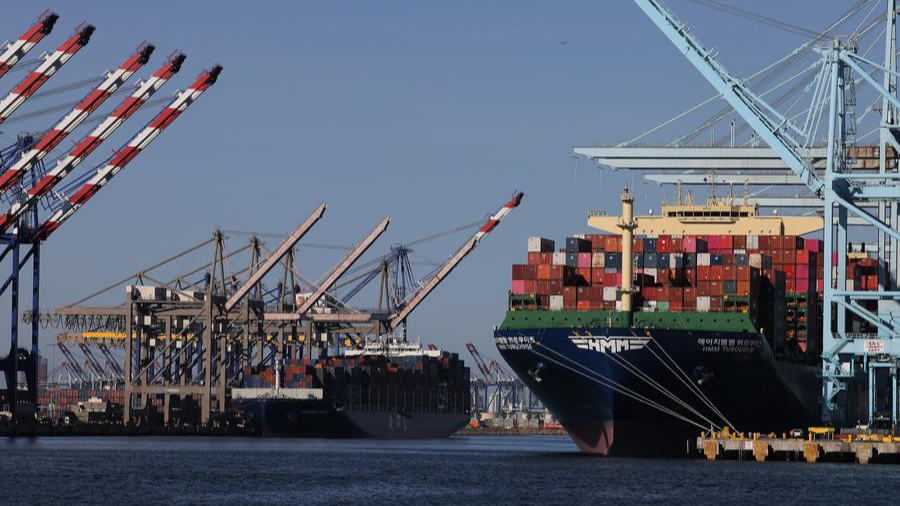
In The Strategy of Denial, published in 2021, Elbridge Colby, who serves as U.S. undersecretary of defense for policy and was deputy assistant secretary of defense for strategy and force development during Donald Trump’s first presidential term, advanced a framework that reflected both continuity and adaptation. Unlike earlier doctrines that focused primarily on military superiority, Colby argued that strategic competition with China would be determined across an integrated spectrum encompassing industrial production, technological innovation, supply chains, logistics networks, critical minerals, energy systems and financial architecture.
Under this framework, economics and security become inseparable. Semiconductor manufacturing, shipping routes, telecommunications infrastructure and industrial capacity are no longer simply components of globalization; they become instruments of geopolitical competition.
Unbroken thread of continuity
The continuity with earlier strategic traditions is striking. Powell sought to secure domestic capitalism against political challenges. Wolfowitz sought to preserve American primacy against geopolitical challengers. Colby seeks to prevent China from converting economic scale into strategic autonomy.
The mechanisms differ, but the underlying logic remains the same: Institutional coordination, long-term planning, alliance management, legal instruments and structural leverage are used to shape outcomes before rivals can fundamentally alter the balance of power.
Export controls, investment restrictions, technology bans, industrial subsidies, sanctions regimes and alliance-based supply chain restructuring all emerge from this strategic perspective. Competition becomes systemic rather than episodic.
Viewed together, these three stages reveal a deeper intellectual evolution. Each reflects a declining confidence in the self-correcting capacity of open systems.
In the Powell framework, democratic politics are seen as unreliable.
In the Wolfowitz and Clean Break frameworks, diplomacy is unreliable.
In Colby’s framework, economic interdependence is unreliable.
The preferred alternative becomes managed systems overseen by durable institutional networks capable of producing desired strategic outcomes independent of short-term political fluctuations.
This trajectory also helps explain the emergence of contemporary post-liberal and Dark Enlightenment currents, which extend aspects of this logic to their furthest conclusions. If democratic publics are viewed as inefficient and unstable, governance itself can be reconceived as a managerial exercise optimized by technocratic elites rather than mediated through traditional democratic institutions.
The long-term consequences of this evolution remain in doubt, as they express goals but not a sustainable endgame, unless an oligarchy is the goal, which would then put it at odds with the foundations of American democracy. The same processes that strengthened elite influence have weakened national cohesion. Financialization reduced industrial resilience. Permanent fundraising weakened political effectiveness. Military overextension strained resources and legitimacy. Public trust in institutions continues to steadily decline.
Meanwhile, China presents an alternative model centered on long-term planning, infrastructure development, industrial policy and strategic continuity. Whether this model ultimately proves more successful is open to debate, but China clearly has an endgame: a multipolar world based on shared values and prosperity rather than hegemony.
In terms of Washington, it is clear that Beijing increasingly interprets the U.S. not through ideological lenses but through structural ones. Chinese policymakers now view America’s central challenge as an inability to reconcile short-term political and financial incentives with long-term strategic objectives.
From Powell to Wolfowitz to Colby, a common thread emerges: the pursuit of stability through control. What began as an effort to protect domestic economic entities has evolved into a strategy for preserving geopolitical primacy and ultimately into a framework for managing global economic competition. Together, these documents illuminate not merely a series of policy choices, but an evolving architecture of power that has shaped the international order for more than half a century.
The author is a U.S. commentator and senior researcher with the Center for International Governance Innovation, Canada.