Towards a Constructive China-U.S. Relationship of Strategically Stability
 Facebook
 Twitter
 Linkedin
 Google +
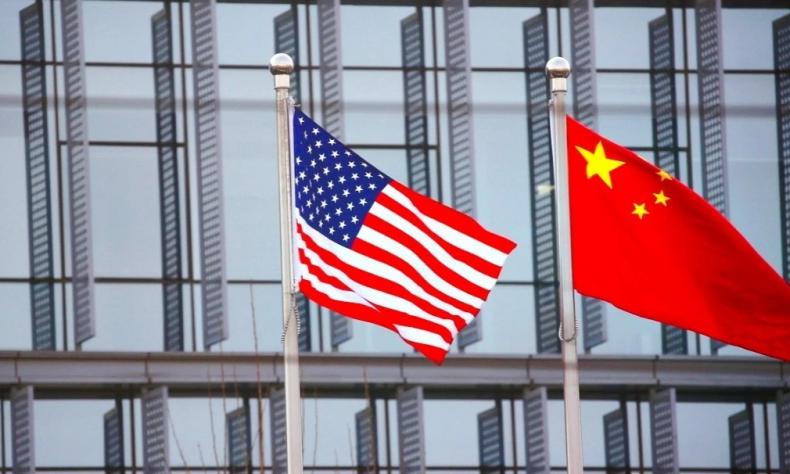
Now, constructiveness prevails as the vision of the constructive China-U.S. relationship of strategic stability has been agreed upon by the two leaders.
U.S. President Donald Trump’s China visit on May 13-15, 2026 was a resounding success and marks a milestone in the world’s most important bilateral relationship. As Chinese President Xi Jinping said, 2026 will be a “historic, landmark year” that opens up a new chapter in China-U.S. relations. The two leaders have agreed on a new vision of building a constructive China-U.S. relationship of strategic stability. It will be a far more significant step forward to ensure a lasting, fundamentally constructive relationship between the world’s two most important countries, and thus anchor the world with lasting stability.
As the ballast supporting the bilateral relationship, China and the United States have achieved positive outcomes in their latest round of economic and trade consultations, with both sides agreeing to advance pragmatic cooperation and maintain the hard-won momentum in bilateral ties, said the Chinese Ministry of Commerce (MOFCOM) on May 16.
According to MOFCOM, the two sides have reached a preliminary consensus in several areas. Both sides agreed to continue implementing the outcomes reached in previous consultations and formed a positive consensus on relevant tariff arrangements.
China and the U.S. also agreed to establish a board of trade and a board of investment to address respective concerns in trade and investment. Through the board of trade, the two sides will discuss tariff reductions on certain products and, in principle, agreed to lower tariffs on products of mutual concern on an equivalent scale, said a ministry spokesperson in a statement.
In addition, the two sides agreed to substantially advance the resolution of some non-tariff barriers and market access issues involving agricultural products, while expanding two-way trade through reciprocal tariff reduction arrangements.
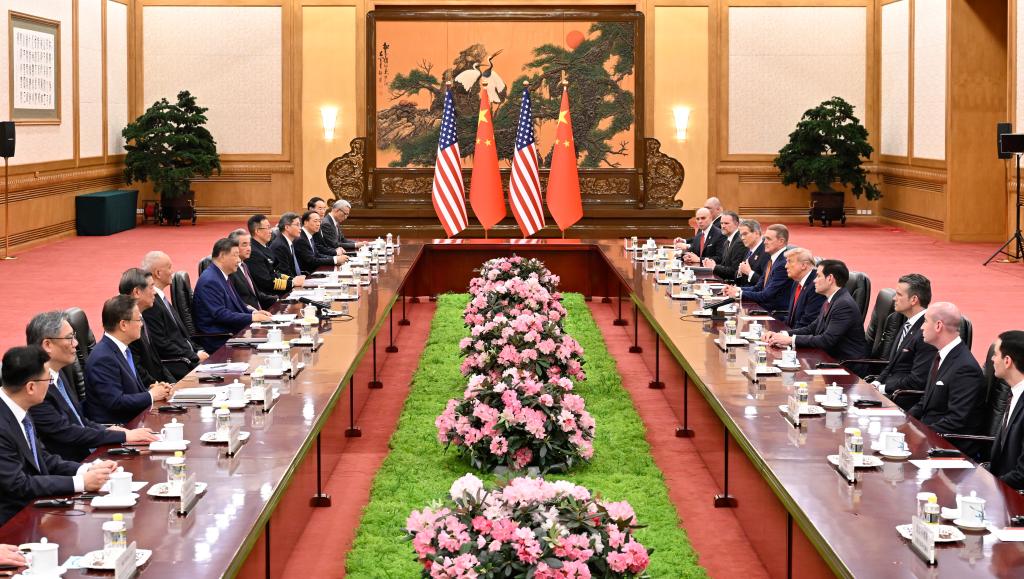
They also reached arrangements on China’s procurement of aircraft from the U.S. and arrangements for the U.S. to ensure the supply of aircraft engines and parts to China, with both sides agreeing to continue cooperation in related sectors.
The spokesperson added that both sides are still in consultation over details of the outcomes, and their economic and trade teams will work to finalize and implement the outcomes as soon as possible in line with the consensus reached by the two heads of state, injecting more certainty and stability into China-U.S. economic cooperation and the global economy.
The key tone for the new relationship is constructive. Despite major differences, both sides will address differences and competition in a constructive, or mutual benefit-oriented way, thus marking a major step forward from the previous guardrail of “non-conflict and non-confrontation”.
The constructive relationship is for stability. A stable relationship is not only essential for both China and the U.S. but also a vital stake in world peace and development.
The constructive relationship of strategic stability means long-termism, not something temporary. The strategy guides all the policies and actions for years to come.
Over the past decades, especially over the past 10 years, Washington has regarded China as a strategic competitor or rival. The latest White House National Security Report released in December 2025 defined China as a structural challenge to the American economy and national security. Now, constructiveness prevails as the vision of the constructive China-U.S. relationship of strategic stability has been agreed upon by the two leaders.
The new relationship includes four elements: a positive stability with cooperation as the mainstay; a sound stability with moderate competition; a constant stability with manageable differences; and an enduring stability with promises of peace.
Undoubtedly, a constructive, strategic and stable business relationship is also the ballast for this new relationship between China and the United States.
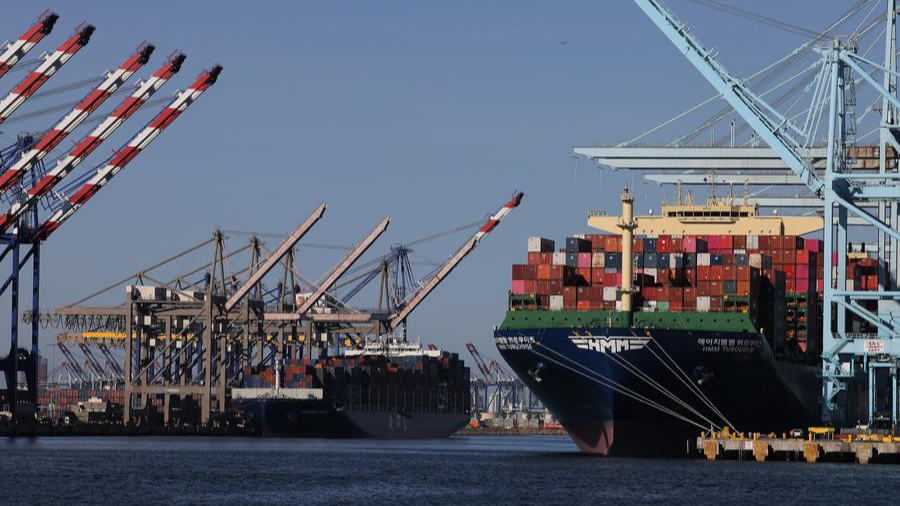
First, positive stability with cooperation as the mainstay. The key orientation of the China-U.S. trade relationship must be switched to cooperation instead of confrontation. In fact, China-U.S. trade has been mutually beneficial for decades, with the two-way trade volume hitting $688.3 billion in 2024, 275 times that in 1979 when the diplomatic tie was established. The two-way trade created millions of jobs in both countries, and the mutual investment created considerable jobs in the host country and considerable profits for the investors. However, due to the unilateral protectionist trade policy in Washington, especially the unilateral tariff, the bilateral trade has suffered seriously. According to China Customs data, the China-U.S. two-way trade volume fell by 18.7 percent in 2025 and a further 10.4 percent y-o-y during the first four months of 2026. The pressing task facing both sides is to anchor the bilateral trade on a key-tone of enhancing cooperation and push a rebound in the trade volume. The China-U.S. business talk at Seoul Airport on May 13, prior to President Trump’s Beijing visit, resulted in generally balanced results for both sides and thus laid a sound foundation for the meeting between the two leaders.
Besides the trade cooperation and rebound, the new emphasis should be an energetic push for a mutual investment rebound. All the CEOs of the 17 world business leaders, including Tim Cook of Apple, Elon Musk of Tesla and Jensen Huang of Nvidia, praised the warm welcome and support by President Xi Jinping and the Chinese government and reaffirmed their will to invest and grow in China. China, on its part, not only keeps its door wide open, but also invites the U.S. business leaders to participate in depth in China’s reform and opening up. Over the past decades, the U.S. multilateral giants have in fact participated in and contributed to China’s economic growth. They have contributed tremendous experiences and suggestions on the banking, insurance, stock and bond trading laws, thus promoting China’s reform in the relevant legal system to meet WTO standards. At the point of a new development, driven by new productive forces and AI technology, the world leading companies will also help China, and in turn, enjoy greater business opportunities for themselves.
Second, the healthy and stable competition within proper limits. Competition should be permitted and even encouraged. But the competition should follow rules, either multilateral trade rules or rules agreed upon bilaterally. Either side should not impose unilateral tariffs or other restrictions on technology and products, such as a ban on IC supply, or imports.
Thirdly, constant stability with manageable differences. Differences should be managed on an equal, mutual respect and mutual benefit basis. China and the U.S. have enough experiences of success in this regard. The 13 rounds of trade consultation during 2018-2020, and the eight rounds of trade talks during 2025-2026 all resulted in agreements. A good delivery of Trump’s China visit is the establishment of a board of trade and a board of investment, as an effective mechanism.
Fourth, lasting stability with expectable peace. A lasting peace should be ensured by solid cooperation, rules-based competition and difference management, which will bring tremendous, tangible benefits to both China and the U.S. China’s rejuvenation and MAGA could be complementary, thus anchoring the bilateral relationship on a sustainable, peaceful ballast.
The chance for both China and the U.S. to create a better future is coming now. With joint, persistent efforts by both governments and business communities, the chance will be turned into reality.
The article reflects the author‘s opinions, and not necessarily the views of China Focus.