70 Years of Friendship, Cooperation and Strategic Partnership Between China and Egypt
 Facebook
 Twitter
 Linkedin
 Google +
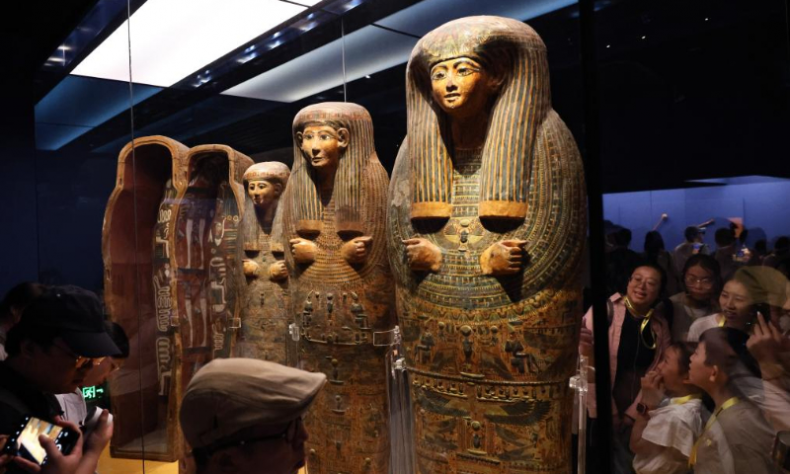
Over the past seven decades, China-Egypt relations have proven their ability to adapt to various international and regional changes while maintaining firm foundations based on mutual respect, non-interference in internal affairs, and the pursuit of common interests.
May 30, 2026, marks the 70th anniversary of the establishment of diplomatic relations between the People’s Republic of China and the Arab Republic of Egypt.
Over the course of seven decades, China-Egypt relations have evolved from mere diplomatic ties into one of the most firmly established comprehensive strategic partnerships in the developing world. Cairo has served as China’s gateway to the Arab world and Africa, while Beijing has been a supportive partner in Egypt’s development trajectory. Throughout this long journey, significant historical milestones have shaped the relationship between the two countries.
Egypt: the first Arab and African partner
On May 30, 1956, Egypt became the first Arab and African country to establish diplomatic relations with the People’s Republic of China. This occurred during a period of clear political rapprochement, and later that year, China’s supported Egypt amid the Suez Canal nationalization crisis, which was followed by the tripartite aggression against Egypt by Israel, France, and Britain. China’s support to Egypt during this aggression had a profound impact, laying the foundation for a relationship built on supporting national independence and opposing colonialism.
In 1956, the two countries signed their first cultural cooperation agreement, building on the trade agreement in 1955 that opened the door to economic exchange between the two sides.
Mutual support between China and Egypt on crucial issues
In 1971, Egypt stood with China during the historic vote at the United Nations to restore the legitimate seat of the People’s Republic of China, a move that embodied the level of trust and mutual support between the two countries on issues related to their respective national interests.
Meanwhile, China supported Egypt during one of the most pivotal moments in Egyptian history: the October War of 1973 against Israel. China declared its full support for Egypt and the Arab states in regaining the occupied territories, condemned the Israeli occupation, and supported Arab demands in international forums.
Strategic partnership
The end of the last century witnessed a qualitative leap in bilateral relations when the two countries announced the establishment of a strategic partnership in 1999, making Egypt the first Arab and African country to achieve this level of relations with China.
With growing shared interests, the bilateral relations were elevated to a comprehensive strategic partnership in 2014, paving the way for broader cooperation in investment, infrastructure, energy, and technology.
A new turning point
In 2016, the 60th anniversary of diplomatic relations coincided with Chinese President Xi Jinping’s visit to Egypt. The Belt and Road Initiative was linked to Egypt’s development vision, ushering in a new era of major projects and economic and cultural cooperation.
2024 witnessed a significant political development with the two countries formally declaring their commitment to building a community with a shared future in the new era. Egypt became the first Arab country to include this goal in a joint statement with China. That same year was also declared “Year of Egypt-China Partnership” and saw dozens of cultural and economic events.
Economic milestones
Relations between the two countries have not only in politics and diplomacy, but have also delivered remarkable economic and developmental achievements. According to the latest statistics, the trade volume between the two countries has reached record levels, exceeding $20 billion. China has maintained its position as Egypt’s top trading partner since 2013, reflecting the significant transformation in relations since their inception seventy years ago.
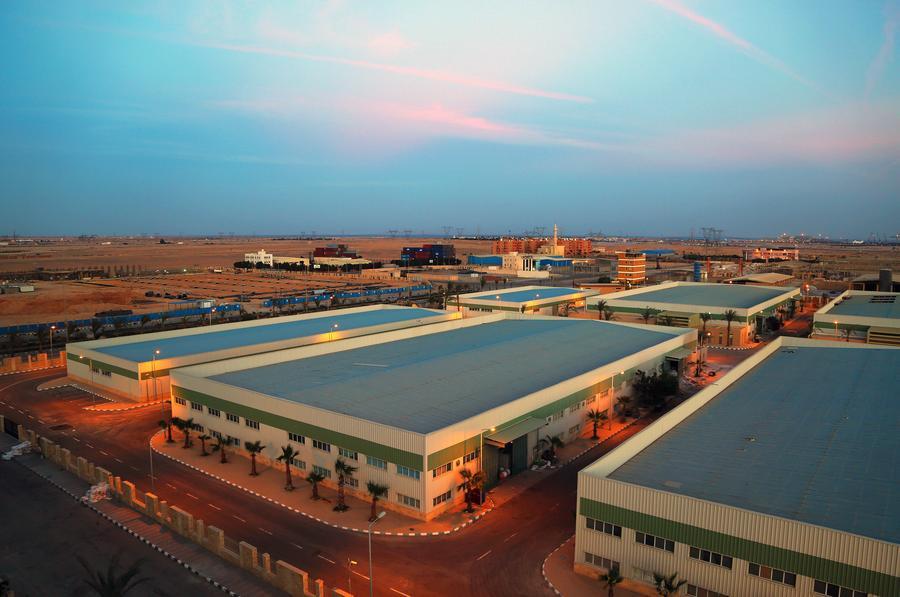
Among the most prominent Chinese projects in Egypt is the development of the TEDA Suez Economic and Trade Cooperation Zone, which has become a model for industrial cooperation between the two countries. This zone has contributed to a surge in investment in the region and has attracted more than 200 enterprises, most of which are Chinese-funded. The most representative enterprise is Jushi Fiberglass, Africa’s largest glass fiber production base, whose operation has helped Egypt rank among the world’s major glass fiber producers.
The success of this Chinese Egyptian economic zone has also attracted investments from many other countries, including Russia and European countries.
Another giant project is the Central Business District project in the New Administrative Capital, which includes the Iconic Tower, the tallest tower in Africa. Chinese companies participated in its construction in cooperation with Egyptian companies, transferring significant expertise and training workers.
China also engaged in the construction of the electric light rail project in 10th of Ramadan City and Aswan’s Kom Ombo Solar Power Plant, which is one of the largest solar power plants in Africa.
Furthermore, education and cultural cooperation has expanded. In 2020, Egypt officially incorporated Chinese into its education system, making Egypt one of the leading Arab countries offering Chinese language courses in its schools. This shows the importance of people-to-people exchanges and will advance tourism between the two countries, allowing the new Egyptian generations to know more about Chinese civilization and China’s modern development.
The last ten years represent the most prosperous and influential period in the history of Egyptian-Chinese relations since the establishment of diplomatic ties in 1956.
China’s support for Egypt’s gaining dialogue partner status within the Shanghai Cooperation Organization and securing full membership of the BRICS group underscores its willingness to enable Egypt to participate in building a new world order based on multilateralism and anti-hegemony, given that Egypt represents an important and critical country in the Middle East and Africa.
This period witnessed a qualitative leap in the political, economic, and investment cooperation between the two countries, driven by a shared vision and strong political will on the part of the Egyptian and Chinese leaderships.
Over the past seven decades, China-Egypt relations have proven their resolution and ability to adapt to various international and regional changes while maintaining firm foundations based on mutual respect, non-interference in internal affairs, and the pursuit of common interests.
The article reflects the author‘s opinions, and not necessarily the views of China Focus.