The Tokyo Trial’s Forgotten Evidence
 Facebook
 Twitter
 Linkedin
 Google +
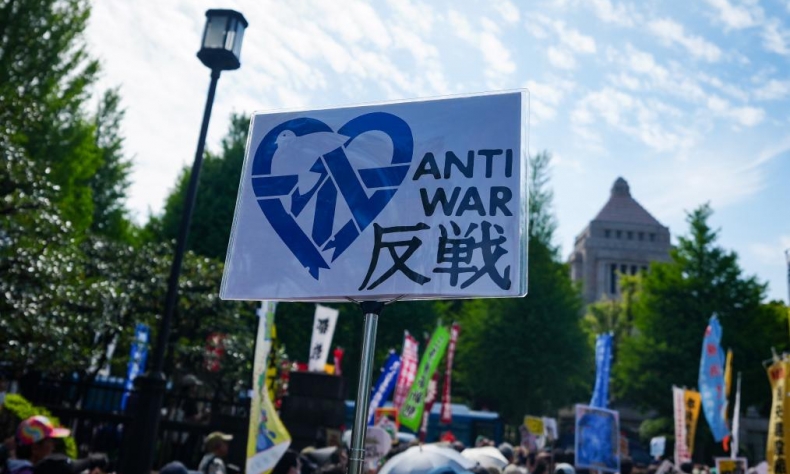
Justice is achieved not through retaliation but through accountability, evidence and historical truth.
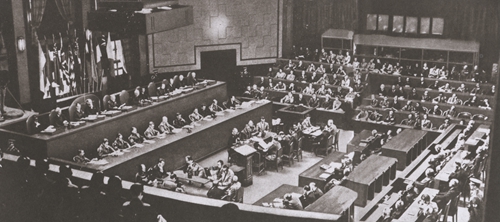
On May 3, 1946, the International Military Tribunal for the Far East convened in Tokyo to try Japanese wartime leaders for their crimes. After two and a half years of hearings, the judges from 11 countries found all 25 defendants guilty. Among them, seven war criminals, including Hideki Tojo, were sentenced to death by hanging, sixteen were sentenced to life imprisonment, and two were given fixed-term prison sentences. However, the court allowed the Japanese emperor and the architects of biological warfare to walk free. The world expected justice, but what it got was a compromised proceeding.
The destruction of evidence
This was not for lack of effort by the prosecution team. The Japanese military systematically burned records. The prosecution team was well-meaning but drowning. Morrow and Sutton’s four-week tour of China was a frantic dash—Shanghai, Peiping (Beijing), Chungking (Chongqing) and Nanking. On one single day in Nanjing, they interviewed 120 eyewitnesses. The Shanghai Evening Post and Mercury reported that the team “frequently go to bed at 3 a.m. However, records show that during the Tokyo Trial, defense attorneys repeatedly requested the international tribunal reject evidence on the grounds that it was “cumulative evidence.” Cumulative evidence is evidence considered to be redundant as it establishes the same facts as evidence previously provided.
Yet despite this destruction, the prosecution managed to locate three critical documents: U.S. Embassy telegrams describing post-occupation Nanjing, German Ambassador to China Oskar Trautmann’s secret eyewitness report to Germany’s Foreign Ministry, and the complete records of the Nanking Safety Zone and the Nanking International Relief Committee for 1937-38.
Biological and chemical warfare
Sutton investigated Japanese aircraft dropping grain and globules over Changteh (Changde, Hunan Province) in November 1941, followed immediately by a plague outbreak. He interviewed key witnesses–Dr. F.Z. King, Dr. W.E. Chen and Dr. Robert Pollitzer. He traveled to Nanjing specifically to meet Pollitzer. He documented everything.
Sutton’s final recommendation was to secure five specific witnesses and obtain an affidavit from Mrs. E.J. Banon, who had witnessed the airdrops. It is unclear whether this was ever done. The biological warfare charges never proceeded. Researchers at Japan’s Unit 731, responsible for chemical and biological warfare, including Ishii Shiro, received immunity in exchange for their data and continued work with the U.S.
Political constraints
On January 25, 1946, General Douglas MacArthur cabled Washington with a warning: prosecuting Emperor Hirohito would cause “a tremendous convulsion” and “disintegration of Japanese society,” and require “a minimum of a million troops” for an indefinite occupation.
MacArthur had initially proposed a separate U.S. military tribunal to try only Tojo Hideki and his cabinet–a narrow proceeding that would have avoided the emperor entirely. That idea was rejected. But MacArthur’s subsequent decision to shield the emperor was not merely pragmatic; it was calculated. He needed a stable Japan as a logistics hub for a planned war with the Soviet Union. The irony, the Allies prosecuted Hermann Göring, Rudolph Hess and Joachim von Ribbentrop in Germany without fear of social collapse. The difference was strategic, not practical.
Japan remains unreconciled with its wartime past. The Yasukuni Shrine controversy, the revisionist history textbooks, and the “comfort women” denialism all trace their origins to the Tokyo Trial’s limited accountability. By shielding the emperor and ending prosecutions prematurely, MacArthur ensured that Japan never experienced the kind of Vergangenheitsbewältigung–coming to terms with the past–that Germany underwent. China and the Republic of Korea live with those decisions every day.
Despite its shortcomings, the Tokyo Trial marked the first time in human history that international judicial practice systematically established aggressive war as an international crime and made clear that national leaders must bear individual criminal responsibility for launching wars of aggression. It sent a signal to the world that aggression would be punished and atrocities would be brought to justice. In doing so, it elevated peace, justice, and humanity as core values of the postwar order and laid an important legal and political foundation for the international order after World War II. The victims were neither forgotten nor reduced to cold statistics; instead, they were incorporated into an ongoing process of historical reflection and public education. For this reason, the Memorial Hall of the Victims in the Nanjing Massacre by Japanese Invaders has become a national first-class museum and the site of the National Memorial Ceremony, serving as an important place of remembrance, education and compassion.
Together, the memorial and the legacy of the Tokyo Trial reinforce the idea that justice is achieved not through retaliation but through accountability, evidence and historical truth. By remembering those who died while remaining committed to the legal process, China created its own path to transforming memory into a foundation for peace and a better future.
The author is an American commentator and senior researcher with the Center for International Governance Innovation in Canada.