World Heritage Listing Is a New Turning Point for Jingdezhen
 Facebook
 Twitter
 Linkedin
 Google +
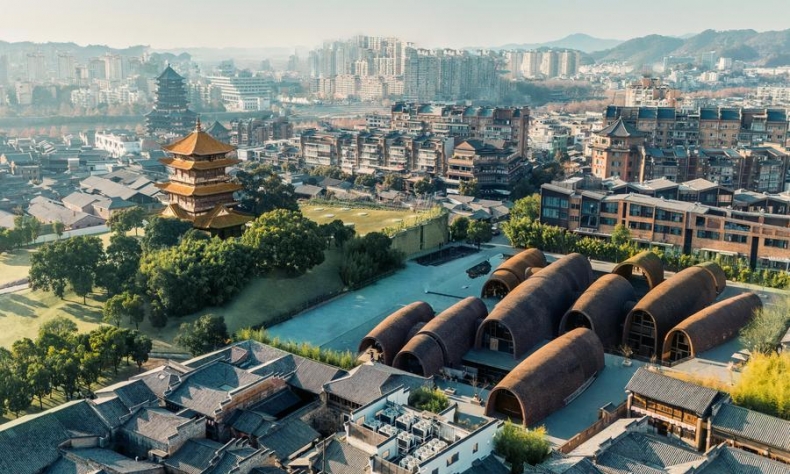
Looking ahead, porcelain must find its way back into everyday homes, weaving art into daily life and daily life into art.
For over two millennia, porcelain, the “white gold” of Jingdezhen, China’s Porcelain Capital nestled in the hilly part of Jiangxi Province, has expressed Chinese culture and artistry in delicate shades of blue and white. Now, the industrial ecosystem in the city has earned a place on the World Heritage List of the United Nations Educational, Scientific and Cultural Organization (UNESCO).
The inscription of the Jingdezhen Handicraft Porcelain Industry Sites during the 48th session of the World Heritage Committee in Busan, the Republic of Korea, on July 25, represents a new milestone. It marks the first Chinese industrial heritage site granted the World Heritage status, and also the first World Heritage site themed on porcelain. The decision also fills a long-standing gap in UNESCO’s register for ceramic heritage.
The group of porcelain industry sites honored chronicled the growth of Jingdezhen’s handcrafted porcelain industry from the 10th to the 19th centuries, a period when its artistry, technology and trade were influential around the world.
A living legacy
According to Wang Tongmao, Director of the Jingdezhen Municipal Leading Group Office for World Cultural Heritage Nomination Office, the city’s bid for UNESCO World Heritage status began back in 2015. Initially, the proposal focused only on an ancient imperial kiln complex. However, following extensive expert reviews, the scope of the application was greatly expanded.
Scholars advised that the nomination should reflect the complete industrial ecosystem of porcelain-making—tracing the story from raw material extraction to firing, distribution and global trade. By 2024, the project was officially named the “Jingdezhen Handicraft Porcelain Industry Sites.” That same year, the National Cultural Heritage Administration assembled elite national teams in archaeology, conservation and curation to carry out major excavations across Jingdezhen, uncovering several vital new heritage points.
The final nominated area encompassed 45 distinct sites spanning a total of 7,524.7 hectares—an area roughly equivalent to 10,500 standard football pitches—with a core protection zone of nearly 2,000 hectares.
“It reflects the massive industrial scale of historic Jingdezhen,” Wang told Xinhua News Agency. “Together, these five interconnected sections preserve an extraordinarily intact record of how porcelain was crafted and traded between the 10th and 19th centuries, and the heritage extends far beyond physical kiln ruins; it captures the intangible soul of the craft—from centuries-old handcrafting techniques to the complex social structures and labor systems that kept the kilns firing on an immense scale,” Wang said.
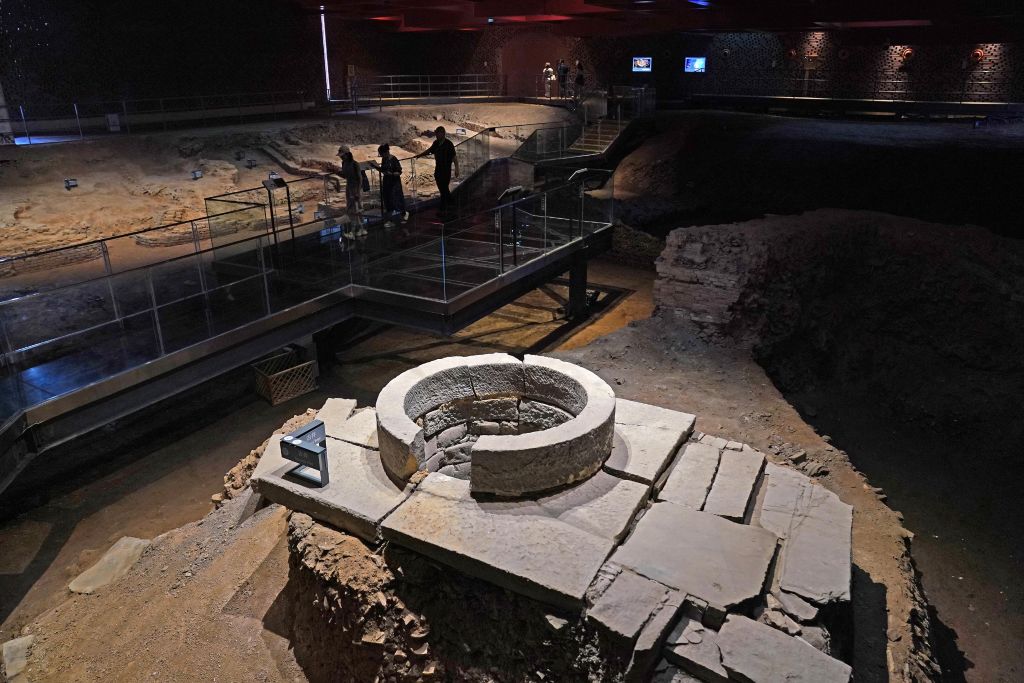
Yet these sites are far from a static museum frozen in time; they remain a living, dynamic community. Longtime residents still call the city’s historic quarters home, disused factory workshops have morphed into thriving creative districts and centuries-old ceramic techniques are proactively passed down to new generations. The city has also become a magnet for a new wave of artisans and entrepreneurs from across China and abroad, all seeking to build their own ventures here.
Meng Lingshuo, a 29-year-old from Hebei Province, launched his own ceramic brand in Jingdezhen, where he had earned a degree in ceramic art and design. Over time, his passion grew beyond physical design into a deep fascination with Jingdezhen’s folk customs and historical lineage. Today, his creative studio operates out of the Guanyinge Kiln Site, one of the 45 designated World Heritage locations.
To Meng, every handful of soil in this ancient city holds centuries of secrets. An ordinary bowl, an everyday utensil or a discarded shard carries the warmth and devotion of long-forgotten artisans. This realization inspired him to launch an educational cultural tourism initiative. Through hands-on workshops where participants piece together ancient ceramic fragments, visitors—ranging from Chinese schoolchildren to international enthusiasts—can touch history, learn ancient aesthetics, and really feel the pulse of a millennia-old craft hub.
“Now that Jingdezhen’s World Heritage bid has succeeded, the Guanyinge site is bound to draw even larger crowds,” Meng told newspaper Jiangxi Daily.
A kiln rekindled
For every craftsman rooted in the ceramic industry, the successful World Heritage inscription of Jingdezhen marks a monumental turning point. It is a catalyst for renewal, breathing new life into both local livelihoods and the creative spirit of the community.
One such artisan is 59-year-old Sun Lixin. Sun began his apprenticeship over four decades ago, mastering every phase of porcelain production, from freehand drafting and classical motif painting to clay forming and glaze composition.
As a provincially recognized inheritor of Jiangxi’s intangible cultural heritage in blue-and-white porcelain, Sun carries the torch for a brand founded by his great-grandfather, maintaining a family legacy that spans over 120 years. His studio is nestled in Taoyangli, a historic riverside quarter where centuries-old traditions meet modern creative currents, all set along a waterway connecting directly to the Yangtze River. Inside, the workshop tells its story through physical forms: Hand-painted porcelain shaped in classic silhouettes, mass-produced everyday wares adorned with decal designs and whimsically modern, cartoon-style pieces crafted by his apprentices.
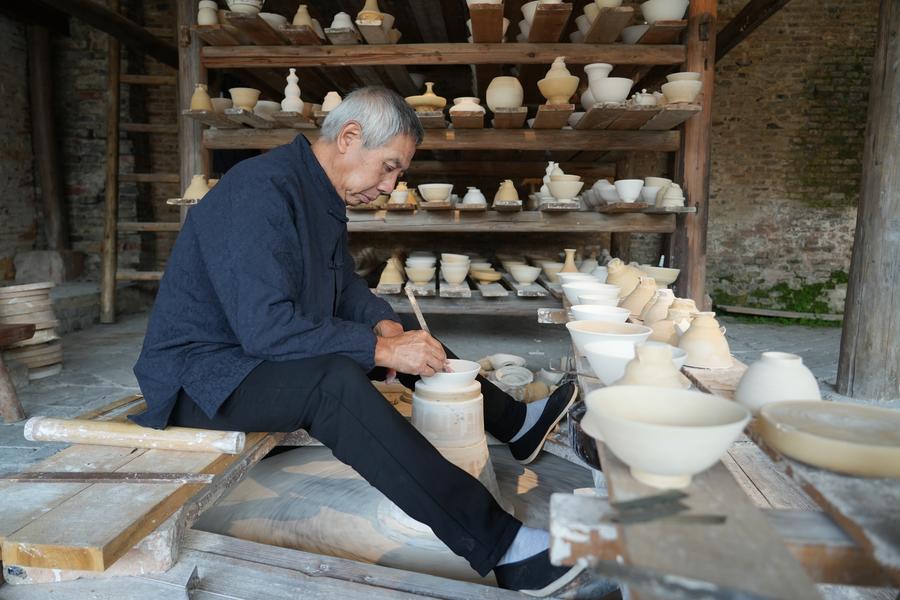
Alongside Sun, master craftsman Zhan Shaolin embodies the city’s deeply rooted tradition. Born in 1978, Zhan arrived in Jingdezhen at 16 to learn wheel-throwing. He has spent over 30 years honing his trade, becoming a national-level master craftsman and an official inheritor of the manual throwing technique. In Zhan’s eyes, the true brilliance of Jingdezhen’s handmade heritage lies in its “radical” specialization.
“The traditional 72 steps are divided among distinct specialists,” Zhan told Jiangxi Daily, referencing Tiangong Kaiwu (The Exploitation of the Works of Nature), the iconic 17th-century treatise detailing Chinese craft technology. “Each step represents a lifetime commitment for the artisan practicing it.”
For Zhan, UNESCO recognition carries profound weight for Jingdezhen’s global standing. “It isn’t just an affirmation of our local ceramic industry; it is a window for the world to witness the supreme skill of Chinese craftsmanship and the unbroken continuity of a 5,000-year-old civilization,” he said. Zhan said he believes the status will “spark deeper dialogue and exchange among artisans from kiln sites across the country and around the globe, drawing creator after creator to Jingdezhen in search of artistic discovery.”
Crucially, Zhan highlighted how World Heritage status elevates public awareness of cultural preservation. “This milestone encourages people to truly grasp the necessity of protecting our heritage. When visitors stand before artifacts and relics that have endured for centuries, they realize just how remarkable this legacy is. Protecting it becomes a natural, shared instinct,” he said.
Jingdezhen has already experienced a major tourism boom in recent years, but Zhan sees the UNESCO listing as the trigger for “another massive surge—one that will endure for the long haul.”
Even so, he approaches the future with clear-eyed realism. “Recognition brings responsibility and greater challenges,” Zhan acknowledged. “As visitors pour in, they bring fresh ideas and new perspectives. We cannot simply guard ancient techniques; we must innovate, creating pieces that resonate with modern sensibilities.”
In his vision, ceramics should never be restricted to gallery walls or collector display cases. “Looking ahead, porcelain must find its way back into everyday homes, weaving art into daily life and daily life into art,” he said.