Shenzhen Is Building the Future of China with Technology
 Facebook
 Twitter
 Linkedin
 Google +
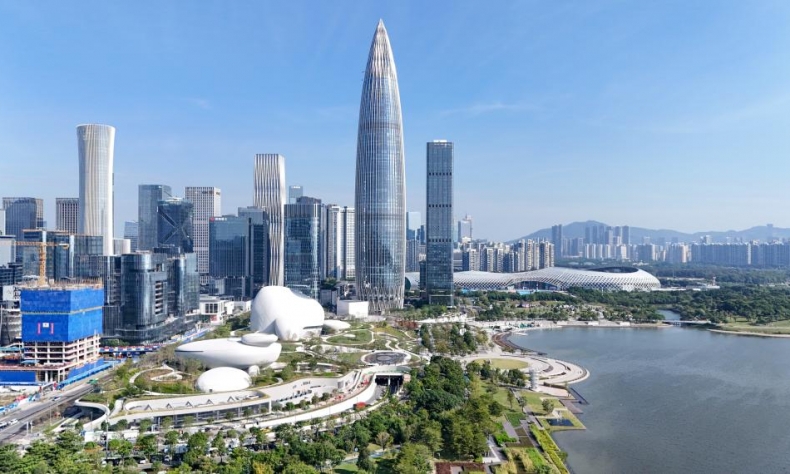
To understand Shenzhen, you need to understand how it supports everything from the world’s largest companies to the smallest businesses operating out of a single booth at Huaqiangbei.
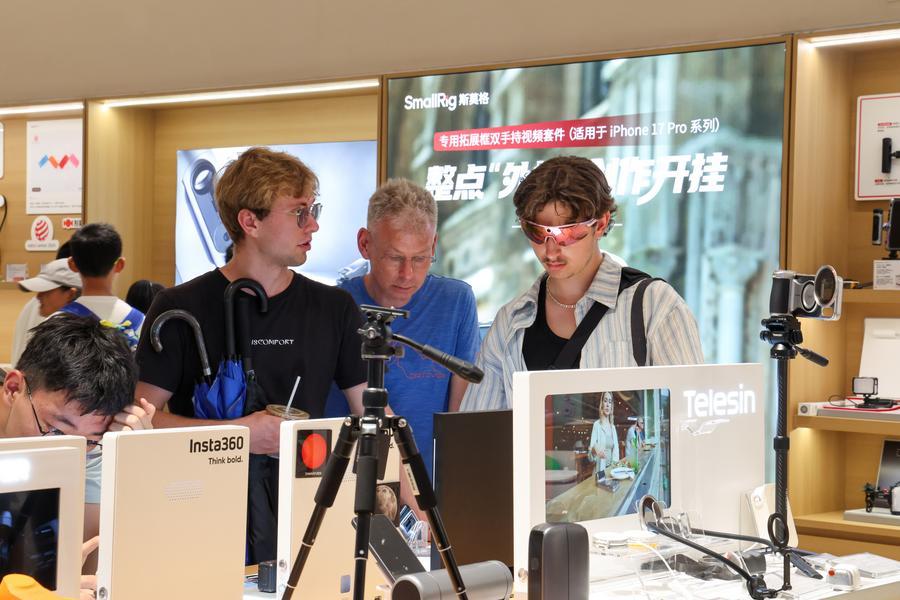
Walking into Huaqiangbei for the first time can feel disorienting, with stalls stretching in every direction and endless corridors lined with stores selling tech products that don’t even look real. Workers push hand trucks loaded with boxes through the crowds in an organized chaos. This is the scene at the world’s largest electronics market: a dense stretch of buildings in Shenzhen’s Futian district where you can buy everything from iPhones and smart vacuum cleaners to travel neck massagers and computers.
Huaqiangbei is often the first stop for anyone new to the city because it captures Shenzhen life better than anything else. The ground floors move small consumer electronics such as portable chargers, headphones, and smartwatches, while the upper floors handle real volume. A buyer looking for fifty iPhones or a hundred MacBooks to export abroad does business on the upper floors, where wholesale vendors negotiate price and can pull stock from across the Greater Bay Area for same-day delivery. Step outside the buildings and the same energy persists on the sidewalks, where boxes get loaded onto lorries, new shipments get unpacked at the curb, and foreign buyers negotiate beside local ones.
Huaqiangbei isn’t just a market. It is a working model of what Shenzhen is built to do. The same pattern that plays out between its ground floor and its upstairs wholesale booths, small transactions feeding into much larger ones, repeats itself across the entire city.
A density of companies most cities never reach
Take the subway from Huaqiangbei in any direction, and the scale of Shenzhen’s tech economy becomes obvious. The city is home to more than 25,000 of what China considers national-level high-tech enterprises. Over 4.5 million registered businesses operate within the city, spanning hardware, software, manufacturing, and finance. It’s also home to the Shenzhen Stock Exchange, the world’s 6th-largest stock exchange, with a market cap exceeding $7.35 trillion. The exchange generally prioritizes industries like tech, biotech, renewable energy, and high-growth startups. That concentration of capital in a single city means a founder with a prototype doesn’t need to fly to another city to find funding, a factory partner, or a buyer; all three exist in the same district. A product can go from sketch to sample to shelf in as little as two weeks, instead of months or even years elsewhere.
This pattern shapes careers as much as products. Entering Shenzhen’s tech industry often leads somewhere large, the way DJI, the drone maker that grew out of the same ecosystem Huaqiangbei represents in miniature, built its rise on exactly this kind of density. Smaller traders follow the same path without ever leaving the city, whether that means an export business shipping toys from Shenzhen to France or another moving Amazon products to the United States. Neither runs a large operation, yet both find everything they need inside the city limits, from manufacturers and export agents to shipping companies willing to work at any scale. Shenzhen supports a business shipping fifty units a month as readily as one shipping fifty thousand.
A government that treats growth as its central job
Shenzhen’s government has spent decades building policies to encourage tech companies to choose this city to grow. Qianhai Special Economic Zone, focusing on modern service industries, is the clearest example, a zone designed to attract investment and companies from Hong Kong onto the mainland by offering preferential tax rates and a simpler path to setting up an office. A Hong Kong firm looking to expand into mainland China can do it more easily here than anywhere else in the country because paperwork that might take months elsewhere moves faster in Qianhai. The entire free-trade zone was built around one question: how fast can the city provide what a company actually needs to get started?
The city backs its AI sector just as much. Hundreds of millions of yuan are set aside every year to help companies rent computing power and fund early-stage research. New measures that took effect this year increase market access and financial incentives for foreign firms in advanced manufacturing and innovation. Rather than spreading support evenly, the city picks specific industries, from biomedicine to next-generation communications, and pours funding and incentives into them. That directed approach means a company in one of those sectors gets real help getting started, not just a general welcome.
The government’s message is consistent: if a company is open for business, Shenzhen will welcome it. The city’s AI Industry Office has rolled out policy packages built around what robotics and AI founders say they need most, whether that’s talent, computing power, or early research funding. Shenzhen treats it as ongoing work rather than a settled plan.
The results are showing up in major numbers across the city.
Policy only matters if it produces something real. In Shenzhen, it clearly has. The city’s AI sector alone generated over $30 billion in revenue last year. New funds targeting AI hardware, software and robotics continue to launch, backed by both government and private capital. Shenzhen’s ambitions now stretch beyond software into hard tech, with the city building out large-scale computing projects aimed solely at supporting the next generation of AI.
With all of this growth, it has to land somewhere, and it lands on people. Shenzhen’s GDP per capita now ranks among the highest of major cities in China, suggesting the jobs created here pay well. Nanshan, the district home to Chinese tech giants like Tencent, Oppo, and DJI, became the first district in a Chinese city not directly under the central government to pass one trillion yuan in GDP. This economic output now exceeds some European countries. That kind of income and opportunity is exactly what keeps drawing so many people to the city.
To understand Shenzhen, you need to understand how it supports everything from the world’s largest companies to the smallest businesses operating out of a single booth at Huaqiangbei. It’s in the friends who built entire trading businesses without ever leaving the city. It’s in a drone company that grew from a small operation into a global brand without relocating to find talent, capital, or manufacturing partners. DJI is the example I know best, because I watched part of it happen from the inside. The company didn’t need to search the world for suppliers or assembly lines. Everything it needed to go from a niche drone maker to a household name already existed within an hour of its own headquarters. That is not luck, but the direct result of decades of policy designed to make exactly that kind of growth possible.
A city that means business
Shenzhen works because every part of it points in the same direction, from the market stalls and venture capital to the tax breaks and subsidies. Together, they exist to make starting and growing a business as easy as possible. But having a good job is only half the story. Because of that job, and thousands like it, people here live good lives. The streets stay clean, and the city feels modern and safe by day or night. Parks are abundant and green, situated between office towers and residential blocks in a way that makes the density feel livable, not crowded.
I spent six years living in this city, experiencing its growth firsthand and working at some of its biggest tech companies. I felt the city’s hustle and bustle, and the lessons never changed. Shenzhen doesn’t just talk about supporting innovation. It builds the infrastructure, makes the policy, clears a path, then steps back and lets people take care of the rest. That’s what makes it more than a manufacturing hub or a tech hub. It’s a city built entirely around one idea: if you’re ready to do business, Shenzhen is ready for you.