China’s Advancing Global Governance Reform Empowers Global South
 Facebook
 Twitter
 Linkedin
 Google +
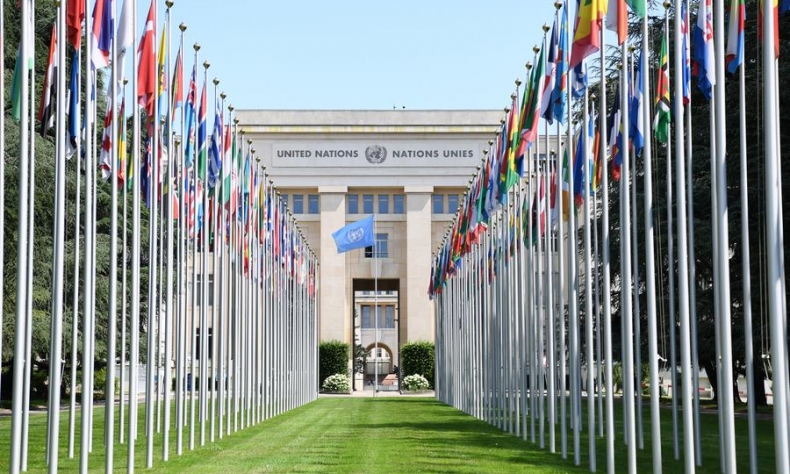
The tangible impact of China’s efforts to push global governance reform is not one-way assistance, but rather two-way empowerment through trade and the cultivation of long-term development capacity.
The global governance system is currently undergoing major changes as the world navigates an era of turbulence and transformation. This manifests as a rise in protectionism, restructuring of the international economic and trade order, and the collective rise of the Global South.
Against this backdrop, how is China advancing global governance reform? What role will the Global South play in reshaping international law? And what insights can Chinese modernization offer other developing countries?
To help answer these and other related questions, Wang Xuekun, president of the Chinese Academy of International Trade and Economic Cooperation under the Ministry of Commerce, shared his insights with China Today in an exclusive interview.
China Today: As the international landscape undergoes profound changes and protectionism continues to rise, what are the defining features of China’s principles and actions in global governance?
Wang Xuekun: The international landscape is indeed undergoing profound transformation, and global governance is facing increasingly complex risks and challenges. In this context, I believe China’s principles and actions in global governance can be summarized in the following key points: true multilateralism, extensive consultation, joint contribution and shared benefits, and an action-oriented approach.
The multilateral mechanism is essential to addressing global challenges. No country can achieve development in isolation from the global governance system, nor can any country secure its future without international cooperation. Through concrete actions, China has remained firmly committed to safeguarding the international system, with the UN at its core and the international order underpinned by international law. China’s share of assessed contributions to the UN budget has increased from less than one percent in 2000 to more than 20 percent in 2025, making it the second-largest contributor to the UN’s regular budget.
Global governance is not the prerogative of a few countries; it is the shared responsibility of all countries. Central to China’s Global Governance Initiative (GGI) is the belief that international affairs should be discussed and managed through consultation by all countries, and that the future of the world should be decided by all countries. This initiative has won support from nearly 160 countries and international organizations, with more than 60 countries joining the Group of Friends of Global Governance [a valuable UN platform, initiated by China, for open and frank multilateral conversations]. This demonstrates that China’s vision resonates with the shared aspirations of the international community.
Global governance finds its source of vitality in practice, hinges on action, and is verified by its effectiveness. No matter how compelling a vision may seem to be, it remains empty rhetoric if it is not translated into concrete actions. Under the framework of the Global Development Initiative, China has carried out more than 1,800 practical cooperation projects and mobilized over US $23 billion in various development funds. China has increased the total of the Global Development and South-South Cooperation Fund to US $4 billion. In addition, over the next five years, China will implement another 2,000 “small and beautiful” livelihood projects in other developing countries.
Therefore, China’s principles and actions carry important practical significance in a time of global protectionism. In my opinion, they can be summarized as: uniting the Global South, providing public goods, and fostering a multipolar world.
At a time when Western development assistance is experiencing a historic decline, China continues to increase its support [to the Global South]. The outline of China’s 15th Five-Year Plan (2026-2030) explicitly calls for deepening solidarity and cooperation with other developing countries, supporting the Global South in pursuing collective strength through unity, providing more global public goods, and increasing foreign assistance. This sends a clear message to the world that China is a stable anchor and a source of certainty for the Global South.
For a long time, global governance has been dominated by a small number of developed countries, and their development path has been narrowly defined by a single narrative. China has consistently supported developing countries, advocating for their increased representation and greater say in international institutions, as well as working to secure a more equal status and greater autonomy for the Global South. Meanwhile, through initiatives such as granting zero-tariff treatment and advancing high-quality Belt and Road cooperation, China has provided public goods that create broad platforms benefiting all parties. These efforts promote inclusive and universally beneficial economic globalization, enabling countries around the world to share development opportunities.
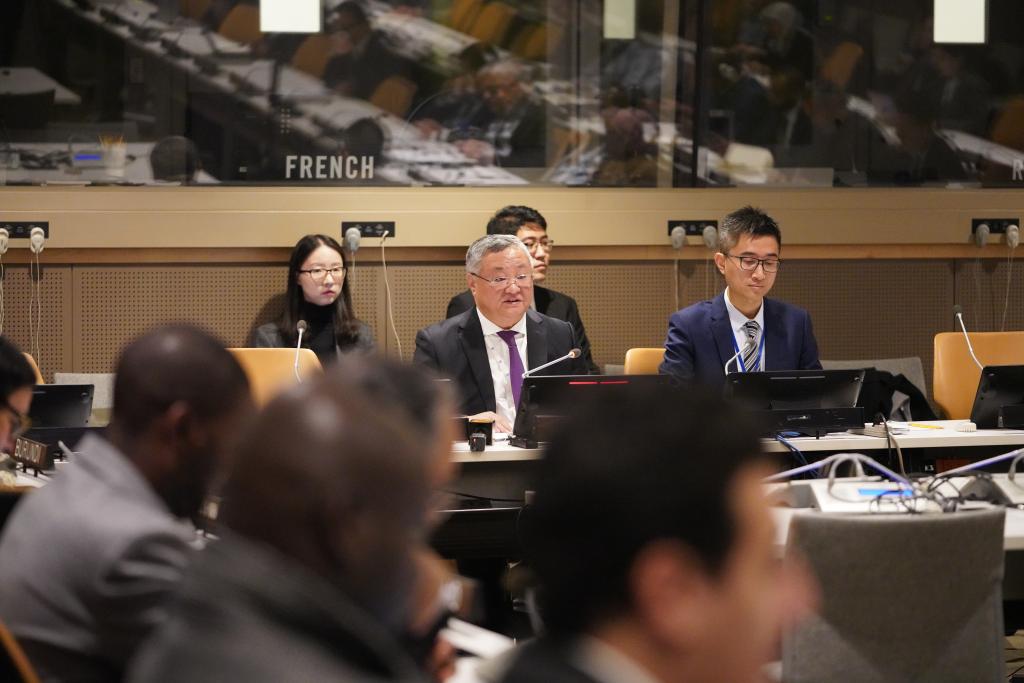
China Today: The collective rise of the Global South is profoundly reshaping the international economic and trade landscape. What role should Global South countries play in advancing the reform of the global governance system, particularly in reshaping international economic and trade regulations?
Wang Xuekun: Measured by purchasing power parity (PPP), the Global South now accounts for more than 60 percent of the global economy and contributes around 80 percent of global economic growth. Therefore, I believe the Global South should work together to transform its growing economic clout into greater institutional influence in global governance. In particular, it should play a more proactive role in three key areas.
First, at the institutional level, the Global South should work to make international economic and trade regulations more representative and inclusive. Under the current international economic and trade system, the voices of developing countries remain inadequately represented. The Global South should strengthen solidarity and push for governance reforms at institutions such as the IMF and the World Bank, so that their governance structures better reflect the realities of today’s world economy. The historic expansion of BRICS and the Shanghai Cooperation Organization becoming the world’s largest regional organization in terms of geographic coverage demonstrate that Global South countries are capable of building their own platforms for cooperation and using them as leverage to advance reform of the global governance system.
Second, at the agenda-setting level, the Global South should return development to the center of the international economic and trade agenda. Today, development issues have been significantly marginalized, while the concept of national security has been stretched thin in foreign assistance, and economic and trade relations are increasingly politicized. The Global South should speak with one voice against the instrumentalization and weaponization of economic and trade issues, and oppose decoupling and disrupting industrial and supply chains. It should reaffirm that development remains the master key to solving all problems and promote the establishment of fairer and more equitable international trade and investment regulations, so that the benefits of economic globalization are shared more broadly and more fairly among all countries and their peoples.
Third, at the practical level, the Global South should explore new pathways for the provision of regulations through South-South cooperation. Global South countries are at similar stages of development and share many common interests, making their experiences more relevant and adaptable to one another. The initiatives proposed by China, including the Global Development Initiative, the Global Security Initiative, the Global Civilization Initiative, the Global Governance Initiative, and the Belt and Road Initiative, constitute important public goods for the Global South. They offer a new model for international economic and trade cooperation that does not attach political conditions or interfere in other countries’ internal affairs. These initiatives are fostering a new set of cooperative norms different from the traditional Western assistance model, thereby creating new possibilities for reforming the global governance system.
China Today: What lessons can China’s experience in governance offer to Global South countries as they pursue modernization?
Wang Xuekun: China accomplished a leapfrog industrialization process within a few decades, forging a development path suited to its own national conditions. In doing so, China has demonstrated to the world that modernization is not a one-size-fits-all model. Every country can find a path to modernization that is aligned with its own realities. For Global South countries, I believe China’s experience offers two particularly important lessons.
First, the Global South should pursue strategic autonomy by maintaining control over development initiatives. Since launching its first Five-Year Plan in 1953, China has pursued one long-term blueprint after another, ensuring policy continuity while integrating external resources into its own development strategy, rather than allowing foreign assistance to dictate its priorities. Many Global South countries face challenges such as fragmented assistance and accompanying conditions. China’s experience shows that true development requires a medium- and long-term strategy that is tailored to a country’s own national conditions, enabling all resources to serve national development goals.
Second, the Global South should pursue reform and opening up by integrating into the global economy through institutional opening up and driving development through openness. China’s development has never been achieved through a closed door. Instead, it has actively aligned itself with international rules, expanded market access, and found its place in the global division of labor, while ensuring that the benefits of openness are shared with more developing countries. From the establishment of special economic zones and accession to the World Trade Organization, to the creation of 23 pilot free trade zones and the island-wide special customs operation of the Hainan Free Trade Port, China has steadily built a first-class business environment through gradual, experimental institutional innovation. For Global South countries, this demonstrates that opening up does not mean passively accepting externally imposed rules; rather, it means actively participating in shaping those rules and pursuing common development through mutually beneficial cooperation.
Of course, drawing inspiration does not mean copying China’s model. China has never believed that its development path should be imposed on other countries. On the contrary, it walks side by side with other Global South countries in pursuing modernization.
China Today: Based on your research and observations, what tangible changes has China’s push for global governance reform brought to the Global South countries? Could you share one or two examples?
Wang Xuekun: The tangible impact of China’s efforts to push global governance reform is not one-way assistance, but rather two-way empowerment through trade and the cultivation of long-term development capacity.
One example of this is the Regional Comprehensive Economic Partnership (RCEP), which has transformed regional economic integration from a paper agreement into tangible institutional benefits. In the more than four years since RCEP took effect, intra-regional trade has grown from US $4.9 trillion to US $6.1 trillion, up 24 percent, while the RCEP countrie’s share of global trade rose from 27.2 percent to 29.1 percent. More importantly, RCEP has significantly deepened the integration of regional industrial chains. Its rules of origin allow the value of a product to be accumulated across all 15 member economies, greatly expanding businesses’ flexibility to optimize their supply chain footprint.
Another example is China’s zero-tariff policy for African countries, which has enabled tangible economic benefits. Beginning in December 2024, China took the lead in granting zero tariffs on 100 percent of tariff lines to 33 African countries. In May of this year, the policy was expanded to 53 African countries with diplomatic relations with China, making China the world’s first major economy to unilaterally grant full zero-tariff treatment to all African countries with which it has diplomatic ties, as well as to all least developed countries maintaining diplomatic relations with China. The results are already evident. China-Africa trade reached US $348.1 billion in 2025, up 17.7 percent year on year and marking a fifth consecutive record high. In the first quarter of 2026, China’s imports from Africa increased by 14.6 percent compared with the same period last year.
China Today: Looking ahead, how can China continue to play a constructive role in promoting solidarity and cooperation among Global South countries and advancing reform of the global governance system?
Wang Xuekun: Looking into the future, emerging fields like artificial intelligence, digital governance, climate change, and the green transition are reshaping the landscape of global governance. The absence of established rules and governance mechanisms in these areas presents not only challenges but also historic opportunities for the Global South. China can therefore play a constructive role on two levels.
First, in the digital field, China can help provide Global South solutions, enabling developing countries to become co-creators of international rules. China has proposed the Global AI Governance Initiative, advocating a people-centered approach and adherence to the principle of AI for good. It has launched a group of friends for international cooperation on AI capacity building to help build the “Digital Global South” brand and bridge the global intelligence divide. Meanwhile, negotiations on Version 3.0 China-ASEAN Free Trade Area have been successfully concluded, incorporating the digital economy and supply chain connectivity into the institutional framework for the first time. Together with the RCEP, it provides a more comprehensive and sophisticated framework for regional digital economy and trade regulations.
Second, China can use the green transition as a bridge to significantly strengthen the Global South’s capacity for sustainable development. China remains firmly committed to the Paris Agreement and has helped developing countries enhance their capacity to address climate change through South-South cooperation. It has signed 55 cooperation agreements with 43 developing countries and implemented more than 300 capacity-building programs. Going forward, China will continue to expand cooperation in clean energy, ecological conservation, and green industries under the Green Belt and Road Initiative, helping Global South countries keep pace with the global green transition and seize the opportunity to leap ahead.