What Role Does China Play in Resolving the Ukraine Crisis?
 Facebook
 Twitter
 Linkedin
 Google +

The main test for Chinese diplomacy will be whether it can move from broad principles and consultations toward a continuously functioning negotiation framework.
In June, Sun Lei, Deputy Permanent Representative of China to the United Nations, stated that the diplomatic process over the Ukraine-Russia conflict had reached a deadlock, calling on all parties to return to dialogue. Since 2022, Beijing has consistently advocated an approach under which any future peace process should include not only Russia and Ukraine, but also major Western countries and nations of the Global South. But can inclusive diplomacy become the foundation for genuine negotiations?
From “12 Points” to “Friends for Peace”
Since the beginning of the conflict in early 2022, Beijing has consistently called for a peaceful settlement, maintaining its position as objective and impartial.
In March that year, China outlined four basic principles guiding its approach, which were further developed in February 2023 in a document titled China’s Position on the Political Settlement of the Ukraine Crisis, referred to by domestic media as the “12-Point Peace Plan.” The document brought together Beijing’s main proposals into a coherent framework for the first time. Subsequently, the 12 Points became one of the starting points of China’s inclusive diplomacy, aimed at building a broad circle of participants for a future peace process.
In March 2024, Beijing separately put forward three conditions for holding a future international peace conference: recognition of the conference by both Russia and Ukraine, equal participation of all parties and fair discussion of all proposals for a settlement.
In May that same year, China and Brazil jointly released the Consensus on Political Settlement of the Ukraine Crisis, the first separate bilateral document between China and a major country of the Global South fully dedicated to this issue. The document created a precedent in which a major country of the Global South became a co-author of a written approach to the future peace process.
In June 2024, China demonstrated in practice its commitment to the conditions it had previously outlined by declining to participate in the peace summit in Switzerland. The event sought to establish a political framework for the future peace process. However, in Beijing’s assessment, it failed to meet all three conditions at the same time.
The next important step came in September 2024, with the establishment of the “Friends of Peace” group on the sidelines of the UN General Assembly. Representatives from 17 Global South countries participated in the meeting, while 13 countries signed a joint communiqué. The format did not become a full-fledged negotiation mechanism and did not provide a clear roadmap or system of guarantees. However, it institutionalized coordination among Global South countries around the idea of inclusive diplomacy and created an additional channel for discussing a political settlement beyond traditional Western formats.
After 2024, Beijing continued to demonstrate its commitment to dialogue, equal participation of all parties and expanded international diplomatic efforts at various levels.
A rational approach
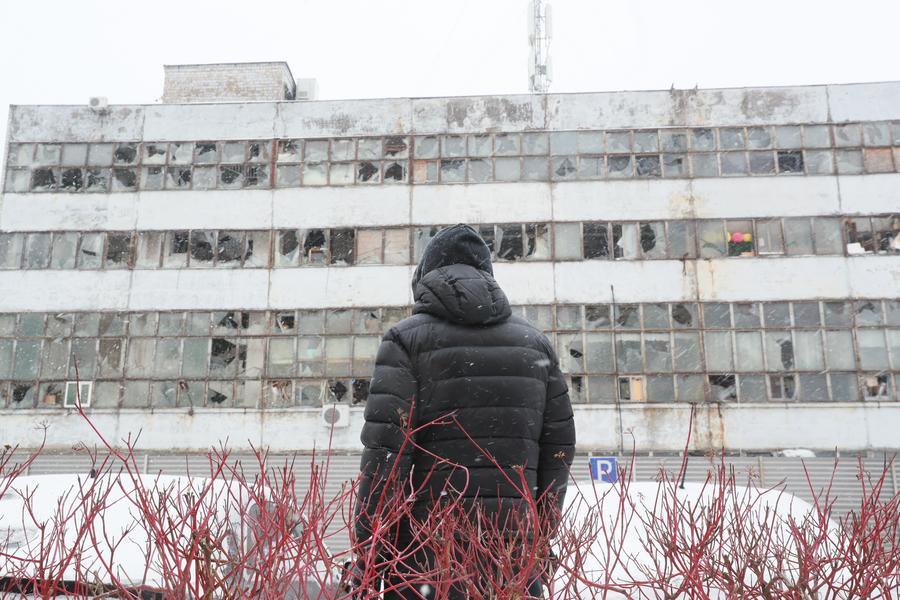
It is worth noting that Beijing’s interest in a peaceful settlement is driven not only by the values of peaceful coexistence, but also by the pragmatic approach to international relations that has long characterized Chinese diplomacy.
In 2025, China’s trade volume reached $228.1 billion with Russia, $828.1 billion with the European Union and $559.7 billion with the United States. A substantial reduction, let alone the loss of any one of these economic relationships, would pose a serious challenge for Beijing. Therefore, as a country that has spent decades developing an export-oriented economy, China has a clear interest in maintaining stable relations with Moscow, Brussels and Washington simultaneously as much as possible.
The conflict, however, inevitably increases sanctions risks, intensifies political contradictions and contributes to the fragmentation of the global economy. For Beijing, therefore, a peaceful settlement is not only a matter of principle, but also a necessary condition for maintaining economic stability and access to external markets.
The consistency of China’s diplomatic approach also has a reputational dimension. By not presenting itself as the sole mediator and not promising quick results, Beijing has gradually accumulated diplomatic capital and strengthened its position as a country capable of maintaining communication with all major parties involved. The issue is not so much about seeking to end the conflict single-handedly, but about shaping a negotiation architecture in which China’s role would be difficult to bypass.
This approach has become particularly visible against the backdrop of Washington’s more fluctuating strategy. The U.S. administration has set short deadlines for reaching an agreement, considered scaling back mediation efforts, and at the same time returned to issuing threats. China’s approach appears more consistent and methodical. This demonstrates a willingness to engage in a long-term process in which maintaining channels of communication and gradually seeking compromises take precedence over high-profile promises.
China, apparently, does not seek to assume the role of the sole mediator. Beijing emphasizes that it is not a party to the conflict and does not have the authority to determine its outcome, limiting its role to facilitating dialogue and negotiations. Such an approach reduces the reputational risks associated with possible failure while allowing China to claim a role as one of the key architects of a future negotiation process.
Not necessarily an agreement
However, not all participants in the process view China as an equally distant actor. In the context of a future peace process, China-Russia relations should also be viewed from another perspective. Close and trusting ties with Moscow provide Beijing with direct access to the Russian leadership. This diplomatic resource would make facilitating future negotiations more realistic.
What is particularly important is that the current level of China-Russia cooperation was established long before the Ukraine conflict. In 2019, Beijing and Moscow established “a comprehensive strategic partnership of coordination for a new era,” which researchers regard as the highest level in the informal hierarchy of China’s bilateral relations. However, the modern political foundation of these relations began to take shape as early as the 1980s. Therefore, the current closeness between Moscow and Beijing should be understood not as a consequence of the crisis or a temporary alignment created by it, but as the result of decades of gradual and consistent development of bilateral relations.
Beijing simultaneously emphasizes respect for the territorial integrity of states and the need to take into account the legitimate security interests of all countries. Translated from diplomatic language, China’s position can be reduced to a simple appeal: “Let’s start the conversation first.”
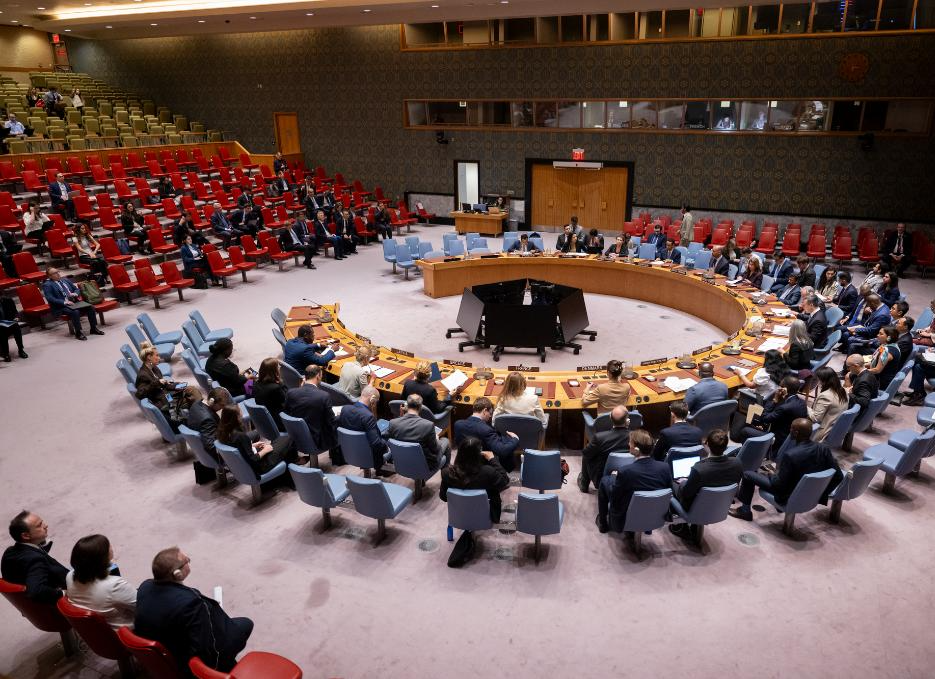
Beijing’s assumption is that it is impossible to formulate a solution acceptable to all sides in advance while the parties are not prepared to discuss it at the same table. Therefore, in this logic, initiating negotiations is more important than reaching prior agreement on the final outcome.
China has so far not proposed a complete formula for a settlement, nor has it transformed its initiatives into a permanent mechanism. However, it does continue to defend a principle without which a lasting agreement would be difficult to achieve: The peace process should include both sides of the conflict, major Western countries and nations of the Global South.
A wider negotiating table, however, does not guarantee an agreement. Yet without such inclusiveness, a sustainable peace is unlikely to emerge.
Therefore, the main test for Chinese diplomacy will be whether it can move from broad principles and consultations toward a continuously functioning negotiation framework. China’s ability to transform inclusiveness from a diplomatic principle into a practical mechanism will ultimately determine its real role in the future settlements.
The author holds a Ph.D in political science and is a research fellow at the Asian Research Center, Far Eastern Federal University, Russia.