The New Vanguard: How China’s “Latest Trio” Steps Up
 Facebook
 Twitter
 Linkedin
 Google +
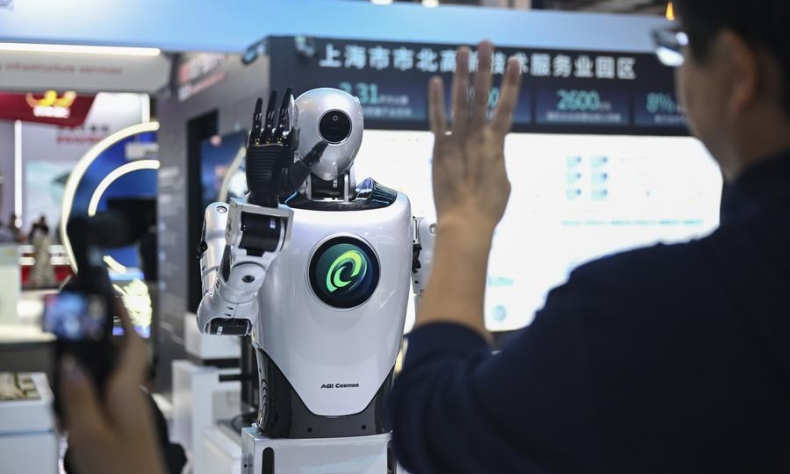
The Latest Trio represents not just a change in export composition, but a fundamental repositioning within global value chains.
On July 14, 2026, the General Administration of Customs announced a figure that drew worldwide attention: China’s total goods imports and exports reached RMB 25.47 trillion in the first half of 2026, up 16.9 percent year-on-year – the first time the H1 figure has ever surpassed RMB 25 trillion, cementing China’s position as the world’s largest trading nation. Yet the headline number told only part of the story. Beneath the aggregate data lay a structural shift so profound that it signals a new phase in China’s economic engagement with the world: the ascent of the “Latest Trio” – artificial intelligence, robotics, and innovative drugs.
In H1 2026, China’s high-tech product exports surged 39 percent to RMB 3.26 trillion. Within this surge, the Latest Trio emerged as the defining narrative of China’s new export era.
As a commentary in People’s Daily put it, the real excitement lies in the “newness” within the trade structure. This is not merely an incremental upgrade – it signals a marked shift of China from a supplier of goods to a provider of technology, intellectual property, standards, and solutions.
The Latest Trio in action
In artificial intelligence, Chinese large-language models have demonstrated remarkable global traction. According to data from OpenRouter, a multi-model aggregation platform that tracks real-world developer usage, all five of the most widely used AI models on its recent weekly ranking are Chinese products. The top-ranked model, Xiaomi’s MiMo-V2.5, recorded 10.5 trillion tokens in weekly calls – a sixfold increase in just two months. On Hugging Face, the world’s largest AI open-source community, China’s open-source models lead in cumulative downloads, with Alibaba’s Qwen series alone surpassing 1 billion downloads to top the platform. The impact extends well beyond downloads – U.S. investment data shows that up to 80 per cent of American AI startups now use Chinese open-source models in their funding presentations, and more than 200 derivative models emerge daily based on Chinese foundational models. What makes this particularly significant is that Chinese open-source models are gaining traction increasingly through market competition rather than policy preference alone – developers worldwide are choosing Chinese models for their superior performance, cost-effectiveness, and ease of local deployment. The ecosystem effect is powerful: as more developers build on Chinese platforms, the models improve further, creating a virtuous cycle that reinforces China’s position in the global AI landscape.
Robotics is rapidly transitioning from factory floors to operating theaters. China became a net exporter of industrial robots for the first time in 2025. In H1 2026, industrial robot exports reached RMB 6.29 billion, up 18.6 percent, shipping to 141 countries and regions, fueled by competitive pricing, advanced technology, and surging global demand for factory automation. The sophistication of this export push is striking: Surgical robot exports surged more than threefold, reaching RMB 480 million in the first half of the year, expanding from 23 to 49 destination markets. Meanwhile, combined exports of domestic cleaning robots and intelligent bionic robots totalled RMB 18.09 billion. Behind these numbers lies a deeper advantage – Chinese robotics systems have been deployed across more than 70 major industrial sectors domestically, building an operational dataset that cannot be quickly replicated. When a robotics company in Suzhou’s Wuzhong District shortens its project cycle from nine to six months, it is because more than 1,600 upstream and downstream enterprises – radar, sensors, core motors – have clustered within a 10-kilometer supply chain radius. This is not just hardware exports; it is the export of integrated, battle-tested automation solutions.

Perhaps the most striking transformation is in pharmaceuticals. According to the National Medical Products Administration, China approved 76 innovative drugs in 2025, including a record 65 domestically developed Class-1 medicines – surpassing the 48 approved in 2024. The real story, however, lies in out-licensing. In the first half of 2026, Chinese innovative drug developers announced 81 out-licensing deals with a combined headline value of approximately US $110 billion – already 80 percent of the full-year 2025 total. These deals cover 10 therapeutic areas and involve partners from 20 countries and regions. Chinese pharmaceutical firms occupied eight of the top 10 spots in global pharmaceutical licensing transactions in H1 2026. Major deals illustrate the trend: CSPC Pharmaceutical Group signed a cooperation with AstraZeneca worth up to US $18.5 billion for obesity and type 2 diabetes drugs. Innovent Biologics reached a deal with Pfizer worth up to US $10.5 billion covering 12 early-stage oncology projects. These are not generics or contract manufacturing – they are original discoveries that global pharmaceutical giants are now licensing. The shift is structural: Chinese biotech is no longer a source of low-cost manufacturing but a partner in early-stage drug discovery and co-development.
The logic of evolution
To understand the significance of the Latest Trio, it’s necessary to follow the trajectory of China’s export evolution.
In the decade after China’s WTO accession, those labor-intensive goods, mainly clothing, furniture, and home appliances (known as the Old Trio), dominated exports, integrating China into the global economy through low-cost manufacturing. The competitive advantage was labor arbitrage, the ability to produce known products more cheaply than anywhere else.
Around 2023, exports of the New Trio (electric vehicles, lithium batteries, solar panels) reached RMB 1.06 trillion, up 29.9 percent year-on-year, marking China’s emergence as a green technology powerhouse. Here, the competitive advantage shifted from labor to integrated supply chains and manufacturing scale. China did not just assemble EVs; it built the entire battery supply chain, dominates polysilicon production – accounting for over 94 percent of global capacity – and has achieved a degree of vertical integration unmatched by any other country.
Today, in the Latest Trio era, the competitive advantage has transformed once again – from factory management to supply chain coordination, and from coordination to original research and development. Each phase built deliberately on the previous one. The massive manufacturing base of the Old Trio era provided the capital, the engineering talent pool, and the domestic market scale that made the New Trio possible. The New Trio’s supply chain mastery and manufacturing infrastructure, in turn, created the industrial ecosystem – the 1,600-enterprise robotics cluster in Suzhou, the AI compute supply chain, and the clinical trial networks – that now powers the Latest Trio.
The transition required new capabilities at each stage. Moving from the Old to the New Trio demanded proficiency in battery chemistry, power electronics, and green manufacturing at scale. Moving from the New to the Latest Trio also required something deeper: original IP creation, frontier research capacity, and the ability to set technical standards. This is why the Latest Trio represents not just a change in export composition, but a fundamental repositioning within global value chains.
The convergence of four forces: why now?
The explosive emergence of the Latest Trio in 2026 is no accident. It is the product of four converging forces, each building upon decades of strategic accumulation.
First, sustained R&D intensity. China’s research ecosystem has matured significantly. R&D expenditure as a percentage of GDP reached 2.8 percent in 2025, with a total spending hitting RMB 3.93 trillion, reflecting a systemic commitment to innovation. Crucially, the country’s pipeline of scientific talent – engineers, clinicians, and AI researchers – has reached a critical mass, providing the human capital necessary for frontier breakthroughs.
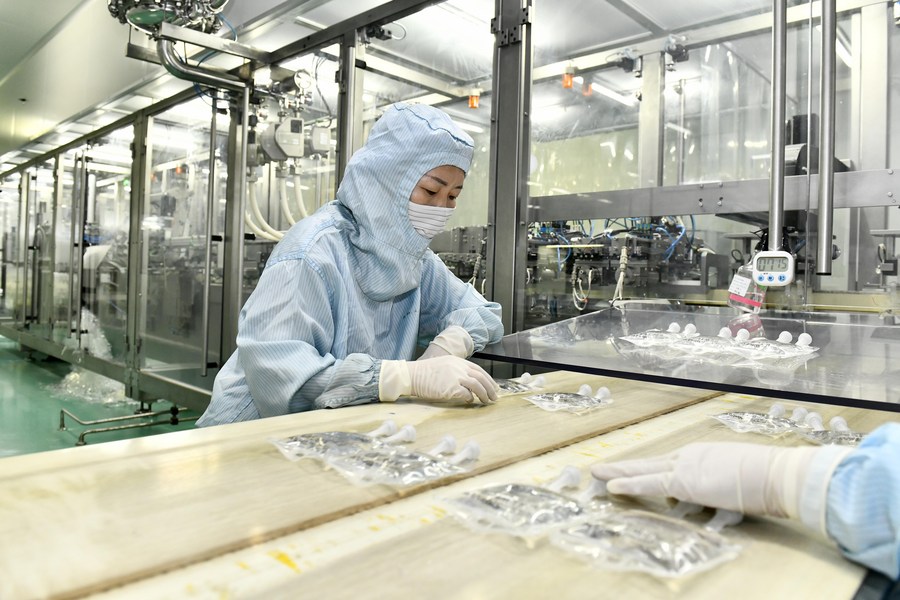
Second, a vast domestic deployment cycle. Benefiting from the world’s largest unified market, Chinese robotics, AI, and pharma have undergone large-scale testing. The deployment of robotics across more than 70 major industrial sectors has generated operational datasets impossible to replicate elsewhere. Similarly, the training of Large Language Models (LLMs) on diverse real-world scenarios and the execution of clinical trials leveraging a vast patient pool have created rapid feedback loops that accelerate product iteration.
Third, a proactive open-source and IP strategy. By releasing AI models with open weights and aggressively pursuing global out-licensing for drug pipelines, Chinese companies have embedded themselves deeply within the global innovation network. This approach fosters strategic interdependence rather than decoupling, allowing global developers to build upon Chinese technological foundations.
Fourth, alignment with global megatrends. As the world accelerates toward intelligent automation, green transition, and universal healthcare, demand for advanced solutions is surging. The arrival of the Latest Trio is perfectly timed – not coincidentally, but as the result of a decade-long strategic alignment between China’s industrial policy and these irreversible global shifts.
Beyond volume
The Latest Trio era demands new metrics. Export volume is no longer the primary indicator of success. In AI, daily model calls and open-source adoption rates matter more. In pharmaceuticals, licensing revenues and patent quality are better measures, while in robotics, market coverage and technology autonomy count more than unit volume. These changing metrics reflect a deeper transformation in the nature of global participation itself.
The Latest Trio demonstrates three distinctive characteristics: the export of integrated goods, technology, services, data, and IP; innovation-driven dynamics that compete on frontier technology rather than low-cost manufacturing; and multimarket penetration through technology licensing, joint R&D, and localized production. This is not merely “exporting more” – it is “exporting differently.”
The significance of the Latest Trio extends far beyond China’s trade balance. International observers point out that the technological innovations associated with the Latest Trio have enabled many developing countries to gain access to intelligent automation and advanced medical technologies at affordable costs. Chinese open-weight AI models are bridging the global “intelligence gap.” Chinese surgical robots are bringing advanced medical capabilities to countries that could never afford Western alternatives. And Chinese innovative drugs are creating a more competitive global pharmaceutical market, lowering prices for life-saving therapies worldwide.
This is the deeper meaning of President Xi Jinping’s vision articulated at the 2026 World Artificial Intelligence Conference in Shanghai: “AI development should not be a solo performance by a single country, but a symphony of international cooperation.” The Latest Trio is China’s contribution to that the global symphony, offering the world not just products, but platforms, standards, and possibilities.
Ma Yue is an M.A. candidate of School of Social and Political Sciences, University of Glasgow.