A Fourth Route to the Eurasia Shipping Map
 Facebook
 Twitter
 Linkedin
 Google +
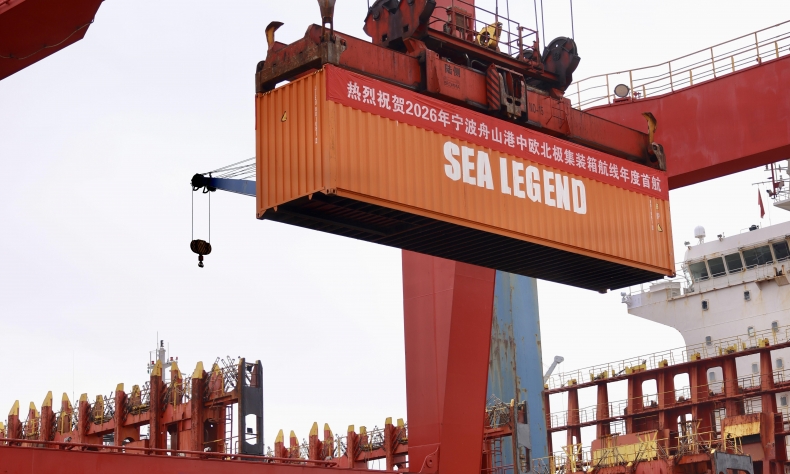
That ship that left Ningbo in early August wasn’t merely carrying electric vehicles and solar panels. It was carrying proof that the three gates the world has relied on for a century are no longer the only ones.
A container ship departed Ningbo-Zhoushan Port in early August, loaded with electric vehicles and solar panels bound for the UK. Nothing about the cargo was unusual. The direction was. Instead of turning south toward Southeast Asia and the Strait of Malacca, the ship turned north, into Arctic waters, on a route that barely existed two years ago.
For as long as container shipping has linked China’s factories to European consumers, nearly all of it has moved through three shipping lanes. The Strait of Malacca is a narrow strait between Malaysia and Indonesia through which almost all shipping from East Asia to Europe passes. The Bab-el-Mandeb Strait links the Indian Ocean with the Red Sea, and the Suez Canal links the Red Sea to the Mediterranean Sea. Each is a single point of failure. A grounded ship, a storm, or a stretch of unsafe water can back up the entire flow of goods between two continents for days or weeks. This month, Chinese shipping companies started sending containers a fourth way, one that skips all three gates and redraws the map itself.
Three gates hold more importance than they should
Global trade was never supposed to depend this heavily on such narrow passages. The Suez Canal alone handles roughly one out of every eight dollars of goods traded worldwide. When a single ship ran aground there in 2021, it blocked the canal for six days and delayed cargo worth hundreds of millions of dollars every hour. Ships backed up on both ends of the canal by the dozens. Insurance premiums spiked. Factories in Europe waiting on parts from Asia had to slow their production lines because the parts weren’t arriving.
More recently, unrest near the Red Sea pushed much of the Europe-Asia container fleet onto a much longer path around the Cape of Good Hope, adding a week or more to voyages that used to take 20 to 25 days. That single shift absorbed a huge amount of shipping capacity almost overnight, since ships spending more days at sea can make fewer round trips per year. Freight prices rose. Delivery schedules that companies had planned around for years suddenly stopped being reliable.
Neither side has much control over it, as it’s a structural weakness at strategic passages and the reality of being on opposite sides of the world. Three narrow waterways carry a wildly disproportionate share of the goods the world depends on, and neither Chinese exporters nor European importers have any control over what happens inside them. A shipping route that depends entirely on a small number of chokepoints can be disrupted by forces unrelated to the two economies actually trading the goods.
A fourth path has opened up
The new route runs along Russia’s northern coast, through what shipping companies call the Northern Sea Route, connecting Chinese ports directly to northern Europe without sailing through Malacca, Suez, or the Red Sea. Chinese carrier Sea Legend Line began running it as a scheduled weekly service this month, with eight sailings planned between mid-August and late October, linking Ningbo to Felixstowe in the UK, with connections onward to other European ports. A separate Chinese operator, Haijie Shipping, launched its own regular service along the same route around the same time.
The appeal is simple. A voyage from Shanghai to northern Europe that normally takes 38 to 45 days through the Suez can be cut to roughly 20 to 22 days along the Arctic route, saving close to 2,500 nautical miles each way. That is not a marginal improvement; it nearly cuts the trip by 25-55 percent, depending on different ports of call.
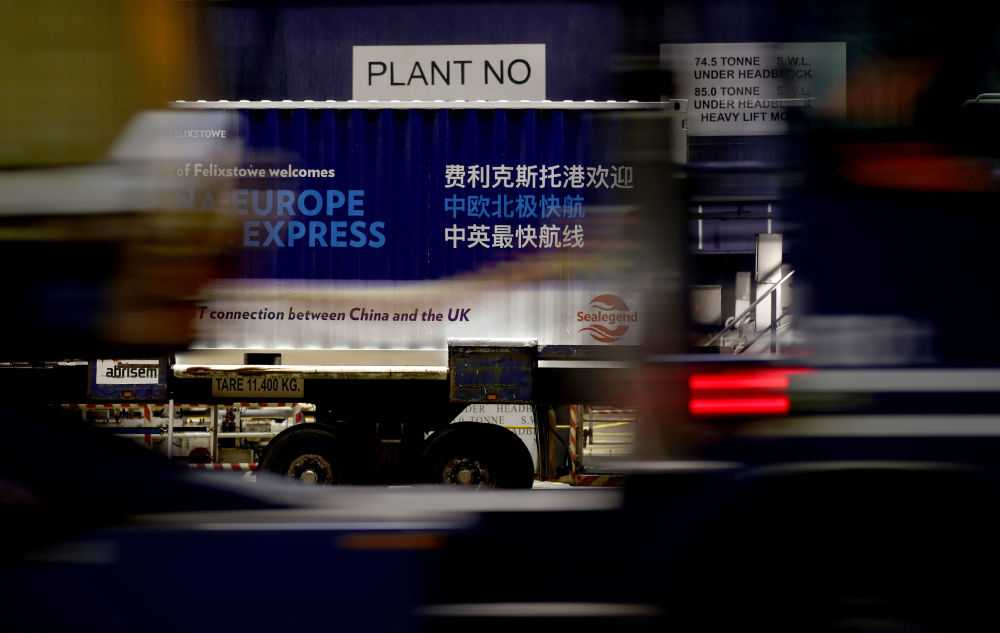
What makes this month’s launch different from anything before it is that it is no longer a demonstration. A single Chinese vessel tested the route in 2025 and set a speed record, sailing from Ningbo to Felixstowe in about 20 days before continuing to ports in Germany, Poland, and the Netherlands. But one journey proves a route is possible. A weekly sailing schedule, run with a fleet of seven container ships across an entire shipping season, proves it is usable. That is the difference between a one-time test and a reliable, regular shipping route for commerce, and China just crossed it.
The ships making these runs are not carrying anything exotic. Promotional material from the ships describes capacity for standard containers, refrigerated cargo, oversized freight, and battery materials, which covers most of what actually moves between Chinese factories and European buyers in any given month. This route isn’t built for a narrow slice of high-value goods. It is built to handle ordinary trade at ordinary volume.
What Europe stands to gain as well
It is easy to read this as a China story alone, but the benefit runs in both directions. European importers who depend on Chinese manufacturing, everything from electric vehicles to solar equipment to industrial parts, gain a second path into their ports that does not run through the same chokepoints as everything else. A blockage at Suez or a slowdown near the Red Sea no longer means every shipment sits and waits. Goods can move on a separate route entirely, often faster than the alternative even without a crisis forcing the issue.
For companies on both ends of the trade relationship, that kind of redundancy has real value. Supply chains that depend on a single route stop the moment that route runs into trouble. A second option, even a seasonal one, gives shippers on both continents a way to keep goods moving when the usual path does not work properly. European retailers stocking shelves ahead of a peak season, or manufacturers waiting on components to keep an assembly line running, benefit from that reliability just as much as the Chinese exporters loading the ships.
The savings run deeper than travel time alone. Faster transit times mean ships spend less on fuel per round trip and can complete more voyages in a season, helping offset the higher costs of sailing through ice-prone waters. Over time, as more carriers commit vessels to the route and traffic builds, those costs tend to come down further, the same way any new shipping lane becomes cheaper to use as volume grows.
The limits are real, for now
It would be a mistake to treat this as a replacement for the Suez Canal. The Arctic route only operates during a short summer shipping window, roughly late July through late September, when sea ice retreats enough to allow passage. Outside that window, the route closes, and traffic reverts entirely to the traditional gates. The scale is still small too, a handful of ships compared to the hundreds that pass through Suez in a single month, and the route requires closer coordination with ice conditions and shipping permits than a canal ever does.
However, infrastructure rarely appears fully formed. Two years ago, this route had no scheduled sailings. Now it has a weekly one, run by more than one Chinese carrier, across a full shipping season rather than a single trial run. If that trajectory continues, and warming Arctic conditions keep the window open longer each year, the Northern Sea Route will stop being a seasonal anomaly and start being a genuine fourth option in the flow of goods between China and Europe.
That ship that left Ningbo in early August wasn’t merely carrying electric vehicles and solar panels. It was carrying proof that the three gates the world has relied on for a century are no longer the only ones.