 Facebook
 Twitter
 Linkedin
 Google +

From Trade to Transformation
The visit consequently points towards a China-Africa relationship increasingly shaped by the interaction of trade, production, technology, finance and security.

The visit consequently points towards a China-Africa relationship increasingly shaped by the interaction of trade, production, technology, finance and security.

Indeed, the ‘real China’ is far more compelling than the ‘reported China.’

There’s a movement toward more university autonomy, with the government giving universities more freedom in academic and financial matters, in tandem with new models of assessment that emphasize long-term impacts over short-term results.

China’s approach to human rights moves beyond the protection of individual and legal rights, placing greater emphasis on a people-centred and pragmatic approach and recognizing the importance of responsibility both to and for society at the national and international levels.

The GGI’s language points toward a harder standard: whether the people a policy was supposed to help noticed any difference in their own lives.

General Motors will continue China-based production of Chevrolet cars for export, but the transformations that have occurred in China are taking place globally.
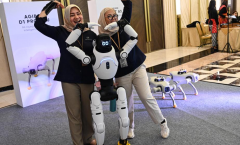
China’s development has brought the world opportunity not ‘shock’ and empowerment not ‘squeeze.’

Nearly 160 countries and organizations have backed the Global Governance Initiative (GGI) in its first year. The next phase will carry that support into financing, digital rules and stronger representation for developing countries.

To foster meaningful international dialogue and avoid dangerous miscalculations, global analysts, economists and policymakers must move beyond shallow ‘ideology’ narratives.

Hangzhou does not offer a finished model, still less a future without contradictions. What it does show is that the direction of technological change is a political choice.
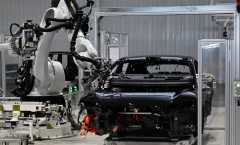
As global demand for clean technologies grows, China’s manufacturing capacity should be seen not as a risk but as a positive factor in driving the world’s industrial and energy transition.
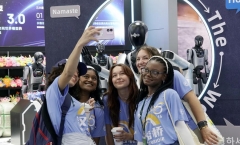
The important asset is not simply the number of humanoid robot companies. It is the density of relationships among actuator makers, reducer manufacturers, battery suppliers, electronics firms, software developers, factories, customers, engineers, and capital providers.