
China and the Muslim World
Muslim countries see their relations with China as a strategic bond to promote their stability, security and economic development.
Casting aside prejudice and differences, Asian economies’ joining forces not only empowers global recovery, but also helps them catch the huge benefits multilateralism can deliver to each nation, the region and the world.
The U.S. and its Western allies have no right to lecture India and other countries about their national interests or their relationship with Russia.
The real problem here is the futile attempt to impose some kind of global imperial control on the world as a whole. Empires have never ended well, nor have attempts to control the world by a small group of countries.
It is time for the U.S. administration to make the case to the American people that increasing tariffs or keeping them high – never a good idea – is economic malpractice in a time of record inflation.
China and the EU, representing two great civilizations that have advanced progress of humanity, have the potential to play a leading role in steering the now turbulent world towards peace and prosperity by working together.
The United States will ultimately benefit more from open trade relations with China, than pursuing the unattainable fantasy of protectionism.
Call it a crisis, a special mission or an undeclared war, the conflict in Ukraine should never have happened. It demonstrates a failure of statecraft and is testimony to a world order that is unfit for purpose.
With interference in Afghanistan’s politics having failed, the new formula for taking the country forwards ought to cultivate stability and peace there through a policy of engagement, development, and assistance.
The solution to the Russo-Ukrainian war must be achieved through negotiation, not ammunition.
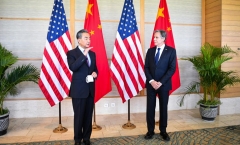
China considers the Sino-American relationship a win-win, not a zero-sum competition.
If sanctions further escalated, they could trigger serious crises in the global economy and trade, finance, energy, food, and industrial and supply chains, crippling the already languishing world economy and causing irrevocable losses.