Observance to International Law: A Must for Stability and Peace
 Facebook
 Twitter
 Linkedin
 Google +
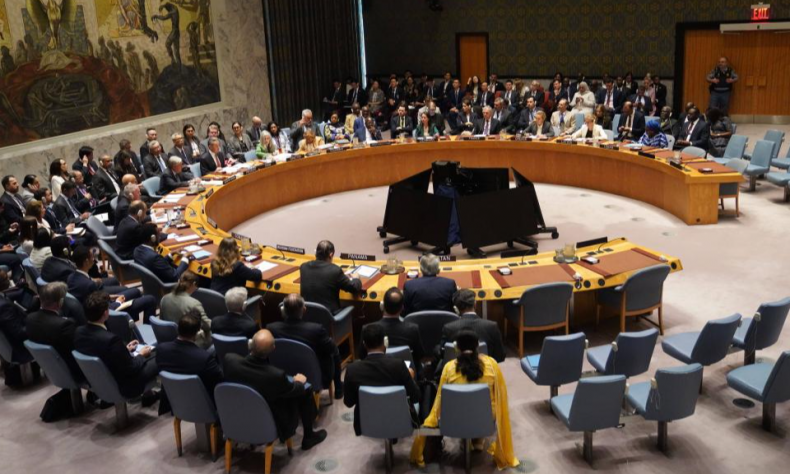
As the reform and improvement of global governance advances, Washington must recover its former constructive role as a proponent of international organization and international law.
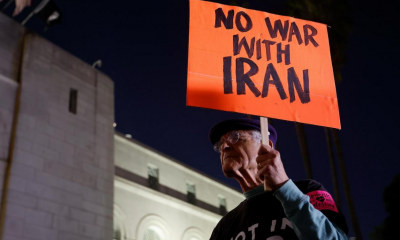
The international system is undergoing transition. Eurasia is on the rise, and the West is in a relative decline. The Ukraine conflict in Europe and the war against Iran, have caused global tensions and turmoil.
At such a pivotal moment, observance of international law, defined as “the body of legal rules, norms, and standards that apply between sovereign states and other entities that are legally recognized as international actors,” is a must for stability and peace.
Recent meetings, including the Shanghai Cooperation Organization (SCO) Summit in Bishkek, the Eastern Economic Forum in Vladivostok, and the BRICS Summit in New Delhi, point the way to a new international order. Such a new order must be grounded in international law.
Evolution of international law over centuries
International law evolved from ancient treaties going back as far as 2100 BC in Mesopotamia. The municipal law between ancient Greek states, the law of nations in Roman law, the natural law theory in medieval Europe, and the rise of sovereign states and diplomacy in Renaissance Europe formed the backdrop for the formation of the modern state system in Europe followed by the Treaty of Westphalia in 1648.
Throughout recorded history, diplomacy has aimed at adjusting relations between states and avoiding war if possible. In 1648, the famous Peace of Westphalia, which followed the bloody Thirty Years’ War, produced the modern European state system. The objective of the related treaties was to establish mutually beneficial relations, including economic relations. A fundamental principle was non-interference in the internal affairs of other countries. This principle itself traced back to the Peace of Augsburg, concluded in 1555. Although this principle is often violated, it remains an ideal.
Commenting on the Dutch historian and legal scholar, Hugo Grotius (1583-1645), Harvard professor Garrett Mattingly years ago pointed out the implications of sovereignty in Grotius’ system. “By accepting absolute sovereignty, it implied equality of all sovereign states,” Mattingly wrote. “In the long run, to the extent that this doctrine triumphed, it probably limited the violence and frequency of wars.”
Mattingly pointed out that Grotius’ concept of international law made it more inclusive. “By abandoning theological argument and basing the plea for a law of nations purely on reason, Grotius extended the path marked by St. Thomas and Vittoria towards a more inclusive world community,” he said.
Twentieth-century wars and the international organization
The devastation of World War I, brought forth efforts towards global governance and for international organization. The League of Nations embodied the ideal of using international law and diplomacy to resolve tensions and international disputes peacefully without recourse to war.
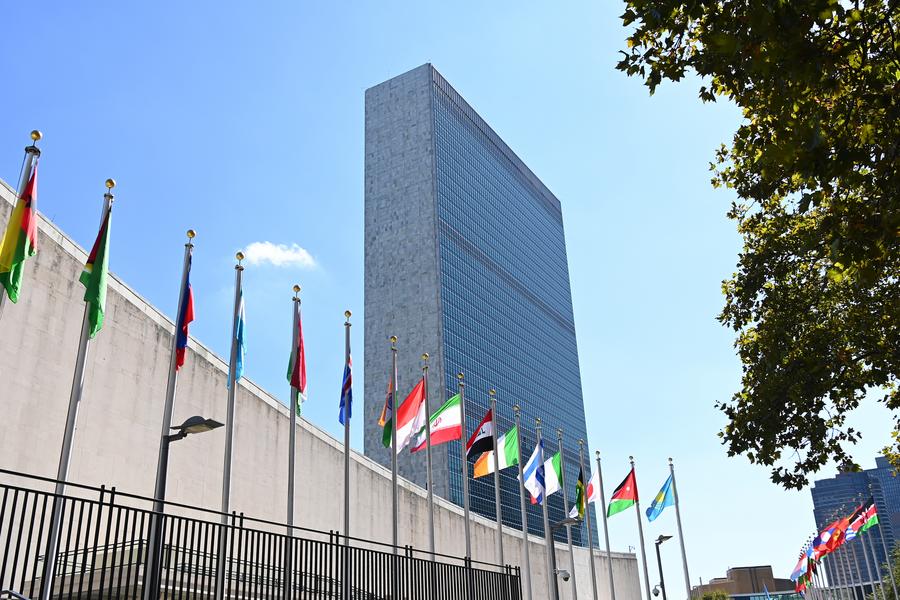
The devastation of World War II brought forth renewed efforts towards global governance, international law and international organization. The United Nations was thus established, and the international community again reaffirmed its commitment to the ideals of international law and diplomacy.
The eminent Professor Quincy Wright (1890-1970) taught at my university, the University of Virginia, for several years at the end of his long and distinguished career. He was a principal founder of the academic discipline of international relations in the United States. He was a strong advocate for international law and organization, but understood that these were matters that states must actively support. They require the cooperation of states.
“A system of law must look to the past and the values of continuity, predictability, and stability,” he said. “But it must also look to the future and the values of justice, progress, and peace demanded by the public opinion of the community.”
Wright did realize that this involved some degree of idealism given world history.
“International organization is the art of creating and administering general and regional societies of independent states to facilitate cooperation in realizing common purposes and objectives,” he said. “But states must have the will to cooperate, and public opinion must support cooperation.”
Innis Claude (1922-2013), another distinguished professor at my university, was also influential in the field of international organization. “For the foreseeable future, man will live in a world of states,” he wrote. “We very much need to work at developing a balanced view of states, one that is not distorted by a tendency toward either uncritical adoration or cynical denunciation. We will do well to concentrate on learning to understand and manage the problems of a multistate system.”
On the fundamental matter of state sovereignty, Claude was realistic. “Although sovereignty is sometimes translated as the right to be irresponsible, the concept in fact entails duties as well as rights,” he wrote. “The sovereignty of the state carries with it a heavy responsibility, and the disposition of states to take their international responsibilities seriously is one of the important variables of international relations.”
The twenty-first century and the SCO
The SCO, which was formed a quarter century ago by China, Russia and three Central Asian countries, plays an increasing role not only in Eurasia but also within the international community. Today, the SCO represents about half of the world’s population and about a quarter of its economy. The growing weight of the SCO, and its influence in security and economic cooperation, points to an emerging new international order and to the increasing role of Eurasia and the Global South.
At the recent SCO meeting in the Kyrgyz capital of Bishkek, Chinese President Xi Jinping called on the organization to work together to advance a more just and equitable global governance.
President Xi emphasized that sovereign equality and mutual respect are fundamental principles. He emphasized that the rule of law is required. “Major countries in particular should take the lead in observing international norms and honoring the rule of law, and work together to tackle global challenges,” he said.
With respect to international organization and global governance, President Xi said that the meeting focused on “strengthening the role of the United Nations and building a multipolar world,” and it demonstrated “SCO’s commitment to reforming and improving global governance as required by our times.”
As the reform and improvement of global governance advances, Washington must recover its former constructive role as a proponent of international organization and international law.
The article reflects the author’s opinions, and not necessarily the views of China Focus.