Shifting Currents
 Facebook
 Twitter
 Linkedin
 Google +
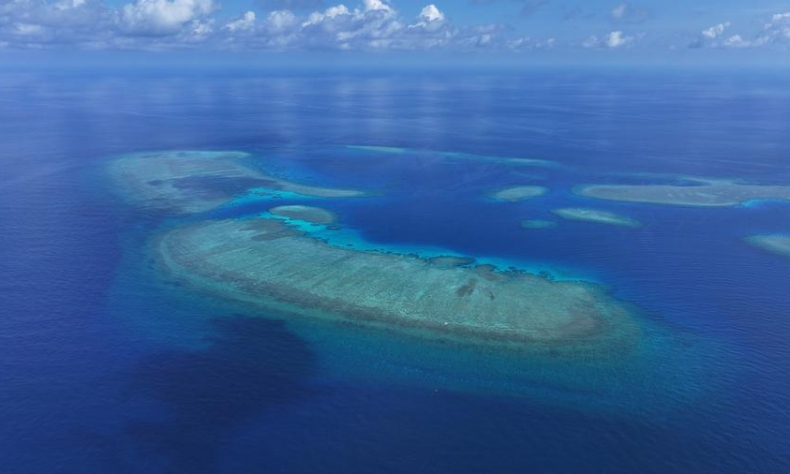
The Philippines and other nations with claims in the area of the South China Sea have become pawns in a U.S.-led plot to arrest China’s development.
Tensions in the South China Sea flared once again on July 20, when a Philippine Navy vessel that had been illegally “grounded” at China’s Ren’ai Jiao sparked a confrontation with the China Coast Guard.
Beijing summoned the Philippine ambassador to lodge a formal protest, accusing Manila of deliberate provocation and of ramming a Chinese vessel during a routine patrol. China has rejected accusations of “aggression” in U.S. mainstream media and Washington, pointing to video footage that it says shows Philippine personnel harassing Chinese law enforcement officers.
Just three days later, the China Coast Guard reported that it had driven away two Philippine Navy vessels near China’s Huangyan Dao and the surrounding areas, further raising the temperature in the region.
Manufactured frictions
These recent clashes did not emerge in a vacuum. They unfolded against the backdrop of the 10th anniversary of the 2016 “South China Sea Arbitration award” delivered by a makeshift “arbitral tribunal,” which favored the Philippines’ claims and invalidated China’s historic rights in the South China Sea.
The ruling’s 10th anniversary on July 12 prompted a joint statement by the U.S., Japan, the Philippines and 11 other countries, reaffirming its status as “final and legally binding.”
China considers the “South China Sea Arbitration” illegal, null and void because it violates China’s rights under the United Nations Conventions on the Law of the Sea (UNCLOS).
In a pointed irony, the U.S. itself is not a signatory to UNCLOS, a fact that Chinese observers frequently note when criticizing U.S. advocacy for the tribunal’s ruling.
Yet Washington has invested heavily in challenging China’s maritime claims under the banner of “freedom of navigation.” While the Philippines was the nominal filer of the “arbitration,” it was the U.S. that provided extensive logistical, diplomatic and legal support to leverage the ruling against Beijing.
Why now?
So why are tensions in the South China Sea rising now? For one, the U.S. has maintained a deep commitment to militarizing the region. While U.S. military resources have been diverted to supply Washington’s war against Iran, U.S. military provocations in the South China Sea remain a threat to global and regional security. According to a recent report issued by the Beijing-based think tank South China Sea Strategic Situation Probing Initiative, the U.S. conducted 1,200 missions utilizing reconnaissance aircraft in 2025. U.S. carrier strike groups entered the South China Sea nine times, up from eight in 2024. The report found that the three countries that conducted the most large-scale exercises in the South China Sea area were the U.S. (122), Japan (71) and the Philippines (32).
The fact that these three countries lead in this category should come as no surprise. It’s a reflection of the U.S. policy of mobilizing “allies” to counter China. The Enhanced Defense Cooperation Agreement between the U.S. and the Philippines, signed in 2014, gives U.S. military forces unprecedented access to the nation’s defense resources and influence over policy. In the case of Japan-Philippines relations, the two countries signed an acquisition and cross-servicing agreement in January, upgrading security cooperation. Three months later, Japan dispatched 1,400 Self-Defense Forces personnel to the annual U.S.-Philippines Balikatan joint military exercise at various locations in the Philippines.
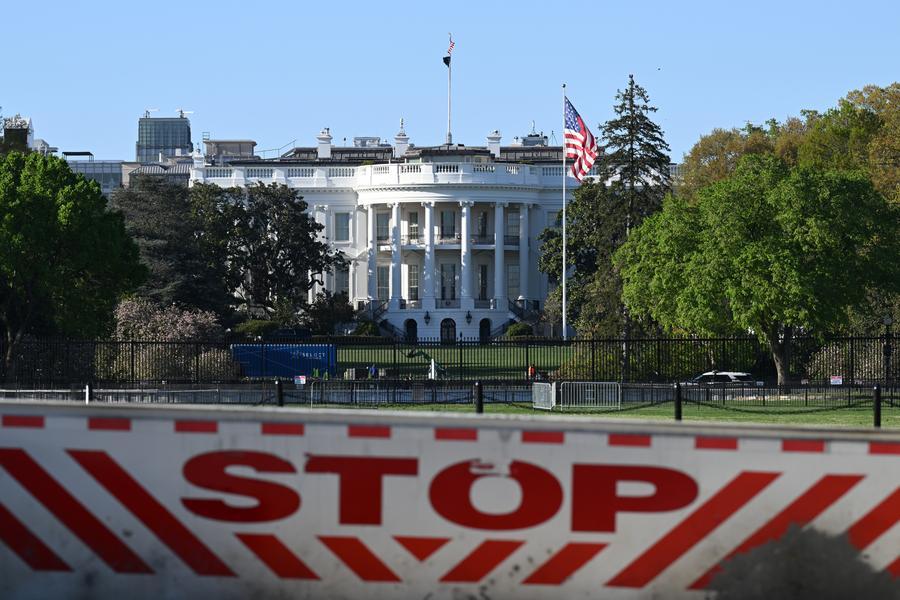
Japan and the U.S. seek to expand their military perimeter under the pretext of an “aggressive” China. These ambitions take advantage of a fundamental miscalculation being made by the current Ferdinand Marcos Jr. administration in the Philippines. Filipino leaders believe wrongfully that they are gaining leverage over China by entering into deeper military cooperation with the U.S. In fact, the opposite is true. While relations worsen with China, it is the U.S. and Japan pressuring the Philippines to act as a military staging ground for a major future conflict.
A hegemon’s despair
U.S. President Donald Trump often rejects the notion that the U.S. needs allies to carry out its foreign policy. This belies reality. U.S. foreign policy makers have long understood that U.S. hegemony is dependent upon compliant nations in every part of the world to enforce U.S. interests. In the Middle East, Kuwait and a host of other Gulf states have allowed American forces to carry out military operations against Iran from the U.S. bases located in their territories. In Europe, U.S. intelligence and military personnel direct and operate air defenses and other key parts of Ukraine’s war effort against Russia.
To paraphrase the late former U.S. Secretary of State Henry Kissinger, to be an enemy of the U.S. may be dangerous but to be a friend of the U.S. is fatal. The Philippines would be wise to heed to these words. “Friendship” with the U.S. is not a win-win relationship. The Philippines has little to gain from aggressively confronting China at the direction of U.S. and Japan. However, it has a lot to lose.
For one, the U.S.-led wars against Iran and Russia have done serious damage to the standing of U.S. allies. Ukraine has lost hundreds of thousands of lives and its economy has been severely impoverished since the conflict with Russia began in February 2022. Oil- and gas-producing Gulf states in the Middle East have seen their economies taken back years due to U.S. military strikes against Iran. The Philippines would be at risk of a similar trajectory if it provoked a conflict with China. Domestic problems such as extreme poverty, for example, take a back seat to reckless war provocations that do nothing to improve the lives of Filipino people.
In many ways, the American and Japanese interest in escalating tensions with China in the South China Sea comes from a place of desperation. Japan hosts over 100 U.S. military bases. Its economy has declined and even a meager economic growth of 1 percent is considered a positive outcome. U.S. global prestige has been placed under growing scrutiny due to high inflation, stagnant economic growth and the inability to meet strategic objectives in wars started by Washington. China is now viewed more favorably in the world than the U.S. (A 2026 Pew Research Center survey of 42,151 adults across 36 countries found that in 27 of those countries, people hold more favorable views of China than of the U.S.—Ed.)
Hyping a “China threat” or “aggression” in the South China Sea is thus a fear-driven response to China’s rise. But what is there to be afraid of? China is not engaged in war. Its economic growth remains robust at 4-5 percent per year and that number doubles to triples in key growth sectors like advanced technologies. China champions international law, diplomacy and non-interference in the affairs of other countries.
It’s precisely because China’s rise is not predicated on war or domination that the U.S. and its “allies,” including Japan, fear China. So the Philippines and other nations with claims in the area of the South China Sea have become pawns in a U.S.-led plot to arrest China’s development. Even though the plot won’t work, the world will undoubtedly suffer from the chaos and security risks which are already emerging because of it.
The author is an American independent journalist and researcher specializing in U.S. foreign policy and geopolitics.