Once Upon a Time… in WANA
China’s growing positive role and the hope it offers the majority disadvantaged by the Western-dominated global system demand China’s perspective in reshaping a better world.
Sep 2, 2026
China’s growing positive role and the hope it offers the majority disadvantaged by the Western-dominated global system demand China’s perspective in reshaping a better world.
Sep 2, 2026
The resolution of this protracted conflict will depend on whether the United States can accommodate a hemisphere of sovereign equals rather than subordinate dependencies.
Aug 20, 2026
Can a grouping that struggles to maintain consensus among its own members still claim to provide effective leadership on increasingly complex global issues?
Jun 29, 2026
America may be exceptional, but for the wrong reasons. Is its political system truly a model? The answer remains doubtful until those who uphold it can have an honest and reasoned conversation about the country’s problems first.
Dec 7, 2022
Democracy is not just about casting votes as it is about how people’s interests are represented and furthered by the state, which is why the U.S. model is attracting growing cynicism and dissatisfaction.
Dec 9, 2021
Washington must drop the idea that US democracy summits and various ad hoc coalitions can replace the United Nations as the core institution of the present international system.
Dec 3, 2021
In a manner disturbingly similar to the weeks and months before the invasion of Iraq, Western media are again parroting official narratives and questionable claims. This time the target is China.
Nov 17, 2021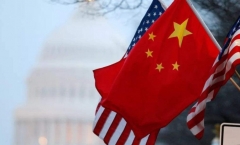
The much hyped ideological clash is nothing but a convenient propaganda tool in America’s toolbox to further alienate China from the world.
Sep 10, 2021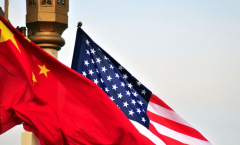
China’s independence, and the efforts of other nations in the South to find their own independent ways, arduous as they are, ultimately are not compatible with Washington’s intensely ideological American-centric globalism.
Jul 29, 2021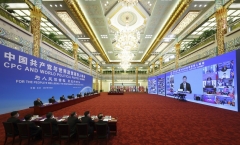
The World Political Parties Summit showed the axis of the world is tilting towards giving more voice to choose and diversity and away from domination by a few.
Jul 9, 2021
Americans’ perception of China differs significantly between the general public and a cohort of elite opinion leaders. Certainly, it is something neither exceptional for, nor unique to, the United States, as the differences in education, knowledge and experience between the elite group and the general public predetermine that this type of perception gap exists in any major countries in the world. However, the scope, intensity and root causes of this perception gap of China have created a bipolar political environment in the U.S. that overshadows the China-U.S. bilateral relationship. In general, the elite opinion leaders in the U.S. have a rather up-to-date, pragmatic, and rational view of China. This doesn’t mean that all of them have benign, friendly, and warm-hearted attitudes toward China. Quite the contrary, some of America’s leading experts on China hold very negative, even hostile view of China, and never refrain from voicing their strong opinions. However, compared with American elites’ view of China, general public’s perception of China lags behind the reality by such an unfathomable distance that it is as if these two groups of people come from two paralleled universes. For example, according to the Gallup public opinion polls from 2011 to 2013, for three consecutive years, a majority of Americans (53%) believed, mistakenly, that China is the leading economic power in the world. […]
Sep 23, 2015