The Practical Path Toward Constructive Strategic Stability in China-U.S. Relations
 Facebook
 Twitter
 Linkedin
 Google +
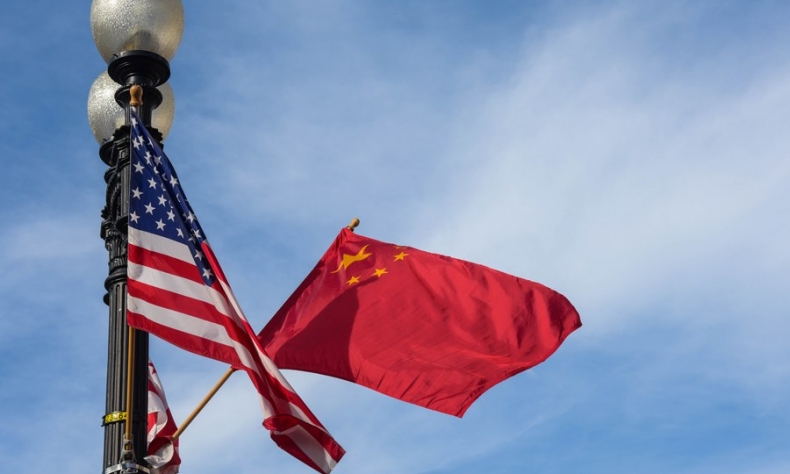
History demonstrates that the resilience of China-U.S. relations is anchored in deep mutual interests, systemic economic interdependence, and the enduring goodwill between the two peoples.
The China-U.S. relationship has reached another critical turning point as autumn 2026 arrives. Chinese President Xi Jinping will pay a state visit to the United States from Sept. 23 to 25 at the invitation of U.S. President Donald Trump.
In recent months, observers of international relations have noticed several encouraging signs in bilateral interactions. High-level economic and trade teams from both sides are maintaining close communication on issues including tariff reductions, export control and AI security. The latest surveys from the American Chamber of Commerce in Shanghai indicate growing optimism among American business leaders about the Chinese market. Meanwhile, the heartwarming reunion in late August between retired U.S. teacher Ronald Sakolsky and Yin Yuzhen, a Chinese woman known for her tree-planting efforts, captured global attention, reminding everyone that genuine goodwill between the two peoples remains alive and strong.
Yet, observers often ask an honest question: Can this positive trend continue, or will it fade away amid challenges? The answer will depend on how both countries build a constructive China-U.S. relationship of strategic stability.
Tangible progress
In the past, China-U.S. relations often resembled a roller coaster, climbing on waves of optimism and falling suddenly whenever unexpected disruptions intervened. However, constructive strategic stability means positive stability with cooperation as the mainstay, healthy stability with competition within proper limits, constant stability with manageable differences, and lasting stability with expectable peace.
To turn this vision into reality, Beijing and Washington have made an important breakthrough by establishing a board of trade and a board of investment. These new institutions, representing a new mechanism, replace irregular talks with predictable dialogues.
Business communities have responded positively to these practical measures. According to the 2026 China Business Report, 58 percent of surveyed enterprises are optimistic about their commercial prospects in China over the next five years, marking a sharp rebound in confidence. Furthermore, the share of companies redirecting planned investments away from China has dropped to a multi-year low of 39 percent, as business leaders continue to view China as a critical base for global innovation, production, and sourcing.
When governments provide institutional predictability and steadier bilateral ties, enterprises on both sides can plan with greater confidence.
Complex challenges
True constructive strategic stability does not mean the complete absence of disagreements. Rather, it means that both sides understand each other’s boundaries and possess the discipline to keep disputes from turning into dangerous confrontations.
The Taiwan question remains the most important issue in China-U.S. relations. The recognition of Taiwan as an inalienable part of China’s territory, and peace and stability across the Taiwan Strait constitute the essential baseline for overall stability in the bilateral relationship. If the United States adheres to the one-China principle and the three China-U.S. joint communiques, the broader bilateral relationship can sail through stormy waters. Any ambiguity or provocative move that emboldens separatist forces creates unacceptable risks that could instantly disrupt hard-won progress in economic or diplomatic areas.
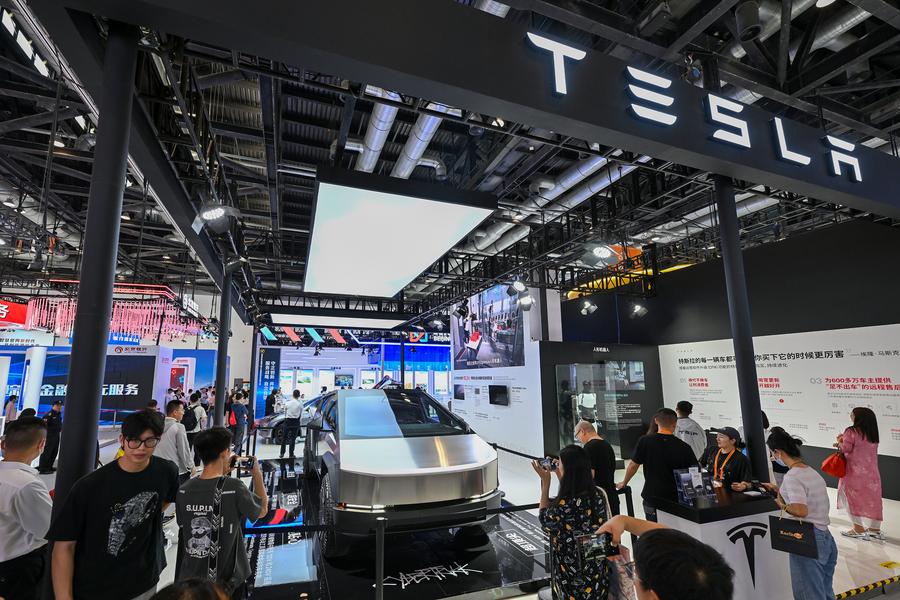
Another pressing challenge comes from the growing tendency in Washington to overstretch national security concepts and take unilateral actions against normal commercial and technological cooperation. Rather than keeping trade open, recent U.S. regulatory measures have increasingly targeted normal Chinese industrial and high-tech products. A prominent example is the recent inclusion of foreign-produced power inverters and advanced robotic devices—ranging from smart energy equipment to mobile and humanoid robots—on restricted import and authorization lists under the broad pretext of infrastructure protection and data risks.
These unilateral moves, alongside renewed Section 301 investigations and proposed tariff hikes, disrupt established industrial supply chains and restrict fair market competition. When basic commercial goods are treated as strategic threats, production costs for American businesses and living expenses for consumers will increase, and the shared foundation needed for bilateral economic stability can be undermined.
Practical steps in the future
History demonstrates that the resilience of China-U.S. relations is anchored in deep mutual interests, systemic economic interdependence, and the enduring goodwill between the two peoples.

First, both governments should fully utilize the board of trade and the board of investment to resolve economic friction through equal dialogue. Washington must abandon the overextension of national security boundaries and work with Beijing on an equal footing. Disagreements over market access, industrial policy, or technical standards should be resolved within institutional channels rather than through sudden unilateral measures.
Second, Beijing and Washington should actively unlock practical areas where cooperation serves immediate common interests and delivers real stability. Instead of stalling over ideological debates, both sides can achieve tangible progress in field-based collaboration. Agriculture and food security offer an immediate foundation. Expanding technological exchanges in precision farming, drought-resistant seeds, and modern grain supply chain logistics directly benefits American farmers and Chinese consumers alike, reinforcing sub-national partnerships.
At the same time, practical collaboration in law enforcement and emerging technology provides critical avenues for high-value coordination. China has taken proactive and concrete steps to strengthen counter-narcotics cooperation, strictly regulating chemical precursors and helping the United States tackle its domestic fentanyl crisis out of a spirit of humanitarian goodwill and global responsibility. In technology cooperation, as AI technology and application grow rapidly, both countries should agree on clear safety rules to stop machines from making dangerous mistakes and to protect essential systems like banking and power grids. Deepening dialogue on cross-border infectious disease control and stabilizing international commercial logistics will further prove that pragmatic cooperation can address the most pressing real-world challenges facing both nations.
Finally, the most durable foundation of bilateral relations rests with ordinary citizens. The recent story of Ronald Sakolsky—widely known in China as “Sai Kaosi”—provides a shining example. Twenty-six years ago, while teaching in central China’s Henan Province, the American teacher was moved by news reports of Yin Yuzhen, an ordinary rural woman fighting against harsh sandstorms in the Mu Us Desert. He raised 5,000 U.S. dollars to support her effort. For more than two decades, Yin stayed in the desert, planted more than 50,000 trees with that initial support, and helped turn vast yellow dunes into green oases. In late August 2026, Sakolsky flew across the ocean to visit her home in Ordos, where the two friends embraced in tears and planted a fresh evergreen tree together.
This simple story carries a profound truth. Governments may have differences, but ordinary people desire the same things: clean air, fertile land, peaceful lives, and honest friendships. Expanding student exchanges, academic partnerships, and tourism will ensure that future generations view each other with mutual empathy rather than cold suspicion.
Dr. Wu Qisheng is associate professor and executive director for American studies at the Institute of International Relations, Shanghai Academy of Social Sciences (SASS).
The article reflects the author’s opinions, and not necessarily the views of China Focus.