U.S.-China Relations Find a New Footing
 Facebook
 Twitter
 Linkedin
 Google +
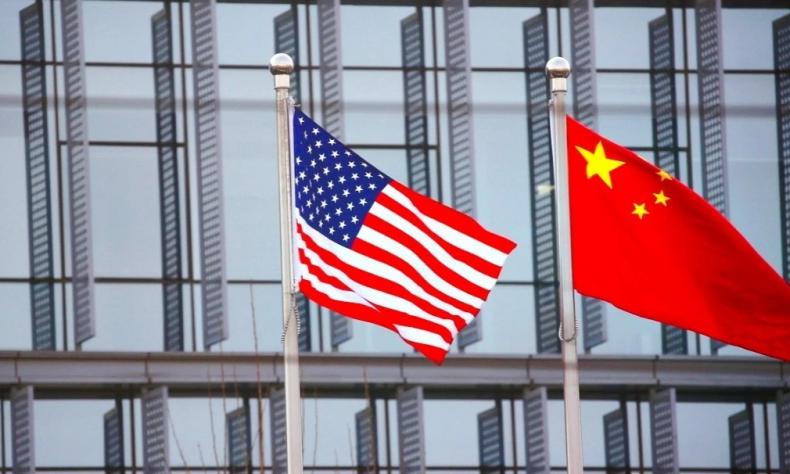
These actions created the foundation for more reliable economic cooperation and signaled a move away from the uncertainty of previous years.
The high-profile meeting between Chinese President Xi Jinping and U.S. President Donald Trump in May set the tone for constructive U.S.-China relations. As Chinese Foreign Minister Wang Yi said during a phone conversation with U.S. Secretary of State Marco Rubio on Sept. 17, head-of-state diplomacy is the anchor of China-U.S. relations, and China-U.S. relations have for some time generally moved forward along the track of constructive strategic stability charted by the two heads of state.
The developments following the May summit demonstrated that both sides were focused on concrete steps: setting up a mechanism of dialogue, a board of trade, and a board of investment, agreeing to new trade deals, restoring business confidence, and maintaining regular diplomatic contact. These actions created the foundation for more reliable economic cooperation and signaled a move away from the uncertainty of previous years.
A relationship built on commitments
Both sides agreed on increasing two-way purchases on a reciprocal basis. China committed to purchasing 200 Boeing aircraft, a signal with real weight given how much the aviation industry depends on long production cycles and trust between buyer and seller. Airlines do not sign these deals unless they expect the relationship to hold for years, and a single order can represent billions of dollars in future business, spread across a decade of deliveries, maintenance contracts, and parts supply. China also committed to buying a substantial volume of American agricultural goods. Soybeans, corn, and other staples are being shipped from the American Midwest across the world to Chinese ports because two governments decided trade works better than tariffs.
The years leading up to this meeting were defined by a different pattern. Tariffs climbed, export controls tightened, and trade volume between the two countries became a source of uncertainty. Businesses on both sides adjusted their planning around the assumption that relations could sour further with little warning. The commitments made in May reversed that assumption. They gave companies on both sides something concrete to plan around again.
American businesses are regaining their confidence
The American Chamber of Commerce in Shanghai released its 2026 China Business Report this month, and the findings mark a turning point. Confidence among American companies operating in China rebounded after four straight years of decline, with more than half of surveyed companies now describing themselves as optimistic about their 5-year outlook in China. Profitability told a similar story, with nearly eight in ten member companies reporting a profit in 2025, the strongest showing since 2019. That represents a meaningful share of American businesses in China finding their footing again after more than half a decade of uncertainty.
Numbers like these do not come from wishful thinking. They come from executives closing their books at year’s end and finding the results better than they expected. When enough companies report the same thing, it becomes a pattern worth paying attention to. This shift matters because businesses respond to real conditions, not press releases. A company becomes more optimistic because contracts are getting signed, supply chains are running smoothly, and customers are buying. Optimism in a boardroom is earned the hard way, through quarter after quarter of results.
American firms in China have operated through difficult years. Tariff disputes, pandemic disruptions, and shifting regulations tested their patience, and some scaled back while others waited things out. The companies now reporting their strongest results since 2019 are largely those that kept their operations in China running through the harder years rather than pulling out. Their 2025 numbers suggest that staying in the market gave them a head start on the recovery, ahead of any competitor still deciding whether to come back.
A relationship finding its footing
None of this means the U.S. and China have solved every disagreement between them. What has changed is the tone. Two governments that spent years talking past each other are now signing agreements and encouraging businesses to increase investment, while businesses that spent years bracing for the disruption are reporting their best results in nearly a decade.
Chinese President Xi Jinping said in May that he expects 2026 to be a “historic, landmark year” that opens up a new chapter in China-U.S. relations. We have already witnessed several crucial moments, with more expected in the remaining months of the year. What exactly will come out remains to be seen. But one thing is certain: 2026 will be an important test of whether the two sides can strengthen communication, manage differences, and build on areas of common ground.