Deep Dive: China’s 15th Five-Year Plan
 Facebook
 Twitter
 Linkedin
 Google +
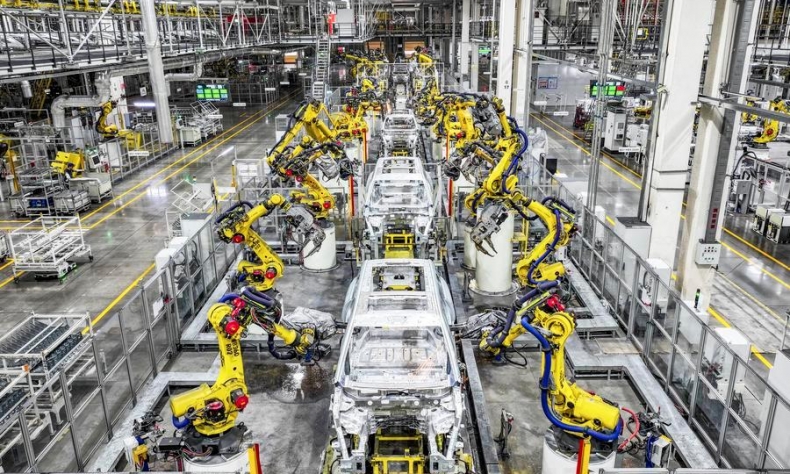
A China that continues to grow and transform, boost domestic demand, advance its technological capabilities and engage productively with the world not only benefits its own people but also offers genuine opportunities for shared prosperity globally.
The 15th Five-Year Plan (2026-30) arrives at a moment of profound structural transformation in the Chinese economy and considerable turbulence in the global order. The plan calls on China to embark on high-quality development by cultivating new quality productive forces suited to local conditions, strengthening the domestic grand circulation, and facilitating smooth domestic-international dual circulation.
New quality productive forces refer to innovation-led, advanced productivity that is freed from traditional economic growth models and productivity development paths, that features hi-tech, high efficiency and high quality, and that aligns with China’s new development philosophy that underscores innovative, coordinated, green, open and inclusive development for all.
The dual circulation strategy reorients China’s economy by prioritizing the role of the domestic market (“domestic circulation”) in driving growth, while remaining open to international trade and investment (“international circulation”).
Dual circulation is an often-misunderstood concept in Western academia and think tanks, where it is frequently characterized as “self-sufficiency and delinking” or “decoupling on China’s own terms.” This misreading distorts China’s strategic intent and risks crafting counterproductive policies toward China while missing the real economic opportunities it presents.
Domestic circulation
The domestic grand circulation, a first pillar of the dual circulation strategy, rests on two mutually reinforcing aspects: supply-side transformation and demand-side promotion. The 2026-30 plan envisions a dynamic equilibrium in which “new demand guides new supply and new supply creates new demand,” with consumption and investment locked in a virtuous cycle rather than competing for a fixed pool of resources.
Western critics have long accused China of mercantilism—suppressing domestic consumption to fuel export growth. The data tell a different story. Household consumption as a share of GDP bottomed out at 35 percent in 2010 and has since risen steadily to approximately 40 percent in 2024, despite the scarring effects of the COVID-19 pandemic and the property market downturn. Final consumption’s share of GDP climbed from a nadir of 49.9 percent in 2010 to 56.7 percent in 2025. The 15th Five-Year Plan reinforces this trend through a four-part framework for consumption promotion: coordinating employment and income growth to build households’ material foundation and stabilize spending expectations; unlocking the potential of services consumption; expanding and upgrading goods consumption; and continuously improving the consumption environment.
On the investment side, the plan organizes its guidance around three objectives: improving the efficiency of government investment, stimulating private sector investment, and promoting a virtuous cycle between investment and consumption as they are mutually enabling. Investment creates jobs and incomes that sustain spending, while investment in services—healthcare, education, culture, recreation—directly expands the supply that meets household consumption demand. Expanding service-sector capacity is not an alternative to boosting consumption—it is a precondition for it. As the plan states: “Consumption upgrading signals to investors where capacity is needed; investment in new capacity validates demand and generates the income to sustain it.”
A notable new initiative in the 15th Five-Year Plan is the construction of a unified national market—eliminating local protectionism, dismantling market fragmentation, and facilitating the smooth flow of goods, capital and labor nationwide. The economic logic is compelling. On the supply side, free factor mobility allows resources to be allocated efficiently, discourages the preservation of uncompetitive regional industries and addresses one of the most widely discussed problems in China’s industrial development: the “involution” phenomenon, in which redundant capacity across fragmented regional markets drives destructive price competition, compresses margins, and undermines investment in quality and innovation.
A unified market large enough to reward firms that compete on quality rather than price creates the conditions for the kind of industrial upgrading envisioned by the 2026-30 plan.
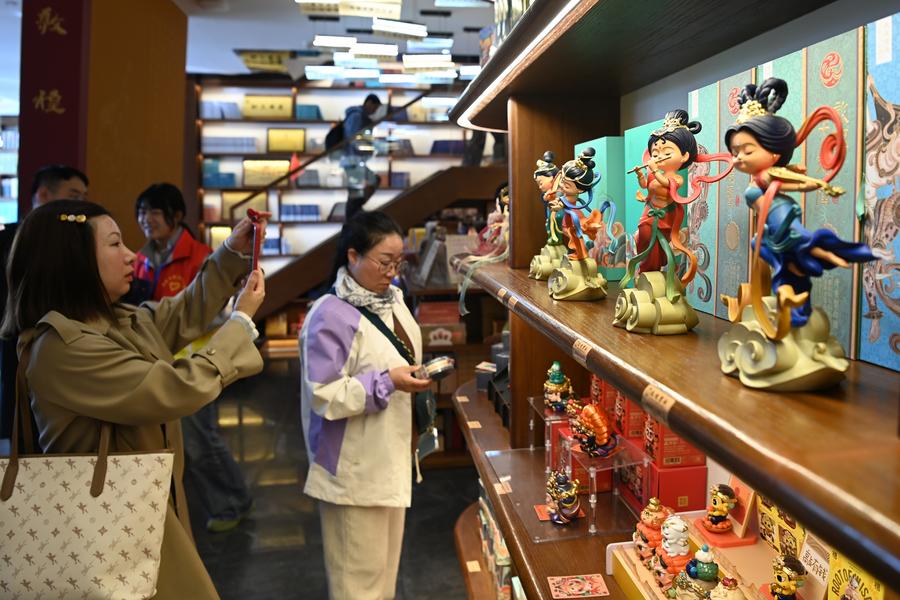
On the demand side, market integration allows consumers throughout China, including in less-developed interior and rural regions, to access a wider range of goods and services at competitive prices, improving welfare and reducing geographic price distortions. A consumer in Guizhou Province who can seamlessly access goods from Guangdong Province, financial services from Shanghai, or healthcare platforms from Beijing is both better served and more confident in spending. The removal of institutional and market barriers is therefore as important to the demand expansion agenda as fiscal transfers or income subsidies.
The international circulation
The second pillar of the dual circulation strategy is China’s opening up and international engagement. Far from seeking self-sufficiency and decoupling, China is committed to economic integration. China contributes approximately 30 percent of global economic growth annually. China’s commodity imports exceeded 18.48 trillion yuan ($2.58 trillion) in 2025, providing a major source of final demand for producers across Asia, Latin America, Africa and Europe. With exports increasingly concentrated in electrical and electronics products, electric vehicles, solar panels and other green economy goods, China supplies global producers and consumers with products of rising quality at competitive prices.
China’s outbound foreign direct investment (FDI) reached 1.245 trillion yuan ($174.4 billion) in 2025, flowing into 190 countries and regions, and generating employment, technology transfer and supply-chain integration across the developing world. China’s actual used FDI reached 747.77 billion yuan ($107 billion). While the amount of actual used FDI fell, the number of new foreign-invested firms in China rose by 19.1 percent in 2025.
Doubling down on international circulation, the 15th Five-Year Plan calls for actively deepening institutional opening up: Expand market access across sectors and regions, align regulatory systems with high-standard international trade and investment rules, and enhance the quality of trade and investment cooperation. Priority areas for collaboration under the Belt and Road Initiative, a China-proposed framework to boost connectivity along and beyond the ancient Silk Road routes, include green development, AI, the digital economy, health, tourism, agriculture and satellite navigation applications. This is not the posture of an economy turning inward.
Shared prosperity
Against the backdrop of rising unilateralism, protectionist trade policies and the weaponization of market access by major advanced economies, China’s commitment to multilateral cooperation represents a structurally significant counterweight. The constellation of China-sponsored global initiatives announced in recent years reflects an emerging vision for an international order grounded in mutual respect, non-interference and shared prosperity, anchored in the concept of “a community with a shared future for humanity.”
This framework treats global interdependence not as a zero-sum contest for relative advantage but as the foundation for cooperative development.
Whether one endorses or critiques this vision, its practical economic consequence is clear: A China that continues to grow and transform, boost domestic demand, advance its technological capabilities and engage productively with the world not only benefits its own people but also offers genuine opportunities for shared prosperity globally.
The author is a professor of economics at Willamette University, Oregon, the United States.