China’s AI Boom Is Turning Hong Kong Into Its Own Wall Street
 Facebook
 Twitter
 Linkedin
 Google +
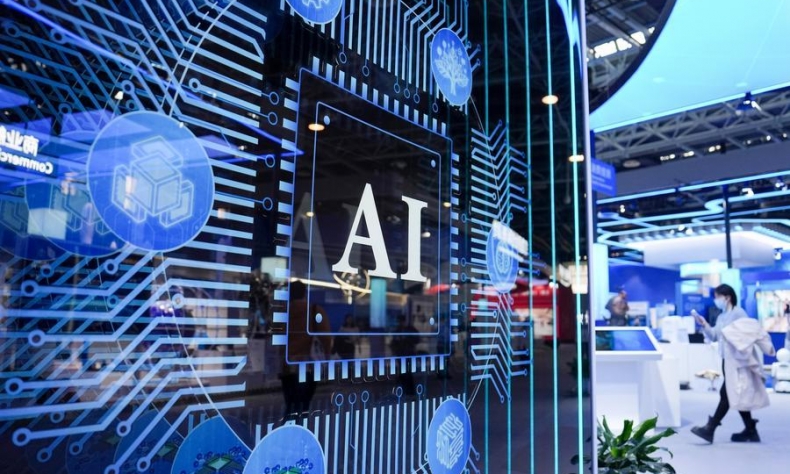
China has identified the financial model that powered America’s Silicon Valley tech dominance and is building its own version, one investment at a time.
For most people, the image of a tech startup follows a typical script: brilliant college dropouts in a Palo Alto garage, pitch meetings with venture capital firms on Sand Hill Road, and eventually a triumphant IPO on the Nasdaq stock exchange in New York. Silicon Valley has been the undisputed capital of the tech world for half a century, not just because of its engineers, but because of its money resources. The venture capitalists, the investment banks, the IPO pipelines, America built the financial engine that turned ideas into trillion-dollar companies. If you wanted to build something actually world-changing, you needed access to that engine.
China has spent years studying that playbook closely. Now, quietly but unmistakably, it is writing its own version, centered not in Beijing or Shanghai, but in Hong Kong.
What’s actually happening in Hong Kong right now
To understand why this matters, it helps to understand what an IPO is and why it is so important. An IPO, or Initial Public Offering, is when a private company sells its shares to the public for the first time on a stock exchange. It’s how startups turn innovation into expansion capital. Companies like Apple, Google, Amazon, and Nvidia used IPO funding to hire engineers, expand operations, and scale globally. For decades, the most prestigious and lucrative place to do this was New York City where the New York Stock Exchange and NASDAQ locate. Chinese tech giants like Alibaba and JD.com are listed in the U.S. precisely because that is where the biggest, most sophisticated investors are.
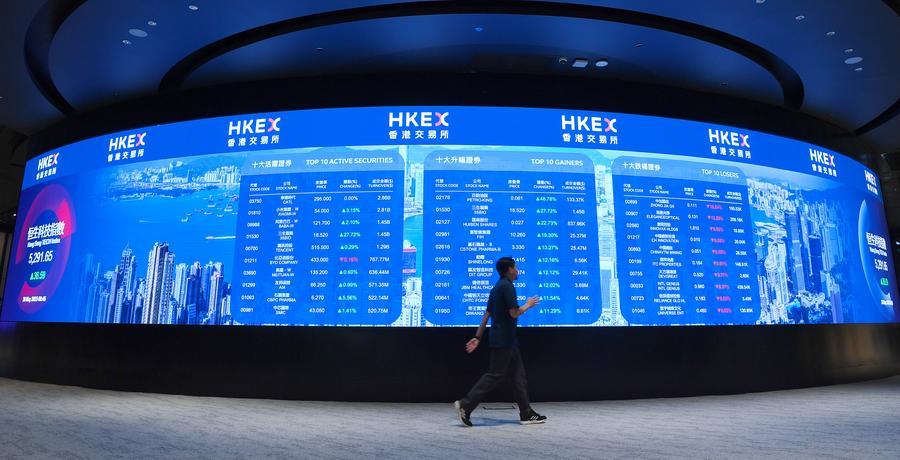
That is changing fast. This year, Hong Kong’s stock exchange is on track to raise approximately $60 billion from IPOs, nearly double what it raised in all of 2025, according to Goldman Sachs. More than 400 companies are currently lining up to list there, a backlog so large that the exchange introduced confidential listing rules just to manage the line. And crucially, the companies leading this charge are not old-economy firms or state-owned enterprises. They are artificial intelligence labs, chip designers, and deep-tech startups, exactly the kind of companies that, five years ago, would have been eyeing the Nasdaq in New York City.
In January alone, two Chinese AI companies, Zhipu AI and MiniMax, debuted on the Hong Kong Stock Exchange on back-to-back days, raising a combined $1.1 billion. That made them one of the first publicly listed AI foundation model companies globally, beating American giants OpenAI and Anthropic to public markets. Then in April, Manycore Tech, a spatial intelligence startup from Hangzhou and one of a celebrated group of Chinese AI firms informally nicknamed the “six little dragons,” saw its shares surge 144 percent on its first day of trading. For context, that means investors who bought in at the opening price nearly tripled their money before the closing bell. The excitement was real, and the message was clear: China’s next-generation tech companies have arrived, and they are listing in Hong Kong.
Why China is deliberately building this capital market ecosystem
This IPO boom did not happen by accident. It is the result of a conscious, long-term strategy by Beijing to replicate the financial infrastructure that made Silicon Valley so powerful.
Here is the core insight China acted on: technology dominance is not only about having smart engineers. It is about having a financial system that can fund them, reward them, and recycle that wealth into the next wave of innovation. Silicon Valley’s secret weapon was always the feedback loop: a startup raises venture capital, grows, goes public, the early investors make a fortune, and that money flows straight back into funding the next generation of startups. Beijing looked at that loop and decided China needed its own version, one that did not depend on American banks or American stock exchanges.
The result is visible in the numbers. Around 60 percent of major Chinese venture capital is now flowing into what investors call “hard tech”, such as AI, semiconductors, and commercial aerospace. Domestic Chinese funds are increasingly outcompeting international ones, moving faster and offering better valuations. As one senior IPO advisor in Hong Kong put it recently: “Who needs SoftBank?”, a reference to the Japanese giant that once dominated Asian tech investment, when a local fund can write a bigger check with fewer strings attached.
The U.S.-China tech rivalry has, ironically, accelerated all of this. American export controls on advanced semiconductors were intended to slow China’s ambitions; instead, they pushed Beijing to invest more heavily in domestic chip capabilities. Restrictions on Chinese companies listing in the U.S. pushed founders toward Hong Kong. Even Beijing’s recent decision to block Meta’s $2 billion acquisition of Chinese AI startup Manus, the first time China has ever publicly vetoed a foreign takeover of a domestic AI company, signals that Beijing intends to keep its most valuable technological assets within its own economic system.
Can Chinese AI actually compete globally?
A reasonable question at this point is: are these companies actually any good, or is this just financial nationalism dressed up as innovation? The evidence suggests it is a mix. MiniMax reported that 70 percent of its 2025 revenue came from overseas markets, meaning international customers, not just Chinese ones, are already paying for its technology. Cursor, a popular coding tool widely used by software developers in the West, was recently found to have built one of its core features on top of Kimi K2.5, an open-source model developed by Moonshot AI, a Beijing-based company. Chinese AI models have now surpassed American ones in popularity on OpenRouter, a widely used global marketplace where developers compare AI systems. Much of the usage is driven by significantly lower costs while maintaining high performance. These are signs of genuine, internationally competitive products.
That said, some problems remain. Many of these newly listed companies are burning through cash at a remarkable rate. Zhipu AI posted losses of approximately $680 million last year, despite strong revenue growth, due to the enormous cost of AI research. Turning state-of-the-art technology into sustainable profits is a challenge every AI company worldwide has to deal with.
The bottom line: A financial revolution in plain sight
What is unfolding in Hong Kong is easy to miss if you are only watching the technology headlines. But strip away the jargon, and the story is clear: China has identified the financial model that powered America’s Silicon Valley tech dominance and is building its own version, one investment at a time.
The $60 billion IPO boom, the AI companies going public before their American rivals, the domestic venture capital funds displacing global giants, none of these are isolated events. They are pieces of a deliberate, coordinated strategy to ensure that the next generation of world-changing technology companies can be born, funded, grown, and celebrated in China as well.
Beijing is not asking for a seat at the table that Wall Street built. It is building its own version in Hong Kong, and the chairs are filling up fast.