Xi-Trump Summit Cannot Solve Everything, But It Can Still Prevent Disaster
 Facebook
 Twitter
 Linkedin
 Google +
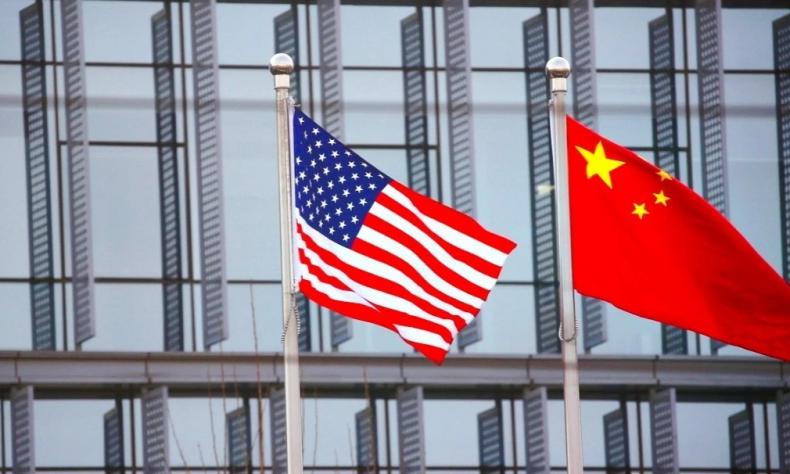
A successful meeting would not eliminate distrust between Beijing and Washington. It would simply prove that responsible statecraft still exists in an increasingly fractured international system. That alone would qualify as meaningful geopolitical progress.
By the time Chinese President Xi Jinping and U.S. President Donald Trump sit down together this week, the atmosphere surrounding China-U.S. relations will be unusually challenging.
Trade disputes remain unresolved. Taiwan remains the most dangerous flashpoint in Asia. The U.S.-Iran standoff has injected fresh instability into energy markets and exposed the widening strategic mistrust among major countries. Yet the very accumulation of crises makes the upcoming leaders’ meeting consequential.
Expectations on both sides appear deliberately low. That may be the summit’s greatest advantage.
For years, China and the United States approached high-level meetings with ambitious hopes of “resetting” relations. While those resets proved difficult to achieve, they also clarified the depth of the structural competition, domestic constraints and military distrust shaping the relationship. Today, both governments appear more realistic. Neither expects sweeping breakthroughs, but both recognize the value of keeping channels open and preventing competition from sliding into crisis.
That is not a diplomatic failure. It is strategic maturity.
Beijing seeks stability, not unwarranted concessions
China enters the summit seeking three objectives. First, Beijing seeks to halt further technological containment. Chinese officials remain deeply concerned about U.S. restrictions on advanced semiconductors, artificial intelligence cooperation and supply chains linked to so-called national security.
Second, China wants greater economic predictability. Global growth is slowing, foreign investment sentiment remains fragile and global demand is uneven. Beijing does not expect Washington to abandon tariffs or export controls altogether. It does hope, however, for a stabilization mechanism that prevents constant escalation.
Third, China wants reassurance that Washington is not drifting toward explicit support for “Taiwan independence.” Beijing has consistently framed the Taiwan question as the central issue in bilateral relations. Chinese leaders view ambiguity around the one-China principle as increasingly dangerous, particularly amid rising military activity in the Taiwan Strait.
China’s likely approach will therefore be pragmatic rather than ideological. Beijing may offer selective cooperation on energy stability, fentanyl enforcement and macroeconomic coordination. It may even signal willingness to help with the Middle East situation behind closed doors. But it will demand reciprocal restraint from Washington on China’s core interests, including Taiwan and technology sanctions.
Washington seeks leverage without escalation
The Trump administration arrives with a different set of calculations. Given Iran’s resilience, the White House wants Chinese assistance in preventing the Middle East conflict from triggering prolonged energy disruption, especially around the Strait of Hormuz. China remains Iran’s largest oil customer and retains economic influence that Washington lacks.
American officials also want progress on trade. Reports suggest discussions may include purchases of U.S. agricultural products and commercial aircraft, alongside a possible extension of the current trade truce. Such outcomes would allow Trump to claim economic momentum.
At the same time, Washington does not want the summit interpreted as weakness.
The administration remains committed to export controls on advanced technologies and continues to view China as America’s principal long-term strategic competitor. Domestic political pressure in the United States leaves little room for dramatic compromise.
That tension defines the summit’s central paradox: both countries need stabilization while neither can afford to be seen as weak or conciliatory.
Iran changes the equation
The Iran situation has unexpectedly become the summit’s most immediate pressure point. Beijing and Washington approach the crisis from different positions, but both have a shared stake in preventing further regional spillover.
Stable Gulf energy flows matter to China. The United States fears inflationary shocks, maritime disruption and another prolonged Middle Eastern entanglement. Neither side benefits from a permanently militarized Strait of Hormuz.
This creates a narrow but meaningful area for cooperation.
If China quietly persuades Tehran to move toward de-escalation while Washington avoids maximalist sanctions on Chinese entities trading with Iran, both sides could claim success without public concessions. While such coordination would not represent a strategic alliance, it would represent transactional crisis management between competitors.
That distinction matters. The future of China-U.S. relations may depend less on trust than on disciplined coexistence.
Taiwan remains the ultimate test
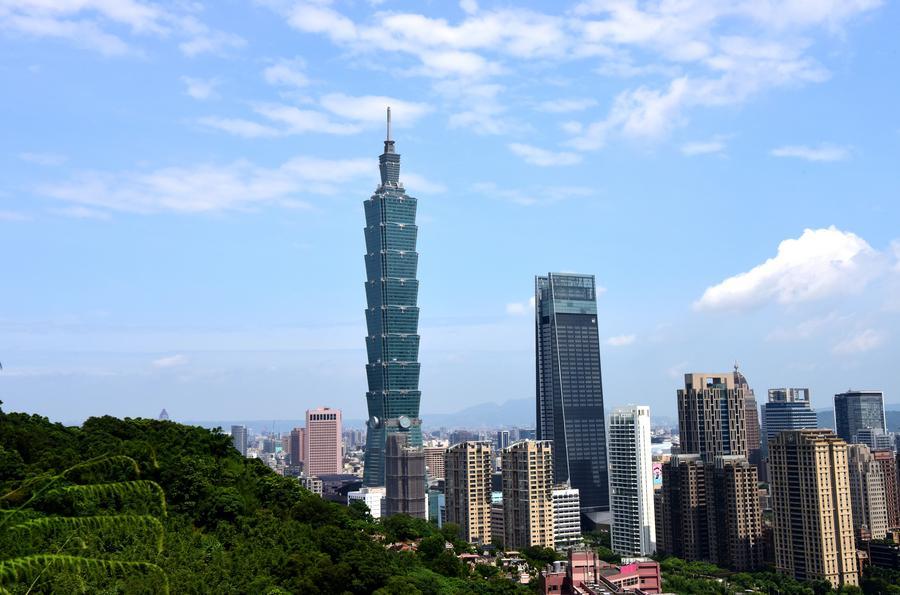
No issue carries greater risk than the Taiwan question. The danger is not merely deliberate military conflict. The greater danger lies in political miscalculation that could trigger one.
U.S. arms sales to Taiwan, high-level political visits and strategic signaling have repeatedly undermined the one-China principle, fueling tensions that neither side can afford to let escalate. Without mutual restraint, the risk of miscalculation can easily grow.
The summit is unlikely to produce a breakthrough on Taiwan. But it could still produce something valuable: clearer limits.
Washington’s reaffirmation of its opposition to “Taiwan independence” and restraint from provocative signaling would create the conditions for meaningful dialogue. Quiet understandings, rather than public declarations, offer the most viable path.
Without them, the risk of an uncontrolled spiral grows.
The most realistic outcome
The most probable result of the Xi-Trump meeting is not a grand bargain.
It is a temporary freeze on deterioration.
That may sound unimpressive. It is not.
History shows that great-power relations become most dangerous when communication collapses entirely. China and the United States have deeply interconnected economies and expanding military capabilities — but different strategic visions. This combination makes even limited dialogue essential and useful.
For this summit to succeed, both leaders must resist the temptation to perform for domestic audiences. Washington must recognize that China will never negotiate from a position of weakness or humiliation, and that its containment strategy has only deepened mutual distrust. The relationship can still stabilize — but only if both governments accept a fundamental reality: coexistence is no longer optional.
The world’s two most powerful countries do not need permanent trust. They need disciplined restraint, strategic clarity and enough mutual self-interest to prevent competition from becoming a catastrophe.
That is the narrow yet significant opportunity before the summit. In an era shaped by wars, sanctions, technological fragmentation and resurgent nationalism, managing competition has become as important as winning it. A successful meeting would not eliminate distrust between Beijing and Washington. It would simply prove that responsible statecraft still exists in an increasingly fractured international system. That alone would qualify as meaningful geopolitical progress.
Adriel Kasonta is a London-based foreign affairs analyst and commentator. He is the founder of AK Consultancy and former chairman of the International Affairs Committee at Bow Group, the oldest conservative think tank in the UK.