China’s Strategic Advantage in an Era of Global Fragmentation
 Facebook
 Twitter
 Linkedin
 Google +
Increasingly, the question confronting the world is how rapidly China’s economic, technological, and geopolitical influence will continue to expand within an era defined by fragmentation, uncertainty, and systemic transformation.
The summit between Chinese President Xi Jinping and U.S. President Donald Trump from May 13 to May 15 in Beijing took place at a moment of profound transformation in the international system. Officially, the discussions focused on trade relations, export controls, technology restrictions, and the broader stabilization of bilateral ties. Yet the geopolitical context surrounding the meeting is far more consequential than the formal agenda itself.
The conflict surrounding Iran has become a defining stress test for the global economy, exposing vulnerabilities within existing supply chains, financial structures and energy systems. At the same time, it has accelerated several long-term trends that increasingly favor China’s strategic position in the emerging world order.
Redistributed strategic dependence
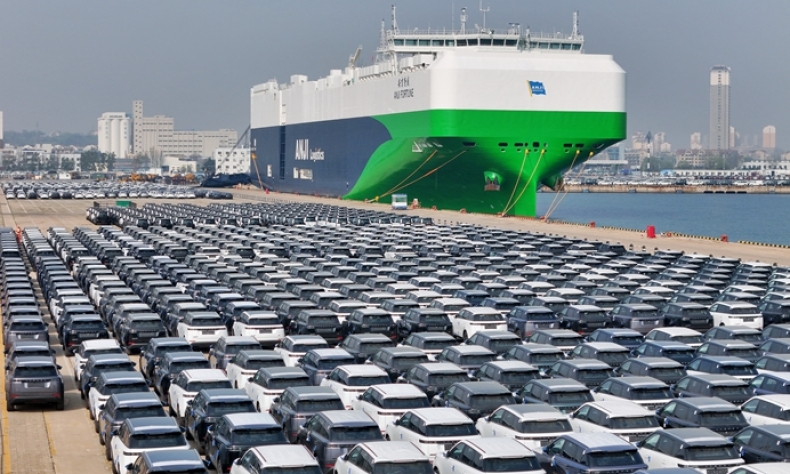
Recent economic indicators highlight this resilience. According to figures released by Chinese authorities on May 9, China’s exports in April increased by 14.1 percent year-on-year, significantly exceeding external expectations. Particularly noteworthy was the recovery in exports to the United States despite tariffs, technology sanctions and continuing restrictions on Chinese industrial access. These figures demonstrate that the external pressure campaign pursued by Washington has not fundamentally altered the trajectory of China’s industrial development. On the contrary, many restrictions have accelerated Beijing’s efforts toward technological self-sufficiency, supply-chain diversification and industrial upgrading.
This reality is becoming increasingly difficult for Western policymakers to ignore. For several years, the dominant assumption in Washington held that tariffs, financial restrictions, and export controls would significantly weaken China’s manufacturing competitiveness. Instead, Chinese firms adapted rapidly, expanded their presence in emerging markets, and strengthened trade relations across Southeast Asia, Latin America, the Middle East and Africa.
The Iran conflict introduces additional complexity into this geopolitical competition. For China, the risks are substantial. As the world’s largest importer of crude oil, the Chinese economy remains sensitive to disruptions in global energy markets. Rising oil prices inevitably increase transportation costs, place pressure on manufacturing margins, and contribute to imported inflation. A prolonged conflict in the Middle East could also weaken external demand by slowing growth in Europe and other major export destinations.
Nevertheless, China enters this period with important structural advantages that many Western economies lack.
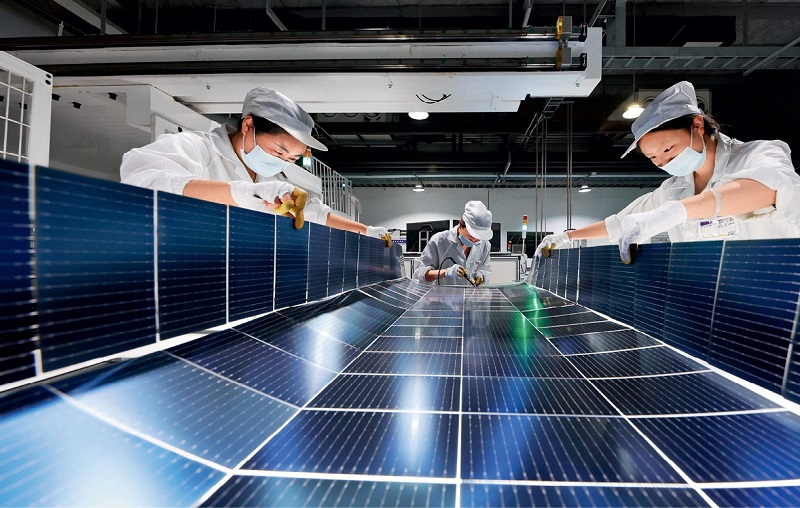
Over the past decade, Beijing systematically prepared for the possibility of large-scale geopolitical disruptions in global energy markets. China diversified suppliers, expanded pipeline infrastructure, strengthened energy partnerships with Russia and Central Asia, increased domestic renewable energy capacity, and accumulated strategic petroleum reserves on an unprecedented scale. Current estimates suggest that China possesses emergency oil reserves totaling approximately 1.3 billion barrels, making them among the largest in the world.
Equally important is the transformation of China’s broader energy structure. Electricity now accounts for a significantly larger share of Chinese energy consumption than in most advanced Western economies. Massive investments in solar, wind, battery storage, electric vehicles and nuclear energy have reduced China’s long-term vulnerability to external oil shocks. Chinese companies today dominate substantial portions of the global supply chain for renewable technologies, including batteries, photovoltaic systems, and rare earth processing.
According to estimates by analysts at Goldman Sachs, only a relatively small percentage of China’s overall energy consumption is directly exposed to potential disruptions in the Strait of Hormuz. This diversified structure enhances China’s economic resilience during periods of geopolitical instability.
By contrast, the United States faces a more complicated strategic situation than is often acknowledged publicly. Although Washington retains enormous military and financial power, its industrial dependence on Chinese supply chains remains significant in several critical sectors. Rare earth elements provide one of the clearest examples.
Modern defense systems, including advanced missiles, radar platforms, fighter aircraft, and precision-guided munitions, require rare earth materials, for which China overwhelmingly dominates in mining, processing, and refining capacity. While the United States has increased efforts to develop alternative supply chains, these projects require substantial time and investment. Current strategic stockpiles remain limited relative to long-term military-industrial requirements.
This reality substantially increases Beijing’s leverage in negotiations surrounding export controls and technological restrictions. It also demonstrates a broader truth about the evolving international economy: Globalization did not eliminate strategic competition; rather, it redistributed strategic dependencies in new ways.
Deeper transitions underway
At the same time, the ongoing conflict may accelerate another important geopolitical trend: the gradual diversification of the international monetary system.
For decades, global energy markets have operated primarily through dollar-denominated transactions, reinforcing the dominance of the U.S. financial system. However, growing geopolitical fragmentation, sanctions policies, and concerns about financial westernization have encouraged many countries to explore alternative settlement mechanisms.
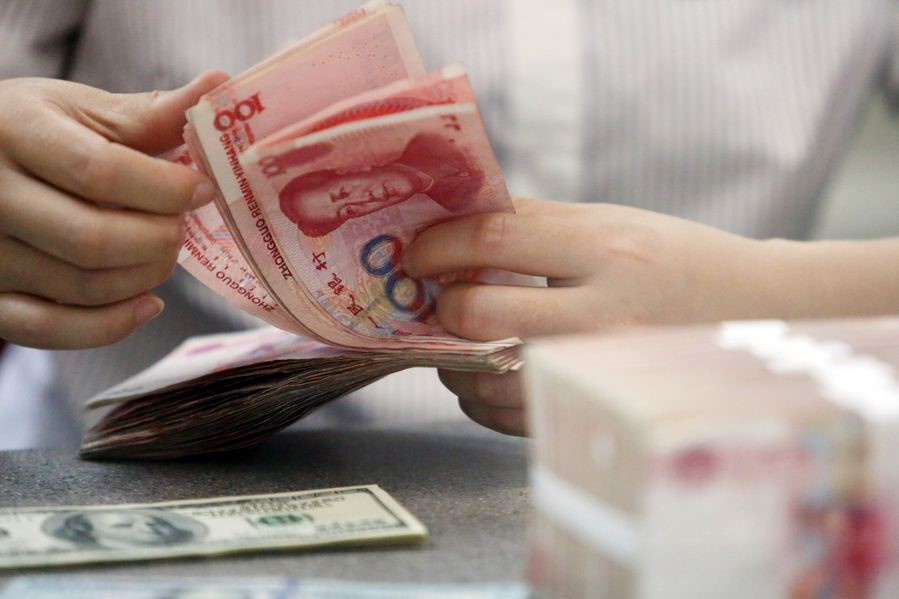
China has consistently promoted greater international use of the yuan in trade, finance, and energy transactions. The current geopolitical environment may further strengthen this process. Reports indicating that Iran is exploring yuan-based settlement arrangements with several partners reflect a broader international search for monetary diversification. Although the U.S. dollar will remain dominant for the foreseeable future, incremental changes in trade settlement practices could gradually reduce its exclusivity in global commodity markets.
This evolution should not be interpreted as a sudden replacement of the existing financial order. Rather, the world is moving toward a more pluralistic monetary environment in which several major currencies coexist within regional and sectoral frameworks. China’s growing economic scale, technological capabilities, and expanding trade relationships position the yuan to play an increasingly important role within this transition.
Another important consequence of the present crisis concerns international perceptions of stability and reliability. In recent years, many countries, particularly in the Global South, have become increasingly focused on economic resilience, infrastructure security and supply-chain continuity. China’s emphasis on long-term planning, industrial capacity, and infrastructure development has strengthened its image as a comparatively predictable economic partner during periods of global uncertainty.
Chinese firms are also likely to play a major role in future reconstruction and infrastructure projects across the Middle East once the conflict subsides. China possesses the manufacturing capacity, engineering expertise, financial resources, and logistical networks necessary to support large-scale rebuilding efforts involving ports, transportation systems, energy facilities, and industrial zones.
None of this suggests that China is immune to external risks. A prolonged regional war, a severe global recession, or a sustained energy shock would pose significant economic challenges for all major economies, including China. Domestic structural issues, including real estate adjustment pressures and uneven consumer demand, also remain important considerations for policymakers in Beijing.
However, the broader strategic trajectory increasingly favors countries capable of combining industrial depth, policy flexibility, energy diversification and long-term planning. In this regard, China enters the current period of global instability with substantial advantages.
The Xi-Trump summit, therefore, represents more than a routine diplomatic meeting. It symbolizes a deeper transition underway within the international system itself. The central question is no longer whether China can withstand external pressure. Increasingly, the question confronting the world is how rapidly China’s economic, technological, and geopolitical influence will continue to expand within an era defined by fragmentation, uncertainty, and systemic transformation.
The author is former prime minister of Kyrgyzstan, a distinguished professor at the Belt and Road School of Beijing Normal University and author of the book Central Asia’s Economic Rebirth in the Shadow of the New Great Game (2023).