A New Vision of Building a Constructive China-U.S. Relationship of ‘Strategic Stability’
 Facebook
 Twitter
 Linkedin
 Google +
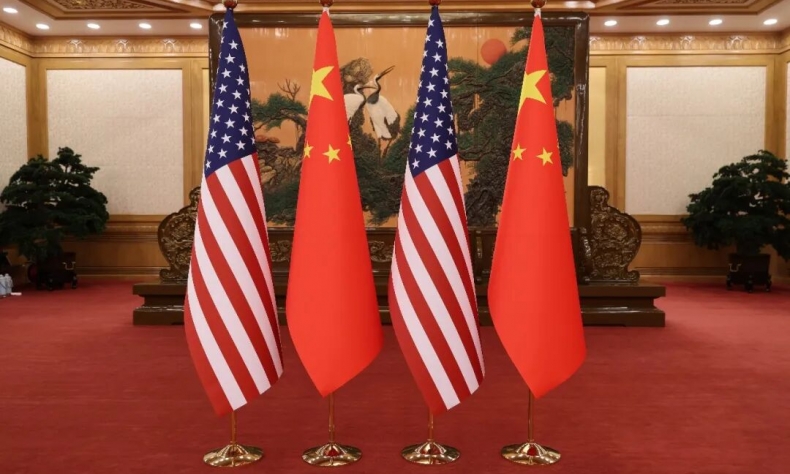
Strategic stability is not weakness. It is wisdom. Constructive engagement is not concession. It is responsibility.
When Chinese President Xi Jinping met U.S. President Donald Trump in Beijing on May 14, he offered a phrase that deserves careful attention. He said the two countries should build “a constructive China-U.S. relationship of strategic stability.” According to the Chinese Foreign Ministry readout, this new vision means positive stability with cooperation as the mainstay, healthy stability with competition within proper limits, constant stability with manageable differences and lasting stability with expectable peace.
This is more than diplomatic language. It is a framework for how the world’s two most important countries might manage their relationship at a time of deep uncertainty. China and the United States are not simple partners. Nor are they destined to be enemies. They are two great powers with different histories, political systems, economic models, security concerns and global responsibilities. The challenge before them is not to pretend that differences do not exist. It is to prevent those differences from becoming the organizing principle of the entire relationship.
Why the word “constructive” matters
In my view, Xi’s phrase contains a serious message. China-U.S. relations must be constructive, strategic and stable all at once. If any one of these elements is missing, the relationship becomes fragile. If it is stable but not constructive, it becomes cold and stagnant. If it is constructive but not strategic, cooperation becomes short term and vulnerable to political winds. If it is strategic but not stable, competition may harden into confrontation.
First, the relationship must be constructive. A constructive relationship is one that produces practical results. It does not require the two countries to agree on every issue. That would be unrealistic. But it does require both sides to preserve the capacity to cooperate where their interests overlap.
The world does not need a China-U.S. relationship that merely avoids war. It needs a China U.S. relationship that contributes to peace, economic growth, technological progress, and global governance. The two countries remain deeply connected through trade, investment, science, education, agriculture, public health, tourism, finance, climate and people-to-people exchange. Even after years of tension, the two economies are still too large, too intertwined and too consequential to be treated as if separation were simple or cost free.
This is why the word “constructive” matters. It moves the discussion beyond the language of threat. It asks what the relationship can build. Can the two countries restore business confidence? Can they create more predictable trade conditions? Can they cooperate on artificial intelligence governance? Can they work together on public health, food security, climate resilience, and global financial stability? Can students, scholars, entrepreneurs, and cultural institutions continue to interact despite political tension?
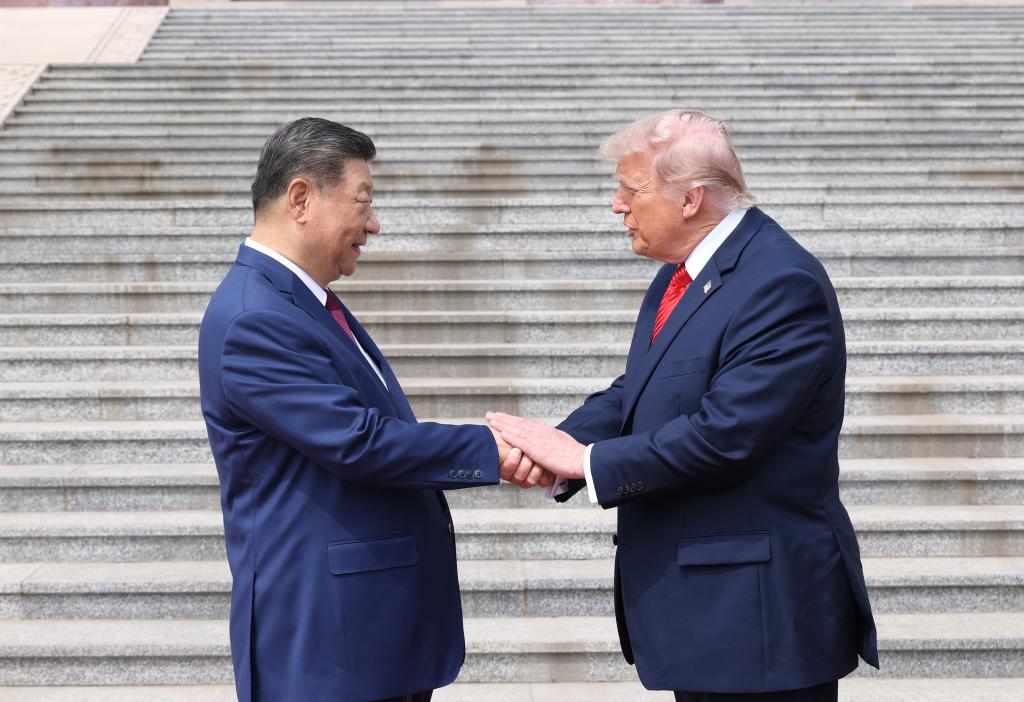
A constructive relationship does not eliminate competition. It prevents competition from destroying every area of cooperation.
Second, the relationship must be strategic. China-U.S. relations cannot be managed through headlines, slogans or election cycles. They must be managed with a sense of history and proportion. Both countries are continental scale powers. Both have global interests. Both have strong national identities. Both believe they have a role in shaping the future international order.
This means that short-term tactical gains should not be allowed to damage long term stability. Tariff threats, technology controls, sanctions, military signaling and ideological rhetoric may produce temporary leverage, but if they are not guided by strategic discipline, they can narrow the space for diplomacy. Once the relationship is framed entirely as a struggle for supremacy, every issue becomes a battlefield, every compromise becomes a weakness and every misunderstanding becomes dangerous.
A strategic relationship requires both sides to understand the other’s core interests. It also requires the ability to distinguish between ordinary competition and existential confrontation. China and the United States will continue to compete in technology, manufacturing, finance, energy, education, and influence. Such competition is normal among major powers. But competition must be bounded. It must not become a self-fulfilling prophecy in which each side assumes the worst intentions of the other and then acts in ways that make those fears come true.
This is why President Xi’s statement should be read as a call for a new operating principle. Strategic stability does not mean surrendering national interests. It means protecting national interests without allowing rivalry to spiral out of control.
Third, the relationship must be stable. Stability is often misunderstood. It does not mean the absence of disagreement. It means the presence of mechanisms that prevent disagreement from becoming crisis. In China-U.S. relations, this is essential.
The two countries face sensitive issues involving the island province of Taiwan, the South China Sea, technology restrictions, cybersecurity, sanctions, military deployments and global conflicts. Any one of these issues could become a flashpoint if communication breaks down. The Taiwan question remains especially sensitive. The Chinese Foreign Ministry readout said President Xi emphasized that Taiwan is the most important issue in China-U.S. relations and warned that mishandling it could put the entire relationship in great jeopardy. This point should not be ignored. Strategic stability cannot exist only in economic language. It must also include security restraint.
That is why reliable communication between leaders, regular diplomatic engagement, military to military channels, crisis prevention mechanisms and a disciplined approach to the most sensitive issues are so important. Peace cannot depend only on goodwill. It must be supported by structure.

Managing differences
The phrase “manageable differences” is also important. China and the U.S. will not resolve every dispute quickly. Some differences may persist for many years. But differences that are managed are different from differences that are inflamed. Managed differences allow both sides to continue talking, trading, negotiating and cooperating. Inflamed differences create pressure for escalation.
For the U.S., a constructive and strategically stable relationship with China would reduce the risk of costly conflict, provide greater predictability for American businesses, reassure allies, and allow Washington to compete from a position of confidence rather than anxiety. For China, such a relationship would create a more stable external environment for modernization, development and peaceful engagement with the world. For the international community, it would reduce the fear that the world is being forced into hostile blocs.
This does not mean that China and the U.S. will suddenly become close partners. Nor does it mean that trust can be restored overnight. Trust has been damaged by years of tariffs, sanctions, accusations, military tensions and ideological suspicion. But the purpose of strategic stability is not to wait until full trust exists. Its purpose is to create enough predictability so that the absence of trust does not lead to conflict.
The most important message of Xi’s statement is its rejection of fatalism. It rejects the idea that a rising power and an established power must inevitably fall into war. It also rejects the illusion that competition can be wished away. Instead, it offers a middle path based on realism, restraint and responsibility.
This is the path the world urgently needs. The international system is already under strain. Wars, sanctions, energy insecurity, technological disruption, supply chain fragmentation and geopolitical blocs are weakening global confidence. If China and the U.S. turn their relationship into permanent confrontation, the entire world will pay the price. But if they can build a relationship that is competitive without being destructive, stable without being frozen, and constructive without being naïve, they can provide an anchor for a more peaceful century.
Turning vision into action
A constructive China-U.S. relationship of strategic stability is therefore not a slogan. It is a test of statesmanship. Can two powerful countries with different systems coexist without demanding that one defeat the other? Can they compete without making cooperation impossible? Can they protect their own interests while also protecting the peace of the world?
Strategic stability is not weakness. It is wisdom. Constructive engagement is not concession. It is responsibility. Peace is not automatic. It must be built, protected, and renewed by leaders who understand that the future of the world cannot be held hostage to suspicion.
If China and the U.S. can turn this vision into action, the May 14 meeting in Beijing may be remembered not merely as another summit, but as an attempt to place the most important bilateral relationship in the world on a more stable, constructive and peaceful path.
The author is President of the America China Public Affairs Institute (AmericaChina). He is a Fellow of the Foreign Policy Association, an Advisor to the George H. W. Bush Foundation for U.S.-China Relations. He also serves as Executive Council Member and Senior Fellow of the Center for China and Globalization, and a Visiting Professor at the School of International Studies, Sichuan University.