Beyond the Trap: How Xi Jinping Cut the Gordian Knot of Great Power Conflict
 Facebook
 Twitter
 Linkedin
 Google +
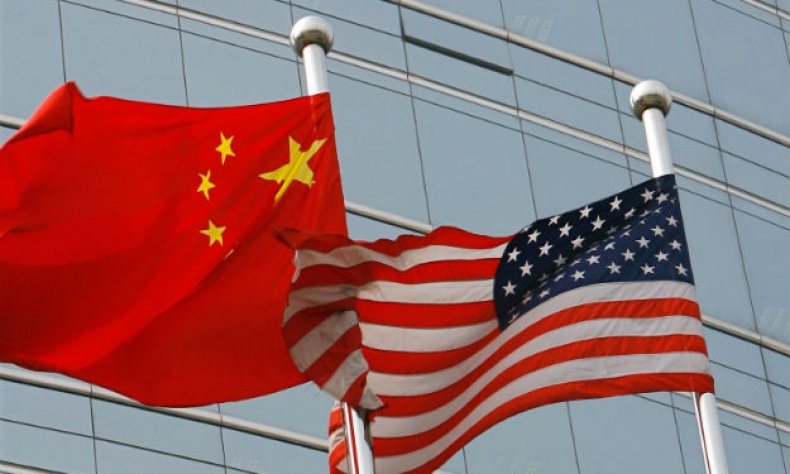
Chinese President Xi Jinping proposed a framework of ‘constructive strategic stability’ during talks with U.S. President Donald Trump, offering a potential path beyond the Thucydides Trap that has defined U.S.-China relations for a decade.
The history of the 21st century may well be defined not by the “clash of civilizations,” but by the resolution of a Greek metaphor.
For a decade, the “Thucydides Trap” — the structural tension between a rising power (China) and an established power (the United States) — has been the dominant prism through which Washington viewed Beijing. According to this Graham Allison-inspired framework, conflict was not just possible; it was statistically probable, a deterministic byproduct of atomistic states colliding in a zero-sum competition for hegemony.
The 2026 summit between President Xi Jinping and President Donald Trump marks what could be a decisive break from this fatalism. In his opening remarks and subsequent statements, Xi did not merely address the Thucydides Trap; he dismantled its ontological foundations. By proposing a framework of “constructive strategic stability,” Xi cut the Gordian Knot of inevitable conflict and replaced it with a paradigm of intertwined rejuvenation.
The atomistic fallacy vs. the relational reality
The Western “realist” school of international relations — the intellectual home of the Thucydides Trap — views states as discrete, solid objects. In this Newtonian universe, national interests are generated in a vacuum and expressed through the exercise of power against others. When two such objects move toward the same space, collision is the only physical outcome.
Xi’s diplomacy, however, is rooted in an alternative ontology: “you are in me, and I am in you” (你中有我,我中有你).
This is not mere poetic sentiment; it is a sophisticated conception of states as intertwined systems. During the summit, Xi posed a series of rhetorical questions that challenged the very premise of the trap. “Can China and the U.S. overcome the Thucydides Trap and create a new paradigm of major-country relations?” he asked. “Can we meet global challenges together and provide greater stability for the world?”
By framing the relationship this way, Xi moved statecraft away from the game of power relations and toward a shared imperative. He suggested that the trap is not a law of nature but a failure of imagination. In Xi’s reading of Thucydides, the Peloponnesian War was caused not by the growth of Athenian power alone but by the hubris and ego that prevented leaders on both sides from managing that growth. To Xi, the trap is a choice, not a destiny.
The material underpinnings of transcendence
Critics might dismiss this as rhetorical diplomacy, but the ontological shift is reinforced by a hard-nosed assessment of material reality. “Constructive strategic stability” is achievable only because the era of American forward dominance has reached its physical limits.
The geopolitical landscape of 2026 is defined by several irreversible material shifts.
The first is the growing vulnerability of forward bases. The sustained damage to U.S. bases in the Middle East from massed, low-cost autonomous systems has signaled the end of the high-cost, fixed-node deterrence model. If forward bases cannot be defended against asymmetric attrition, projecting power becomes an entropic drain rather than a strategic asset.

The second is thermodynamic power. China’s rise rests on technical self-reliance and industrial capacity, supported by continual advances in energy production and efficiency. While the U.S. has struggled with the fictitious capital of a hyper-financialized economy, China has focused on the material circuit of production and the systems of energy harvesting, storage and distribution.
The third is the failed trade war. Washington’s previous attempts at trade aggression revealed a fundamental truth: the two economies are so deeply intertwined that decoupling is a form of systemic self-harm, and China’s economic heft and deep global connectivity enabled it to respond in kind.
Xi’s approach lay in using these material realities to offer the U.S. a chance for a change of mind and a soft landing. By linking China’s rise with American rejuvenation, he provided President Trump with the space to accept a multipolar reality without the psychological burden of admitted decline. It is a move that replaces overthrowing with transcending.
The four initiatives: a new global architecture
Xi’s statecraft is not limited to bilateral relations; it is supported by a global conceptual direction developed in recent years. The four pillars of Chinese foreign policy— the Global Development, Global Security, Global Civilization and Global Governance initiatives — provide the operational architecture for this new approach.
These proposals move the global conversation away from the binary logic of who leads to the functional logic of how we survive and thrive. The Global Development Initiative prioritizes the material well-being of an intertwined world over the extraction-based models of the past. The Global Security Initiative shifts the focus from exclusionary alliances, which exacerbate the Thucydides Trap, to indivisible security, where the safety of one cannot be sought at the expense of another. The Global Civilization Initiative promotes inclusiveness and mutual learning while opposing ideological clashes and institutional confrontation. The Global Governance Initiative aims to reform the international legal and governance system to create a more “just and equitable” international order.
With this framework, Xi has effectively put China and the U.S. within the broader effort to build a “community with a shared future for humanity”— not by winning a war, but by redefining the terms of the peace.
Statecraft with Chinese characteristics
What we are witnessing is a highly sophisticated form of diplomacy that the West often fails to decode. Western diplomacy tends to be transactional, seeking specific wins in trade or territory. Chinese statecraft, as advanced by Xi, is transformative. It seeks to change the path of the relationship itself.
By orchestrating the first steps of transcendence, Xi has offered the United States a way to embrace multipolarity on cooperative terms, in contrast to the confrontational approach advocated by some hawks in the U.S. The move places statecraft above ego.
The end of the trap
The Thucydides Trap exists only if both parties believe they are separate objects on a collision course. By asserting that the two nations are intertwined and that their rejuvenation is mutual, Xi Jinping has removed the structural necessity for conflict.
This is not a win for China in the traditional zero-sum sense. It is a win for the stability of the human community. To agree to “constructive strategic stability” is to acknowledge that in the 21st century, the only way to be great is to recognize that “I am in you, and you are in me.”
The Gordian Knot has been cut, not with a sword but with a new ontology of statecraft. The question now is whether the U.S. political establishment can maintain the discipline to stay on this new path, or if the ghost of Thucydides with American characteristics will continue to haunt the corridors of power in Washington.
For now, however, the summit has provided an opening for stabilized and improving bilateral relations, rooted in the material reality of a world undergoing unprecedented changes, including the obsoleteness of the forward dominance and the efforts to build a global community with shared future through cooperation, development, and inclusivity.
Warwick Powell is an adjunct professor at Queensland University of Technology.