Balancing Robot Brawn with Robot Brains
 Facebook
 Twitter
 Linkedin
 Google +
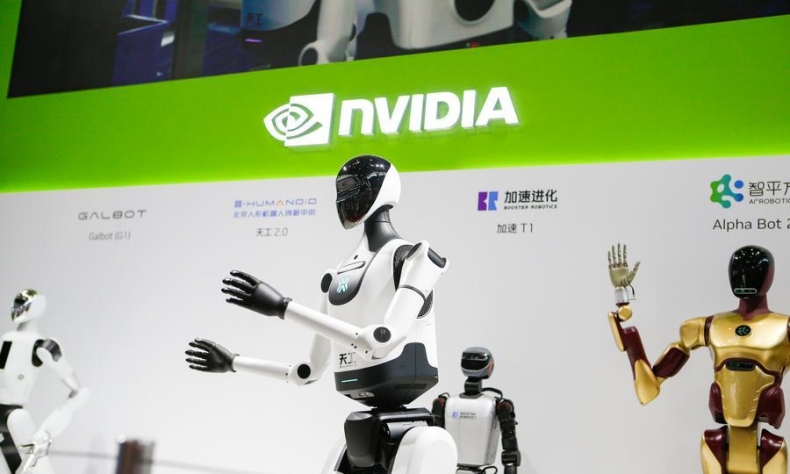
In the context of the global AI landscape, the Nvidia-Unitree partnership demonstrates that despite the strategic competition between China and the U.S., complementary needs still exist.
On June 1, U.S. chip maker Nvidia’s CEO Jensen Huang announced a partnership with Chinese humanoid robot maker Unitree Robotics to launch the Isaac GR00T Reference Humanoid Robot (Unitree H2 Plus), a reference design that combines a Unitree H2 humanoid chassis, Sharpa five-finger hands, Nvidia Jetson Thor onboard compute and Nvidia Isaac GR00T open software and models.
To put it simply, this collaboration involves Nvidia creating the “brain” and Unitree making the “body,” complemented by Singapore-based Sharpa’s dexterous hands. The new design of the reference robot connects the entire chain from hardware integration, AI training and simulation testing to scenario deployment, providing a relatively standard starting point for global research of embodied AI.
The collaboration between Nvidia and Unitree can be seen as a landmark event in the evolution of the global AI landscape, proving that the attraction of industrial specialization remains stronger than the resistance created by geopolitics.
In recent years, technological competition between China and the U.S. has intensified. Increasingly stringent export controls on high-end chips and regulatory barriers to large-scale AI models have led to widespread predictions that the two countries may move toward a deep decoupling at the forefront of AI. However, the partnership between Nvidia and Unitree is an example of positive and constructive cooperation between the two countries in the field of embodied AI. It conveys a strong signal that they are not just competitors in the AI field, but can also be win-win partners.
Nvidia chose Unitree rather than U.S. companies such as Boston Dynamics and Figure AI as the initial core hardware partner for the Isaac GR00T system, indicating that Chinese companies have gained substantive recognition from the world’s top AI computing power giants for their mass production capacity, cost control and supply chain maturity of robot bodies. The investment plans of Unitree Robotics target annual production of 75,000 humanoids, with 90 percent of the core components being domestically produced. The company is capable of offering budget-friendly humanoids costing approximately $10,000. This combination of large-scale production of hardware and extreme cost-effectiveness is exactly what Nvidia urgently needs.
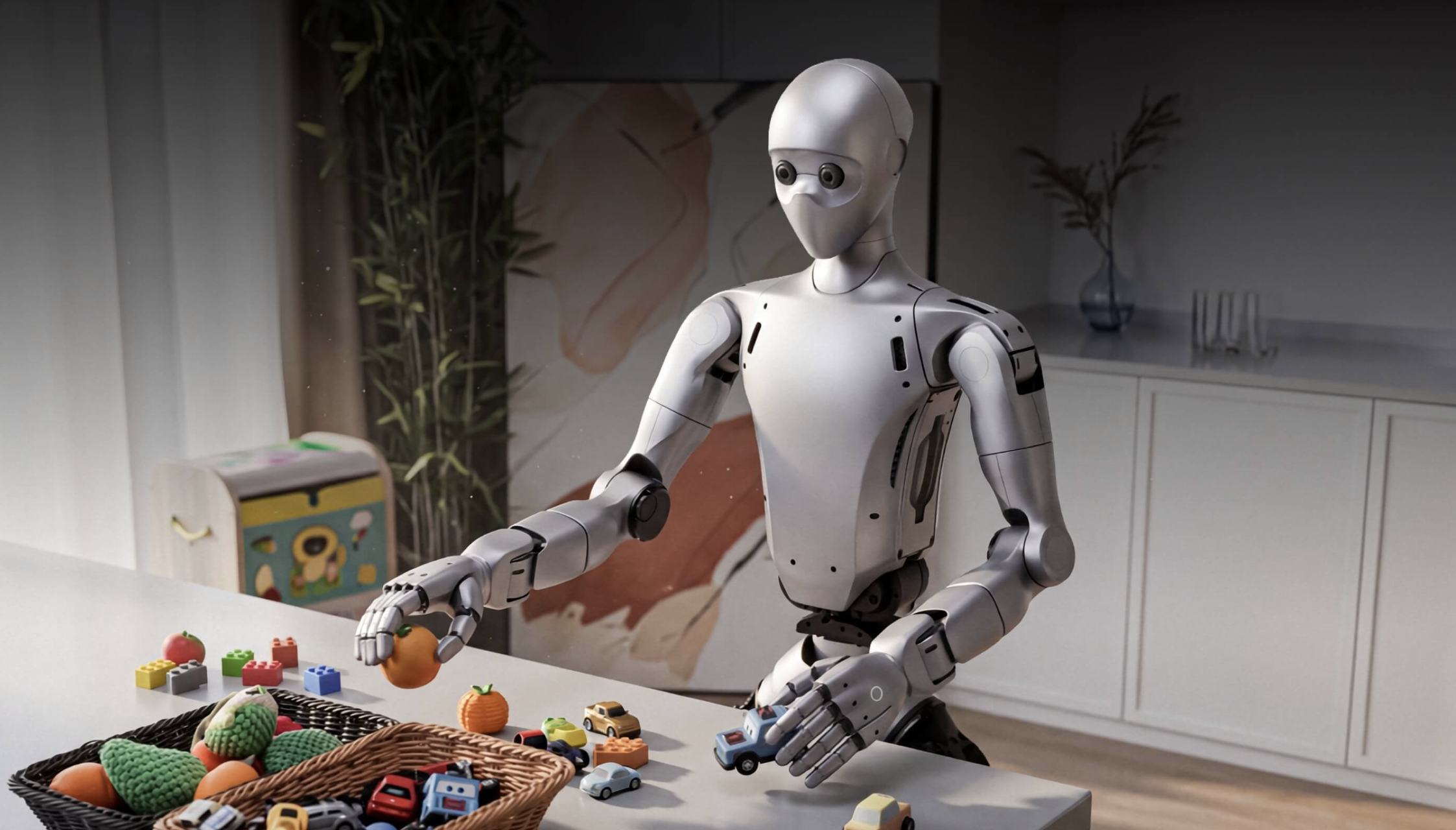
In the context of the global AI landscape, the Nvidia-Unitree partnership demonstrates that despite the strategic competition between China and the U.S., complementary needs still exist. Neither country can achieve a fully independent industrial chain. The reality is that the U.S. controls upstream chips and basic models, while China provides large-scale hardware manufacturing and scenario data, forming a new type of modular collaborative network. This may become a template for future China-U.S. AI cooperation.
H2 Plus is like the Android operating system in the field of robotics, in that no matter what kind of robots you need, such as those for healthcare, education, construction and domestic services, you can develop their skills through the system. This will significantly reduce startup costs, allowing embodied AI research to shift from being monopolized by a few industrial leaders to receiving wide public participation.
This will not be completely favorable for China’s embodied robotics industry. Within the value chain of H2 Plus, Nvidia dominates core computing chips and simulation systems, while Unitree contributes mechanical structures and motion control algorithms. This is reminiscent of the value distribution in the personal computer and smartphone industries of the past, where Chinese manufacturers assumed the risks of hardware research and development and supply chains, while chips, basic models and software ecosystems, the three most profitable segments in the industrial chain, were controlled by U.S. giants.
If Chinese companies remain complacent in their positioning as makers of robot bodies while neglecting the high value-added segments, they may eventually serve merely as the hardware manufacturers for overseas computing power giants. Therefore, the partnership between Nvidia and Unitree should be viewed as both a window of opportunity and a wake-up call that urges China to accelerate the development of its own embodied AI software infrastructure.