Overcapacity: A Convenient Excuse
 Facebook
 Twitter
 Linkedin
 Google +
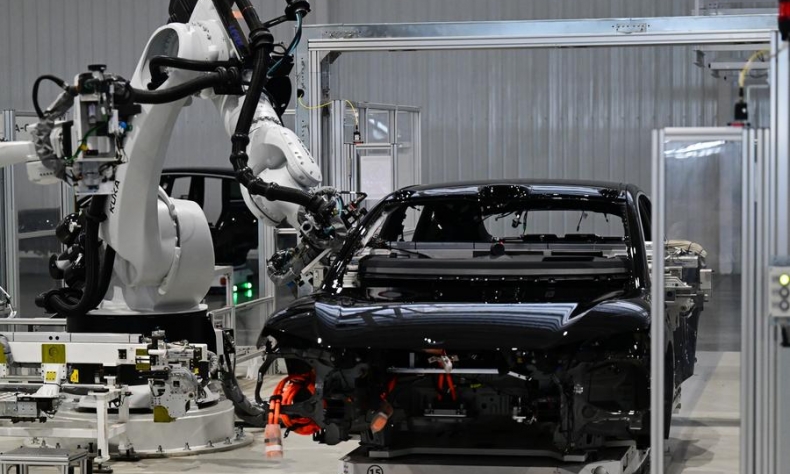
History suggests that charges of overcapacity recur when dominant positions in international trade and investment eventually give way to new rising economic powers.
In recent years, the U.S. economy has experienced growing competition from many parts of the world. U.S. enterprises encountered growing difficulties as they responded to that competition. Many of them then invited governmental interventions to help overcome those difficulties. One result was an important historical shift. A period of neoliberal globalization, especially since the 1970s, gave way to a return to “America First” economic nationalism. Instead of seeing the world as a vast area of economic opportunity, U.S. policymakers shifted to viewing a “cheating” world that victimized the U.S. economically. Washington reacted by means of aggressive trade and tariff wars, sanctions, and military threats and actions.
“Overcapacity” is a convenient rationale to justify such aggressive behaviors. It can convey the idea that some sort of deliberate “cheating” is underway. Politicians need simply to claim that “x” is the appropriate or “optimum” capacity coupled with data showing that the actual capacity is greater than “x.” The problem lies with the claim. Serious economists know well how complex and contentious such claims are, how often economists have differed about them. It has been easy to abuse them for purposes of rationalizing policies undertaken for other reasons that policymakers prefer not to admit.
Investment: a matter of guesses
At any time in the life of a productive investment, the investors (public or private) must make decisions about purchasing and installing productive capacity: reduce it, leave it the same or expand it. Those decisions depend on guesses about: the future of demand for whatever output flows from the installed productive capacity, the future production plans of competitors, and near and far future macro-economic conditions (interest rates, wage rates, foreign exchange rates, inflation rates, tax rates, supply chains, and so on).
Different capacity investments yield different possible economies of scale. Where greater scale enables lower per-unit-of-output costs, investors might buy more capacity as a competitive strategy aimed to capture more of a market. This practice is as old as capitalism. Likewise, any investor’s fear that a competitor might have or acquire some advantage could induce that investor to counter that advantage by means of a capacity increase aimed to realize an economy of scale. Generally, fear of missing out (FOMO) often induces great surges in capacity construction totaling far in excess of current demand. Contemporary examples include worldwide investments in computer chips and data centers.
When investors (public or private) purchase any capacity, they consider its costs and the revenues it will generate. Because of the time between the costs of paying for capacity and the revenues that eventually flow from it, investment decisions entail guesses about the future. The uncertainty surrounding investment is unavoidable. Investments of all kinds, including industrial capacity, have outcomes overdetermined by a literal infinity of influences. Some are known and measurable for investors before they make the investment. Some become visible only during the production of the capacity or during its normal operation. Some elude our awareness for indefinite periods of time. Such un-knowables render all investment decisions partial and incomplete. In practice all we can do is to work with what information we have, make reasonable guesses, and try not to lose sight of the partiality and incompleteness of what we “know.”
One consequence of the limits of our practice is to recognize that the accusation of “overcapacity” makes little sense. Given the uncertainties, guesses and overdeterminants of investments in industrial capacity, there is no single “correct” or “optimum” quantitative capacity. Investors cannot and do not “know” it and the same applies to observers or critics of what they did or do. Consequently there is no way to determine whether any existing capacity is “over” or not.
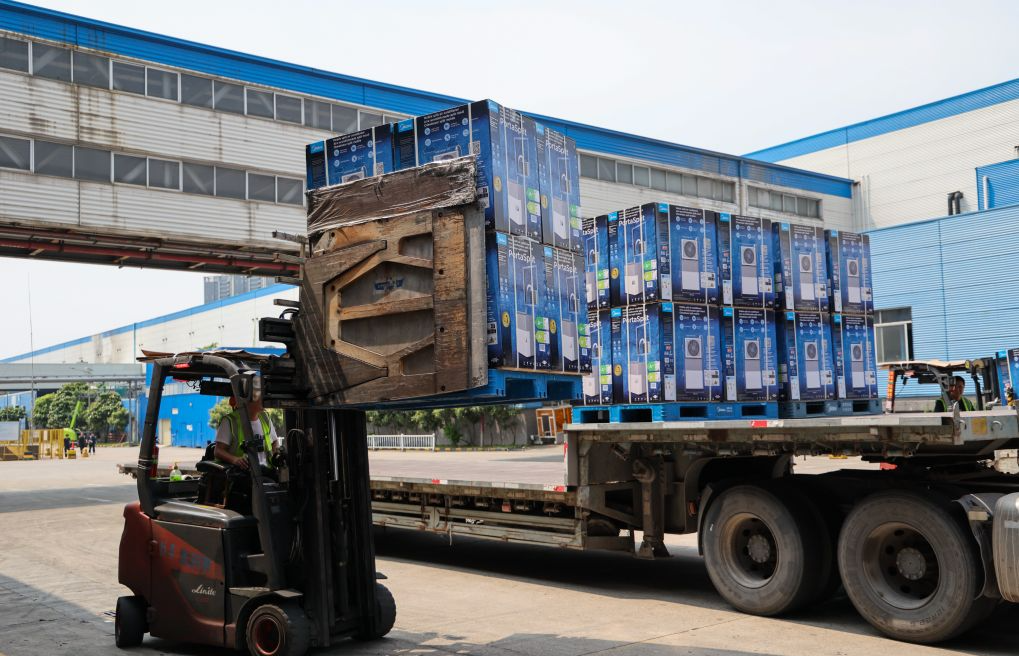
In practice, then, the charge or accusation of “overcapacity” has a purpose other than its mostly empty literal meaning. Accusing your competitors of deploying “overcapacity” aims to convey that they are “cheating” or breaking the rules that explicitly or implicitly govern an economy. Often, such accusations grow to include pricing commodities below their costs of production, obtaining government subsidies, ignoring ecological damages associated with production and so on. Accusers insist that their nation refuses to cheat or violate the rules-based international order, whereas other nations—those targeted by the accusers—do not.
It turns out that all such accusations include problems of identifying and/or measuring the targeted misbehavior. Virtually everything a government does entails benefits to some and costs to others. When are such benefits “unfair subsidies”? “Sale prices” are standard policies to build market shares across capitalism’s history; when do they become “dumping”?
History offers many examples of all such behaviors. Many never rise to the level of public accusations or formal charges. Victims may not suffer enough to undertake the accusations. If too few demand relief from their government, its officials need not write the reports to justify the threats, etc. needed to counter the accusations. Often, stronger and larger nations hurl accusations at weaker and smaller states who dare not do likewise. Compensation may be demanded and paid; behaviors may change under duress.
Accusations without merit
History suggests that charges of overcapacity recur when dominant positions in international trade and investment eventually give way to new rising economic powers. The latter prosper and grow by focusing production on displacing the former, usually in part by producing the same or similar products with higher quality or lower price or both. That happened when Germany and the United States rose in the 19th century to challenge the British Empire. It happened again when Japan and Germany recovered from World War II and challenged the U.S. Now it is happening as China’s dramatic growth challenges the formerly dominant positions of the U.S., Western Europe and Japan.
China also enjoys a structural advantage related to industrial capacity. The well-known instability (business cycles, crashes, etc.) of the West’s largely private capitalist economies poses constant risks to nearly all investment decisions about capacity. A large sector of state-owned and operated enterprises can enable the economic planning that can lessen those risks. The same logic applies when consistent, coordinated regulation supervises a mixed state and private economy. The accusation of “overcapacity” thus dissolves into a complaint that China’s economic system renders its capacity decisions less risky than, say, capacity decisions in the U.S. economy.
Charging overcapacity parallels much policy toward China. The goal is nothing less than reversing or slowing China’s historically unprecedented economic advance. Perhaps because past efforts to achieve that same goal failed, the West hopes now that the charge of overcapacity can succeed to rationalize sanctions and tariffs. The historical record suggests otherwise. Overcapacity charges among competitors during periods of intense competition arise like weeds in a garden. They cause a short-lived stir driven by exaggerated accusation. Then they fade away unless and until similar circumstances in the future revive them.
The author is an American economist, professor of economics emeritus at the University of Massachusetts, Amherst, and a visiting professor at The New School, New York. He is the author of numerous books, including Understanding Socialism (2019) and Understanding Capitalism (2024).