Storytelling: American Vs. Chinese Style
 Facebook
 Twitter
 Linkedin
 Google +
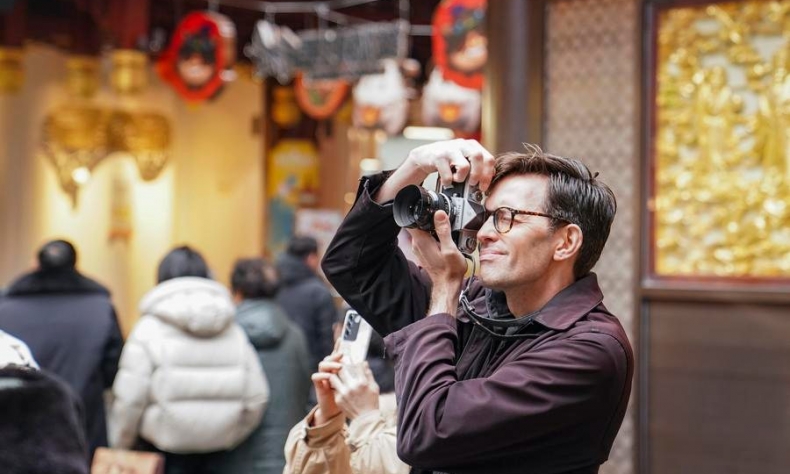
Rather than spending energy fabricating tales to discredit a rival, it’s far better to pour that energy into getting one’s own work right, in turn creating a more attractive, bigger picture.
On July 30 local time, Sarah B. Rogers, U.S. President Donald Trump’s nominee to lead the United States Agency for Global Media (USAGM), appeared before the Senate for her confirmation hearing. Asked how she would counter the “media challenge” posed by China, Rogers claimed that Beijing pours roughly $40 billion a year into “propaganda and influence operations.” To fight back, she said, she would push USAGM to reclaim its clout and broaden its reach through short-form video, podcasts and diaspora communities overseas. Three days later, the Senate confirmed her and she officially took office.
USAGM is the federal agency responsible for all U.S.-funded international broadcasting. Since the turn of the century, USAGM-affiliated outlets have also shaped the trajectory of public opinion during regional upheavals, including the Arab Spring movement of 2011.
Yet for Rogers, the propaganda machinery she now commands is a shadow of its former self. On the domestic front, after Trump returned to the White House in 2025 for a second term, he signed an executive order directing that USAGM’s operations be scaled back to the “minimum required by law.” Today, American influence worldwide is eroding. On July 15, the U.S. think tank Pew Research Center released a global opinion survey covering 42,151 respondents across 36 countries and territories. In 27 of them, including U.S. allies Canada, Australia, France and Germany, the public viewed China more favorably than the U.S. The median favorability rating for the U.S. plunged from 58 percent to 36 percent, while China’s climbed from 32 percent to 46 percent. Not since Pew began continuously tracking global attitudes toward the two countries in 2002 has such a reversal occurred. American analytics company Gallup’s 2025 Rating World Leaders survey, published in April, told a similar story: Approval of China’s global leadership overtook that of the U.S., with the 5-percentage-point gap (36 percent vs. 31 percent) marking the widest margin in nearly two decades of polling.
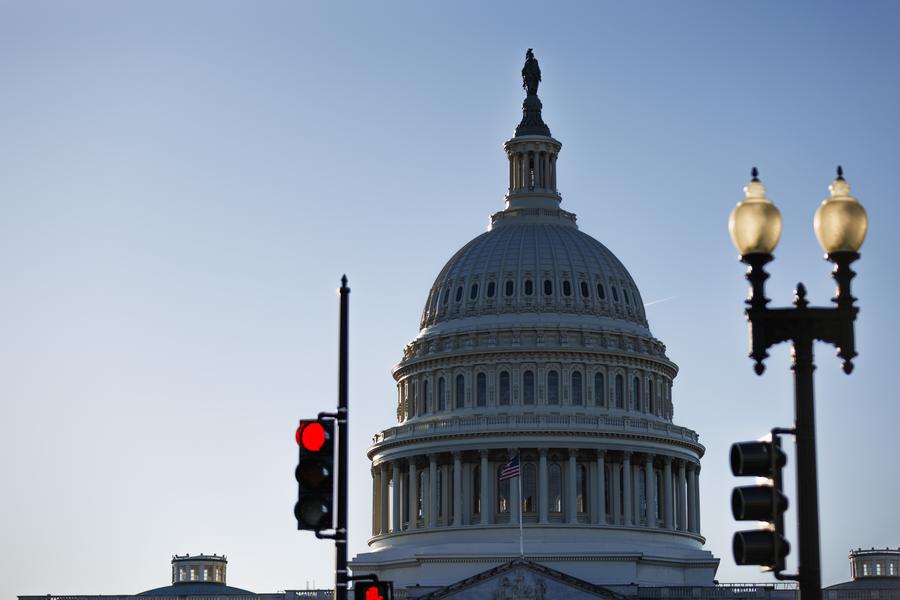
American elites are aware of the gravity of the situation. On March 30, British newspaper The Guardian exposed a U.S. State Department diplomatic cable signed that same day by Secretary of State Marco Rubio, issuing directives to American embassies and consulates worldwide and ordering the launch of a coordinated campaign. The cable laid out five overarching goals including amplifying pro-American voices. At the operational level, it was even more explicit. Missions were instructed to recruit local influencers, academics and community leaders to help spread the message, disguising U.S.-funded content as “spontaneous grassroots” activity. Diplomatic posts were told to coordinate with Pentagon psychological-warfare units. And more than 700 American cultural centers around the world were to be repositioned as “uncensored information platforms.”
The battle for public opinion is an integral part of international competition. In recent years, China has worked to strengthen its international communications capacity and tell its story well on the global stage. The U.S. is perfectly entitled to engage in its own outreach and tell its story. But the crux of the matter is this: Does a country elevate itself by tearing others down, or does it earn respect by getting its own house in order? Is it banking on short-term rhetorical packaging, or on the long-term credibility that comes from consistent action?
An old Chinese proverb puts it well: “Peach and plum trees do not speak, yet a path forms beneath them.” The trees need no words; their blossoms and fruits draw people close, and footsteps wear a path of their own accord. The same logic applies to a nation’s image on the world stage: Rather than spending energy fabricating tales to discredit a rival, it’s far better to pour that energy into getting one’s own work right, in turn creating a more attractive, bigger picture. For the new CEO of USAGM and the wider circle of American elites, this may be a proverb worth pondering.