From Silk to Silicon: What Will China Bring to the World Next?
 Facebook
 Twitter
 Linkedin
 Google +
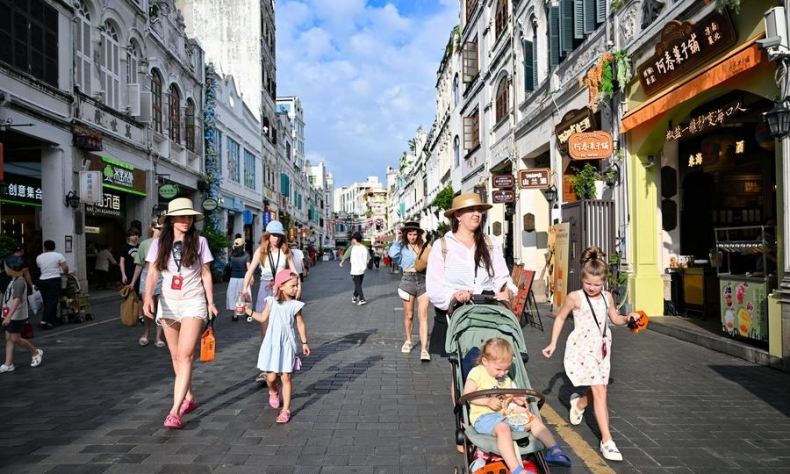
Today, as in the age of paper and porcelain, China’s workshops and its inventiveness are once again offering the rest of humanity what they have offered for so long.
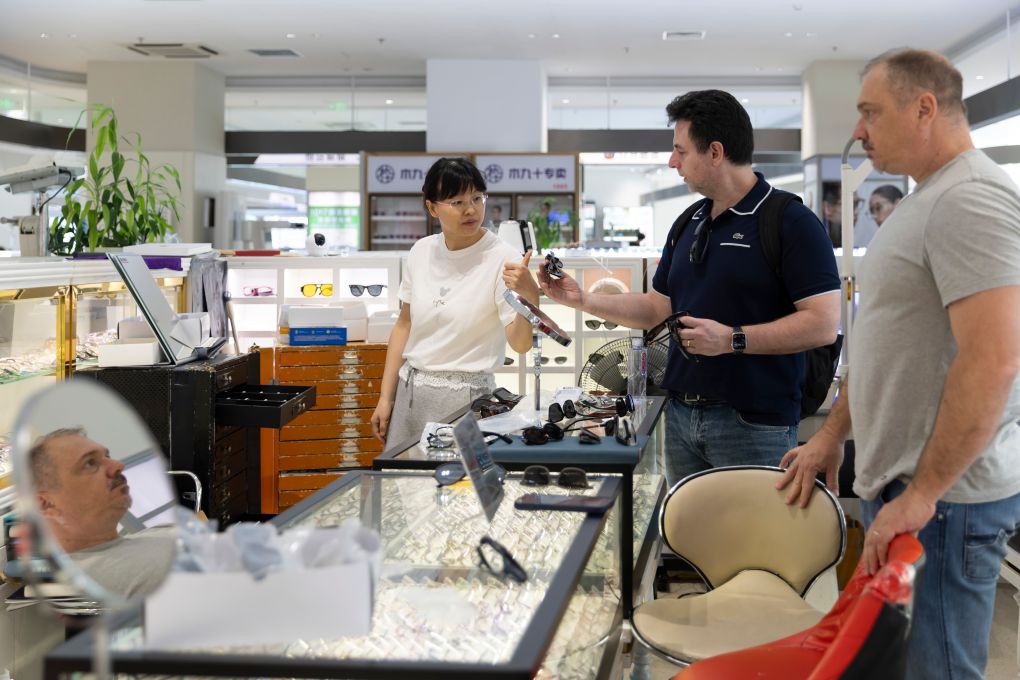
Something has changed at China’s border controls. Under its visa-free policies of recent years to numerous countries, and especially this year, travelers have been arriving in greater numbers than ever, and many of them are leaving with their suitcases full. That in itself is nothing new. What is new is what they carry home. A generation ago, a visitor returned with tea, a bolt of silk, perhaps a length of embroidered cloth. Today, guided less by guidebooks than by the videos and recommendations that circulate on social media, they leave with something else entirely, a smartphone, a small folding drone, a pair of AI glasses, a designer toy that half the world seems to be collecting at once. The souvenirs have changed, and the change says more than it first appears to.
For a historian of China, none of this comes as a surprise. It looks, in fact, like the newest verse of a very old song. A civilization that has spent several thousand years turning ingenuity into objects that ordinary people can hold, use, and want is not likely to stop now. The particular things are unfamiliar, but the instinct behind them is very old. China has always been, above all, a nation of makers, a place where cleverness was measured less by what it could prove than by what it could produce.
The clearest evidence sits in every schoolbook under the name of the Four Great Inventions of Ancient China, “四大发明”, namely papermaking, printing, the compass, and gunpowder. It is worth pausing on what these actually were. They were not abstractions or elegant theorems but practical technologies that changed the daily texture of life far beyond China’s own borders. Paper gave the world something cheap to write on, and printing, refined in China with movable type generations before Gutenberg, gave it something to read, together placing knowledge within reach of people who had never been allowed near it. Within a few centuries, papermaking had spread westward through Central Asia, and Samarkand and then Baghdad were making paper long before Europe was. The compass let sailors cross open water they had once feared, and gunpowder, for better and for worse, remade how the whole planet fought and built. These were tools, not treatises, and they traveled well.
Here a famous difficulty must be acknowledged: the question the British scholar Joseph Needham spent much of his life circling. If China was so far ahead for so long, why did the industrial revolution, with its telescopes and its laws and its new way of asking questions, arrive in Europe rather than in China? Some point to the imperial examinations, some to the weight of the bureaucracy, some to the merchant pressures that pushed Europe and were largely missing in China, and some doubt the question is even posed correctly. That debate cannot be settled here. But one distinction bears drawing. Whatever the verdict on modern theoretical science, in the practical realm, in the everyday world of things that make life easier, China was rarely anything other than first. Chinese thought even has a name for this temper, jingshi zhiyong (经世致用), learning turned toward practical use. The gap Needham describes belongs to the realm of theory. The realm of daily life tells almost the opposite story.
Silk came first. The fabric was so closely bound to China that it gave its name to the very road along which it traveled west, and for centuries it clothed rulers and courtiers alike from Rome to Samarkand. Porcelain followed, and offers the plainest proof of all. English simply borrowed the country’s own name and called the substance chinaware, later simplified to china, and small wonder, since for centuries no one outside China knew how to make it. Chinese porcelain became one of the most coveted objects across West Asia and beyond. It filled the treasuries of the Islamic courts, and the Topkapi Palace of the Ottoman Empire still holds thousands of pieces of it, celadon and blue-and-white gathered over many generations. The potters of Iznik spent decades trying to reproduce that blue-and-white for the Sultan’s tables, and the very Turkish word for their glazed ware, çini, is nothing other than the name of China itself. For the finest porcelain the language kept another Turkish word, fagfur, which means, quite literally, the Son of Heaven, Tianzi (天子), the title once borne by the emperor of China. A Chinese product did not merely reach Anatolia. It entered the language twice over, and the local taste with it, and settled there for good. And these were not alone. Song-dynasty China printed the world’s first paper money, jiaozi (交子), centuries before anyone thought to, one more quietly revolutionary convenience aimed squarely at ordinary life. Tea, lacquer, and much else besides, the pattern repeats: things of daily use, made superbly and carried to the ends of the earth.
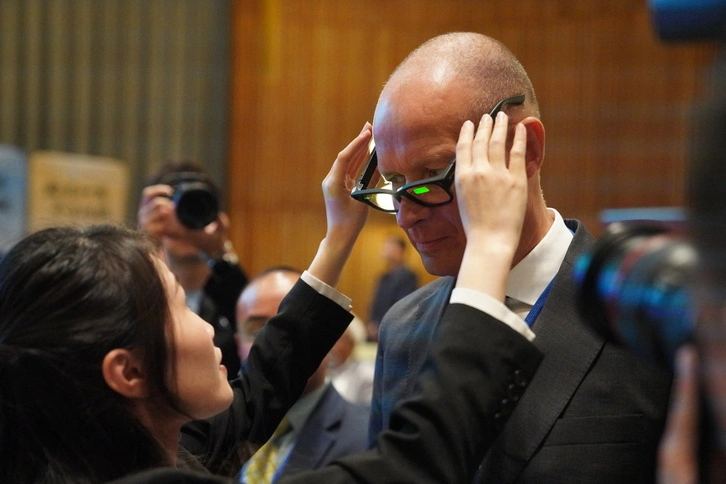
Seen against this long background, the travelers wheeling full suitcases through the airport marks no break with Chinese history but a continuation of it. The designer toy, the folding drone, the AI glasses that murmur directions into a wearer’s ear, the affordable phone that carries the power of a laboratory in a pocket — these are the silk and porcelain of the present century. What binds them to their ancestors is not their cleverness alone but their reach. They are built to be used by the many rather than admired by the few. The genius on display is the same one that once spun thread into silk, clay into porcelain, and paper into money. That has always been the particular Chinese gift, not so much the lonely theoretical breakthrough as the useful thing made well and made available to nearly everyone.
The old Silk Road carried Chinese silk and porcelain westward on the backs of camels, and it changed how distant peoples ate, drank, and adorned their homes. The route now runs through a suitcase and a social-media feed, and it moves a great deal faster, but the current is the same one it has always been. Today, as in the age of paper and porcelain, China’s workshops and its inventiveness are once again offering the rest of humanity what they have offered for so long, practical and reachable solutions, and things that ordinary people, anywhere in the world, are simply glad to carry home.
Giray Fidan is a Turkish sinologist. He is also head of the Department of Chinese Language and Literature at Haci Bayram Veli University, visiting professor at Zhejiang Yuexiu University and a distiguished expert at Beijing Language and Culture University World Sinology Center.
The article reflects the author’s opinions, and not necessarily the views of China Focus.