Fact and Fiction About the Law on Ethnic Affairs
 Facebook
 Twitter
 Linkedin
 Google +
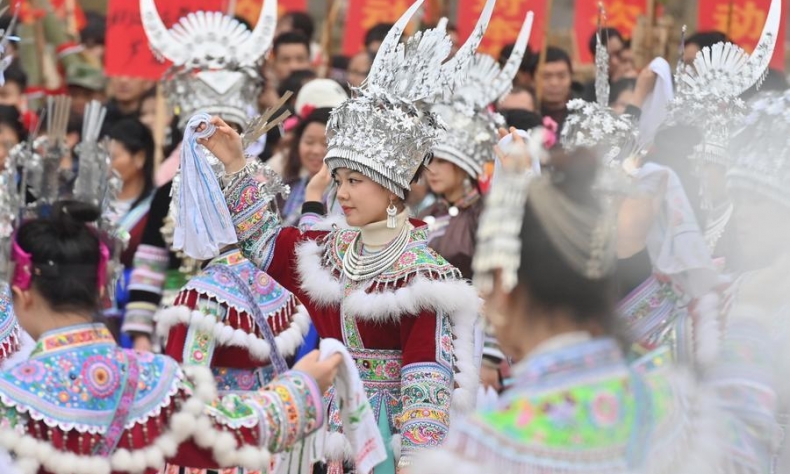
While the adoption of this statute marks a pivotal new starting point, its long-term impact hinges on sustained high-quality development in ethnic minority areas, deeper inter-ethnic integration and the full institutional application of the rule of law in ethnic affairs governance.
The Ethnic Unity and Progress Promotion Law, which entered into force on July 1, codifies China’s decades of tested experience in ethnic affairs governance into a cohesive, systematic legal framework.
Despite its clear objective of consolidating ethnic solidarity and advancing balanced regional development, the law has been subjected to skewed Western media narratives. Unsubstantiated claims of “forced assimilation,” “forced labor” and “extraterritorial suppression” misrepresent its core provisions and legislative intent.
Fact one: Language inclusion does not equal “cultural assimilation” or “cultural erasure.”
Unfounded Western allegations cast common language promotion and minority tongue protection as mutually exclusive alternatives, ignoring their coexistence in dozens of modern multi-ethnic states. More than 100 sovereign nations constitutionally recognize an official national language as a pillar of state building. A shared national tongue allows citizens from ethnic backgrounds to participate equally in public life.
In China, popularizing standard written and spoken Chinese is a constitutional duty designed to equip people with tools for cross-regional mobility and broader market participation. Article 15 of the Ethnic Unity and Progress Promotion Law guarantees ethnic minority language teaching and official use, alongside state support for conserving ethnic minority manuscripts and cultural archives. Over one third of China’s UNESCO-recognized intangible heritage assets originate with ethnic minorities. Such concrete institutional safeguards flatly contradict allegations of “cultural genocide.” China’s bilingual framework, the national common language together with indigenous mother tongues, underpins cultural coexistence. To brand this framework as cultural annihilation misrepresents both related legislation and on‑the‑ground realities, laying bare the critics’ rigid ideological preconceptions.
Fact two: Developmental empowerment does not equal “forced labor” and “compulsory boarding.”
Western commentators resort to a well‑worn rhetorical ploy: They strip Xinjiang Uygur and Xizang autonomous regions’ poverty alleviation, job creation and education policies of their context, and then force‑fit them into frameworks modeled on colonial forced labor and coercive cultural assimilation. This tactic of decontextualization and imposed framing does not stand up to empirical evidence.
Labor transfer schemes in Xinjiang follow three non-negotiable rules: full voluntariness, two-way selection and strict legal compliance. Their purpose is to widen local employment channels and lift household incomes. Verified official statistics record 2.392 million new urban jobs created during the 14th Five-Year Plan period (2021-25), alongside steady gains in urban and rural disposable income. Expanding employment and rising earnings contradict the defining feature of forced labor, under which workers are denied their rightful share of the fruits.
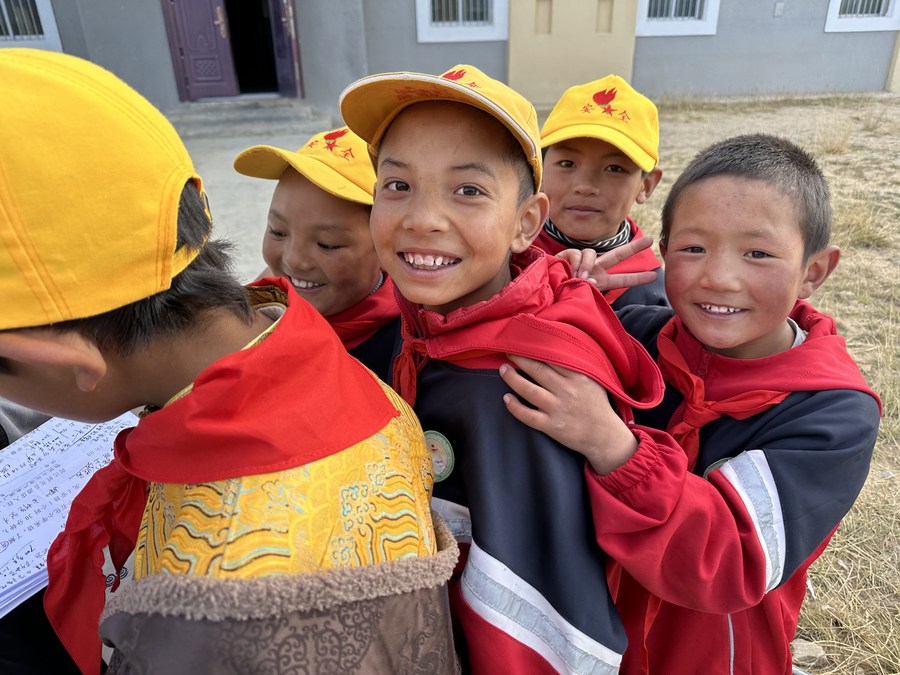
Xizang’s boarding school system responds to stark geographic realities. Pastoral settlements are scattered across high altitudes, with remote commutes making daily school runs impractical. Boarding placement remains a voluntary choice for families and students, and the policy has lifted the school-age enrollment rate to 99.98 percent, nearly achieving universal compulsory education. Casting these access expanding facilities as coercive boarding confuses two distinct categories: infrastructure designed to realize rights and state coercion intended to abolish them.
The debate also lays bare a stark double standard. Several Western nations once maintained nationwide coercive boarding schools for indigenous communities, featuring compulsory schooling, prohibitions on native languages, systematic cultural erasure, elevated mortality and deep‑seated intergenerational trauma. Archival and archaeological evidence confirms that this constituted genuine cultural genocide. China’s education system in ethnic minority areas differs fundamentally in three key respects: Enrolment is voluntary, mother tongue teaching is protected and sustained funding supports cultural heritage preservation. To turn a blind eye to their own violent past while lodging unsubstantiated claims against evidence‑based development policies severely erodes the credibility of Western critics.
Fact three: Cultural revival does not equal ethnic chauvinism.
Some Western media portray the revival of hanfu, the traditional attire of the Han Chinese, as state-orchestrated Han chauvinism engineered to marginalize ethnic minority cultures and erode diversity. The claim lacks factual foundation.
Today’s hanfu boom represents a grassroots, youth‑driven cultural awakening, fueled by a resurgent public fascination with traditional aesthetics rather than top‑down political mobilization. What is more, the trend has yielded positive spillover effects: Consumer and academic interest in ethnic minority cultural heritage such as the Miao ethnic group’s silverwork, Uygur embroidery and Tibetan carpets has surged, creating a virtuous cycle whereby enthusiasm for mainstream heritage fosters greater appreciation of cultural pluralism.
To brand this spontaneous aesthetic movement as a threat to diversity is to overlook its grassroots roots and inclusive ripple effects. In the final analysis, such criticism shoehorns an apolitical cultural phenomenon into a political framework through over‑interpretation.
Fact four: Sovereign protective jurisdiction does not equal “transnational suppression.”
Several overseas NGOs misinterpret Articles 10 and 63 as legal authorization for Chinese long-arm jurisdiction over foreign entities. This reading conflates two distinct concepts of international law: protective jurisdiction and long-arm jurisdiction.
Article 10 stipulates that efforts to advance ethnic unity and progress shall be free from foreign meddling, and rejects external attempts to smear, contain, infiltrate or destabilize China under ethnic, religious or human rights pretexts. Article 63 establishes liability for foreign organizations and individuals engaged in separatist, disruptive activity.

Under established principles of international law, sovereign states may invoke protective jurisdiction over overseas conduct by foreign actors that endangers national security and territorial integrity. This constitutes a recognized jurisdictional basis. It is a world away from the long‑arm jurisdiction practiced by one particular country, which extraterritorially applies domestic law to ordinary commercial activities bearing scant connection to its national interests and amounts to hegemonic overreach of jurisdictional power. China’s exercise of protective jurisdiction targets cross‑border separatism and sabotage that pose a direct threat to core national interests; it represents a legitimate assertion of sovereign self‑preservation.
Global governance value
Multi‑ethnic societies across the globe find themselves locked in a stubborn governance impasse. Old‑fashioned, state‑driven assimilation has forfeited its moral legitimacy, as it seeks to suppress cultural diversity. Meanwhile, radical multiculturalism has hardened ethnic dividing lines, stoked social fragmentation and sharpened political polarization. Many Western countries are struggling with identity‑fueled conflict precisely because they remain caught within this outdated binary framework.
Against this global backdrop, China’s Ethnic Unity and Progress Promotion Law offers a viable alternative that transcends the false choice between forced homogenization and fragmented pluralism. Rooted in the rule of law, the model fosters a dynamic, mutually reinforcing balance between ethnic unity and cultural diversity. It builds a unifying national identity through a shared spiritual home for all ethnic groups, bolsters social cohesion via sustained cross-ethnic exchange and integration, and legally safeguards cultural rights and development interests of ethnic minority groups. Rather than flattening cultural distinctions or entrenching ethnic divides, China’s governance framework delivers orderly, inclusive coexistence within a unified national community, formalizing mechanisms for cross-ethnic exchange, interaction and integration.
This innovative legislative model delivers three global public goods for multi‑ethnic governance. First, it empirically debunks the zero‑sum assumption that ethnic solidarity and cultural diversity are inherently incompatible. Through deliberate institutional design, unity and pluralism can thrive in tandem rather than at each other’s expense.
Second, it offers a practical, replicable rule‑of‑law template for other developing countries grappling with complex ethnic diversity. Its core mechanisms—development‑centered governance, bilingual inclusivity and steady inter-ethnic integration—provide actionable strategies for sustaining long‑term stability and shared prosperity.
Third, it disrupts the Western‑centric paradigm of nation‑building. It demonstrates that modern governance can evolve organically from a country’s unique civilizational heritage and multi‑ethnic societal realities.
No legislation realizes its full dividends without consistent, rigorous implementation. While the adoption of this statute marks a pivotal new starting point, its long-term impact hinges on sustained high-quality development in ethnic minority areas, deeper inter-ethnic integration and the full institutional application of the rule of law in ethnic affairs governance. Guided by the principles of mutual respect and non-interference in internal affairs, China remains open to international dialogue on ethnic affairs governance. It stands ready to share Chinese solutions to advance inclusive development and enduring stability across multi-ethnic societies worldwide.
The author is an international affairs observer.