Ally, Vassal or Pawn?
 Facebook
 Twitter
 Linkedin
 Google +
From Washington’s perspective, Japan is increasingly little more than a pawn to be discarded when convenient, and Takaichi’s trip to the U.S. laid that bare.
An awkward moment played out in the White House Oval Office on March 19, as a Japanese journalist questioned U.S. President Donald Trump at a press conference following the U.S.-Japan summit about why the U.S. had not given prior notice to its allies, among them Japan, regarding possible military operations against Iran.
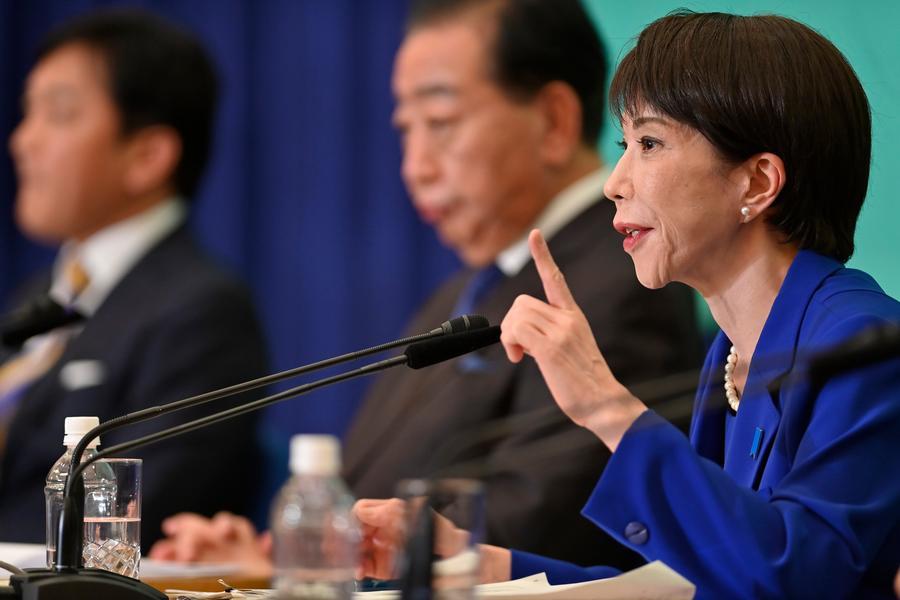
Trump responded without hesitation: “We went in very hard and we didn’t tell anybody about it because we wanted surprise. Who knows better about surprise than Japan? OK, why didn’t you tell me about Pearl Harbor?” As laughter broke out, Japanese Prime Minister Sanae Takaichi appeared at a loss and could only manage a strained smile without saying a word.
This was anything but a joke. In America’s historical memory and collective narrative, “Pearl Harbor” remains shorthand for the humiliation and fury of a nation attacked without warning. It also shaped the underlying logic of U.S.-Japan relations: Washington was determined to keep a firm grip on Japan’s foreign and security policy, ensuring that the country that had once launched a surprise attack could never again pose a serious threat to the U.S.
A typical case is, by the 1980s, when Japan had become the world’s second largest economy, Americans began referring to Japan’s wave of investment in the U.S. “an economic Pearl Harbor.” Washington struck back in 1985 by forcing Japan to sign the Plaza Accord. The deal sent the yen soaring, severely eroded Japan’s export competitiveness and, after the bubble burst, left the Japanese economy trapped in prolonged stagnation, with consequences that continue to this day.
By publicly invoking this history in 2026, President Trump was sending Japan an unmistakably blunt message: Japan may be useful to the U.S., but it has never been seen as a truly trusted ally. Takaichi, like her political mentor Shinzo Abe, adopted a “fawning diplomacy” toward Trump and came to Washington bearing investment commitments worth up to $73 billion, yet still failed to win either respect or credible guarantees from the U.S.
Japan’s investment in the U.S. was, from the outset, imposed under conditions of outright economic coercion and deep inequality. In late November 2025, Japan was pressured into pledging $550 billion in investment in exchange for tariff relief. By February this year, the first $36 billion of investment had already been put in place. In just two months, Japan had completed nearly one fifth of its pledged investment, even though the deadline for fulfilling the full commitment was January 19, 2029.
Notably, by the end of 2025, Japan’s total national debt had exceeded 1,342 trillion yen ($8.6 trillion), a record high, and its debt-to-GDP ratio had also risen above 260 percent. Against this backdrop, Japan remained eager to prove its loyalty to the U.S.
For Takaichi, she hoped her first visit to the U.S. as prime minister would win public backing from President Trump and convert it into political capital at home. At the same time, she also had to fend off U.S. pressure for Japan to send naval forces to escort shipping through the Strait of Hormuz.
Japan has long maintained friendly ties with Iran, a key energy supplier, and any decision to join a U.S.-led escort mission would mark a major turn in Tokyo’s Middle East policy. Back in 2019, then Prime Minister Shinzo Abe rejected a similar U.S. request, explicitly citing Japan’s friendly relationship with Iran.
More broadly, amid persistent tensions in China-Japan relations, Japan’s right-wing forces have sought to tie the country even more tightly to America’s global strategy, treating it as a strategic opening to hollow out the constraints of the postwar pacifist constitution and accelerate the push toward so-called “normal nation” status.
But that is no longer America’s strategic priority. In the past, the U.S. needed to build Japan up and shelter it as a frontline asset for containing Russia and China in the Far East. Now, the bill is due. Washington intends to squeeze as much value out of Japan as it can for the purposes of putting “America First.” More Japanese investment in the U.S. economy and Japanese naval support for U.S. operations in the Middle East are exactly what Washington wants.
From Washington’s perspective, Japan is increasingly little more than a pawn to be discarded when convenient, and Takaichi’s trip to the U.S. laid that bare.