Cooperation in an Uncertain World: Why the Hungarian-Chinese Relationship Matters
 Facebook
 Twitter
 Linkedin
 Google +
In an age of global challenges, there are numerous issues whose solutions require closer international cooperation.
The world is passing through another era of profound uncertainty. Many had assumed that the age of global crises, wars, and geopolitical tensions was behind us, and that humanity had moved beyond a time when armed conflicts in some parts of the world could dictate the rhythms of daily life. The events of recent years, however, have made it clear that history, in the sense of hegemonism and large-scale confrontation, has not been consigned to the past.
Today, even those who had never experienced the immediacy of war are confronting its reality. For a long time, conflicts existed for them only in the pages of history books. Now, it has entered the present.
Confrontations, moreover, no longer occur exclusively on battlefields. Across much of the world, competition waged with economic tools has emerged as a force that shapes nations’ room for maneuver as decisively as traditional armed conflicts do.
Yet, these global challenges are conveying a crucial lesson to us: no country can resolve them alone. Whether it is climate change – the effects of which we have been feeling for years – or the rapid development of artificial intelligence, which in the coming decades may fundamentally reshape how societies function, these are issues that demand collective responses.
The key to rising above this is cooperation.
In this respect, the relationship between Hungary and China offers a telling example. Though geographically distant, the two countries have in recent years built an increasingly close and pragmatic partnership, proving that a mutually beneficial relationship can indeed exist between two countries of different sizes.
Such cooperation rests on a shared understanding: different countries, cultures, and civilizations do not see the world in exactly the same way. The foundation of a durable relationship lies precisely in the ability of each party to find common ground while respecting their differences.
A key milestone of the bilateral relationship was set in 2024. During President Xi Jinping’s visit to Hungary, the two sides decided to elevate their partnership to an all-weather comprehensive strategic partnership for the new era. While such diplomatic steps set the direction for the bilateral ties, the strengthening of people-to-people connections remains equally vital.
Bilateral cultural and educational cooperation has grown visibly in recent years. Currently, more than 2,500 Chinese students are enrolled in Hungarian institutions, while Hungarian students can pursue studies in China with the support of Chinese scholarships. Numerous universities in the two countries have established exchange programs, joint research projects, and faculty partnerships.
Direct flights can also play an essential role in bringing people closer. Today, more than 25 flights operate weekly between Budapest and several Chinese cities, greatly facilitating people-to-people exchanges.
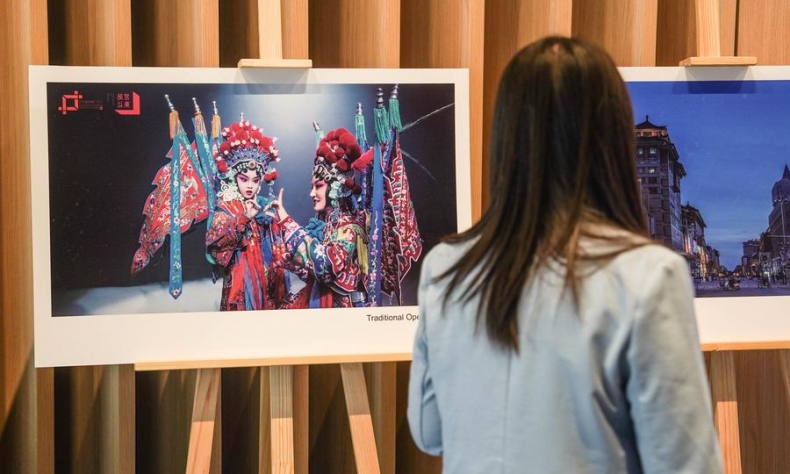
Cultural dialogue between the two countries has been further enriched by reciprocal exhibitions and cultural programs. Museums in both countries regularly host displays that allow visitors to engage with each other’s heritage without leaving home.
Cultural influences are increasingly woven into everyday life. In Hungary, Chinese cuisine is widely enjoyed, and growing interest in Chinese tea culture offers many a meaningful encounter with tradition. In addition, an increasing number of Hungarians practice Chinese Kung Fu or Tai Chi. Clearly, getting to know each other’s culture helps build a strong and lasting bond between the two countries.
It is a particular joy for me that my daughter was able to attend the Hungarian-Chinese Bilingual School. While still in high school she spent half a year in Beijing on a scholarship, where she studied the Chinese language and experienced Chinese culture firsthand. One of my proudest moments came in 2024, when she welcomed President Xi at Budapest Airport and exchanged words with him. That experience reminded her and me that what truly brings bilateral relations to life are in-person meetings and exchanges.
Economically, bilateral cooperation continues to deepen. Hungary has become one of China’s most significant European investment destinations. Alongside growing investments, trade has expanded, and Hungary – particularly Budapest – is increasingly functioning as a Central European logistical hub for Chinese goods entering the European market.
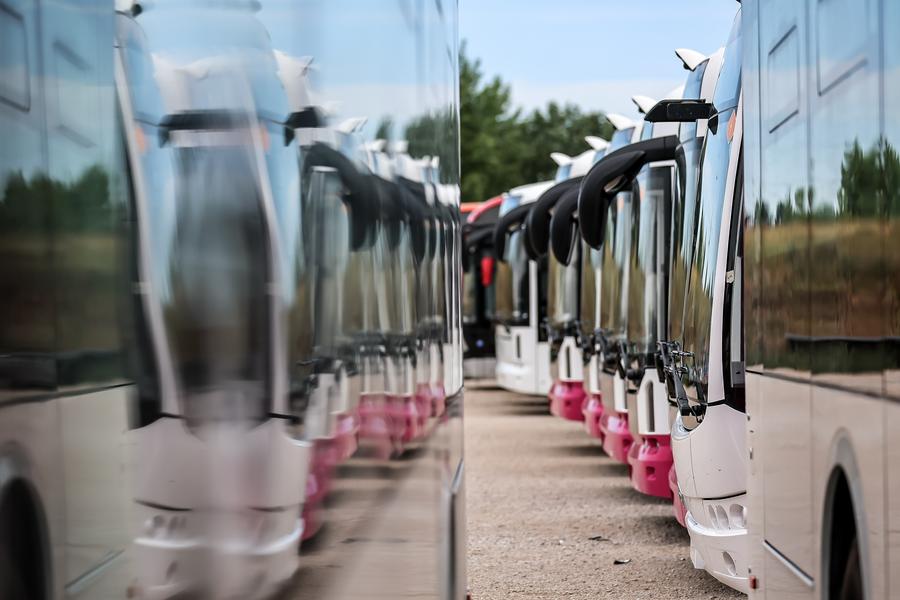
One of the most exciting developments in economic cooperation is that the Chinese car manufacturer BYD is opening its first European passenger car production unit in Hungary, a move that could mark a new chapter in bilateral industrial cooperation.
Beyond state-level engagement, ties between provinces, regions, and cities also matter. Sister-city and sister-province partnerships allow cooperation to develop in more direct and locally grounded ways.
As a member state of the European Union (EU), Hungary has a particular interest in seeing balanced and long-term cooperation between the EU and China. The leaders of major EU countries – such as France, Germany or Spain – regularly visit Beijing and conclude agreements for their countries.
In the long term, however, what is truly important for the EU and China is to establish a stable, predictable, and constructive partnership. In an age of global challenges, there are numerous issues whose solutions require closer international cooperation.
In the end, the Hungarian-Chinese relationship is more than a bilateral matter. It is a testament to the possibility of dialogue and mutual gain in a fragmented world, and a reminder that even in uncertain times, cooperation remains the most reliable path forward.
Lajos Oláh is deputy speaker of the Hungarian National Assembly.