China’s Zero-Tariff Policy Offers Africa A Rare Shot at Economic Transformation
 Facebook
 Twitter
 Linkedin
 Google +
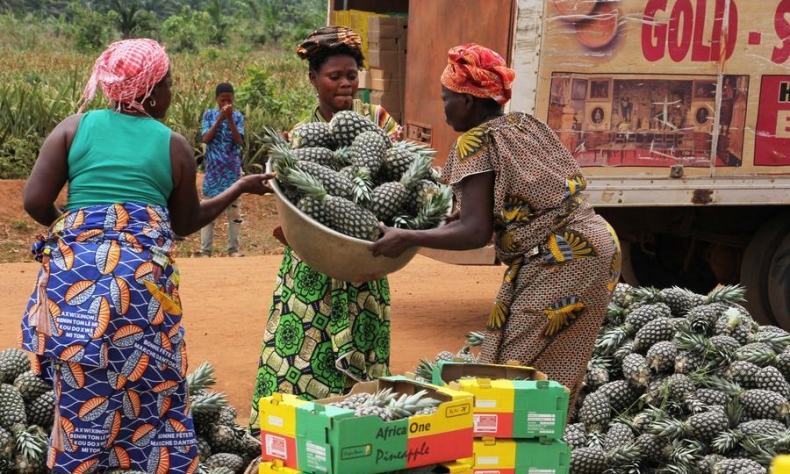
In an era increasingly defined by closed doors and economic nationalism, China has opened one — wide enough for Africa to walk through and reshape its economic destiny.
In the shifting geometry of global trade, few moves in recent years have carried the quiet audacity of Beijing’s decision to eliminate tariffs on imports from 53 African countries that have established diplomatic relations with China. Announced with little of the bombast that often accompanies major-country economic policy, the measure, effective from May 1, 2026, nonetheless represents one of the most sweeping unilateral trade liberalizations ever extended to almost an entire continent.
Instead of a geopolitical gambit, this policy is a recalibration of Africa’s place in the global trading system, and a potential catalyst for long-delayed structural transformation across the continent.
A market opening of unusual scale
The headline figure tells its own story. China will grant zero-tariff access across 100% of tariff lines, not merely for select commodities, but for all qualifying goods produced in eligible African economies. This is not preferential trade in the narrow, technocratic sense; it is near-total market access to the world’s second-largest economy.
That matters because scale matters. China has been Africa’s largest trading partner since 2008, with bilateral trade reaching approximately $348 billion in 2025, a 17.7% increase on the previous year. Yet beneath that headline lies a persistent imbalance. African countries exported roughly $123 billion to China, while importing $225 billion, an asymmetry that has long fed skepticism about the relationship.
The zero-tariff policy is, in part, an attempt to correct that imbalance. By removing duties, estimated to be worth around $1.4 billion annually, Beijing is lowering one of the most immediate barriers to African exports.
But tariffs are only one piece of the puzzle.
From commodities to complexity
Africa’s enduring trade deficit with China is not primarily a function of tariffs; it is a reflection of structure. The continent exports largely unprocessed commodities — oil, copper, cobalt — while importing higher-value manufactured goods.
Herein lies both the promise and the risk of Beijing’s policy.
On the optimistic reading, zero tariffs create a rare window for African producers to climb the value chain. With duty-free access, sectors such as agro-processing, textiles and light manufacturing could finally gain a foothold in Chinese markets. Already, officials in countries like South Africa point to agriculture as a beneficiary, with expanded access for food exports through streamlined “green channels.”
If even a modest shift occurs, from raw cocoa beans to processed chocolate, from unrefined minerals to semi-finished goods, the developmental implications could be profound. Industrialization in Africa has long been constrained by limited market access; China, with its vast consumer base, offers precisely the demand scale such a transition requires.
Yet optimism must be tempered. Preferential access does not automatically translate into competitive exports. African firms still face constraints in infrastructure, logistics and standards compliance. As analysts caution, “the real gains will depend on how quickly African economies respond.”
In other words, the opportunity is real, but it is not self-executing.
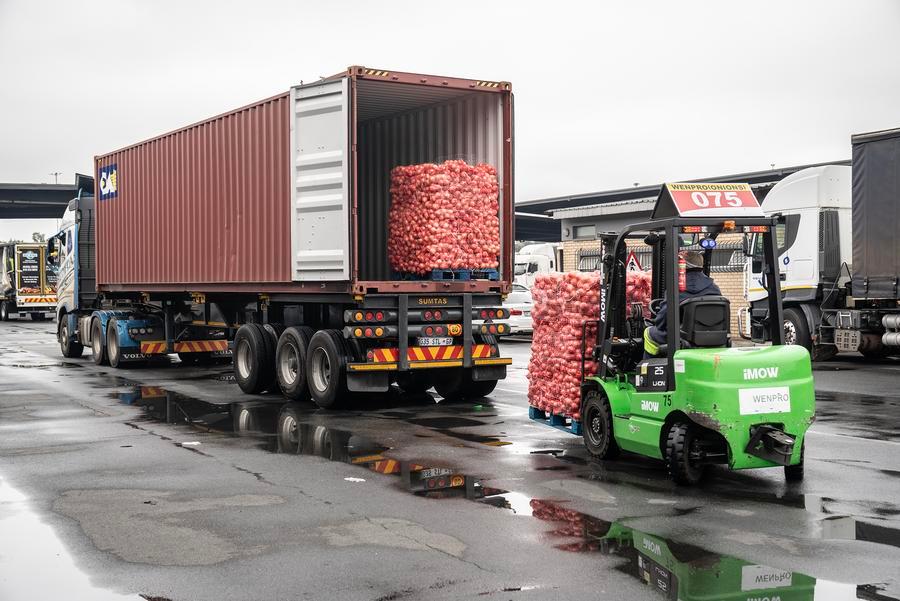
A strategic bet on the Global South
From Beijing’s perspective, the rationale is equally clear. While the zero-tariff policy offers preferential treatment to African countries, it is not charity. Instead, it is a well-grounded, practical measure designed to support African nations, boost their export capacity, and fuel their long-term development.
In a world of fragmenting supply chains and rising protectionism, China is repositioning itself as the champion of South-South cooperation. By opening its market to African goods while Western economies tighten theirs, Beijing strengthens both its economic and diplomatic ties with Africa.
This policy will bring about a win-win situation, benefiting Chinese enterprises as well. As China’s domestic economy slows, Africa offers both a source of raw materials and a destination for Chinese exports, from electric vehicles to solar technology. The tariff move helps secure that relationship, creating a shared future for both China and Africa.
Development through trade
The historical record offers grounds for cautious optimism. Trade, when coupled with industrial policy, has been a proven pathway to development, from East Asia to parts of Latin America. What China is now offering Africa resembles, in some respects, the market access that once underpinned its own export-led rise.
There are early indications of what could follow. Manufacturing hubs in countries such as Ethiopia, Kenya and Morocco are already positioning themselves to take advantage of improved access. Middle-income economies, including Nigeria, Egypt and South Africa, stand to benefit particularly, given their relatively more developed industrial bases.
If leveraged effectively, the policy could accelerate regional value chains under the African Continental Free Trade Area, enabling African firms to scale production across borders before exporting to China. That, in turn, could stimulate job creation, technology transfer, and, crucially, product diversification.
The macroeconomic upside is not trivial. Even a 10-15% increase in African exports to China over the next five years could narrow the trade deficit significantly, while boosting GDP growth in export-oriented economies. For a continent where growth remains uneven and often commodity-dependent, such diversification would be transformative.
The verdict
While Beijing’s zero-tariff policy is not a panacea and will not, on its own, industrialize Africa or erase decades of structural imbalance, yet it does something rarer in global trade: it shifts the terms of engagement in favor of a historically marginalized region.
For Africa, the measure is best understood not as a gift, but as an invitation — one that demands a strategic response. Governments will need to invest in infrastructure, streamline customs procedures and support domestic industries. Private sectors must scale up, innovate and meet the standards of the Chinese market.
If they do, the rewards could be considerable. If they do not, the opportunity may pass, leaving the underlying asymmetries intact.
Either way, the signal from Beijing is unmistakable. In an era increasingly defined by closed doors and economic nationalism, China has opened one — wide enough for Africa to walk through and reshape its economic destiny.
Adriel Kasonta is a London-based foreign affairs analyst and commentator. He is the founder of AK Consultancy and former chairman of the International Affairs Committee at Bow Group, the oldest conservative think tank in the UK.