Why Europe Is Watching the Xi-Trump Summit So Closely
 Facebook
 Twitter
 Linkedin
 Google +
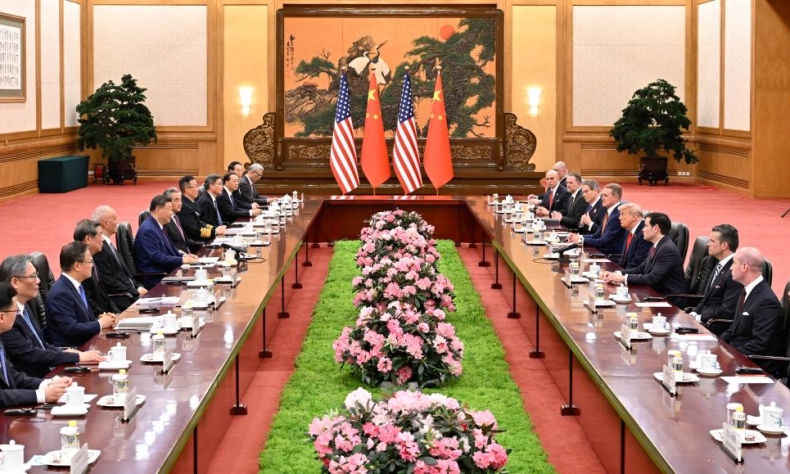
Improved China-U.S. trade relations would benefit Europe significantly by reducing uncertainty across global supply chains and restoring investors’ confidence.
Many Europeans are watching the trajectory of China-U.S. relations with cautious anticipation. What concerns Europe most is not abstract geopolitics but the stability of international trade. Europe’s industrial base, food systems, and economic recovery remain deeply exposed to disruptions in global supply chains and energy markets.
In this context, the Strait of Hormuz has become more than a regional security issue. For European policymakers and businesses, it is increasingly viewed as a potential pressure point that could trigger inflation, food insecurity, and industrial slowdown.
Recent reporting surrounding preparations for the Xi-Trump summit from May 13 to 15 suggests that the United States remains primarily focused on trade negotiations and strategic competition, even as regional instability linked to Iran and maritime security continues to cast uncertainty over global markets.
European hopes for the summit are nonetheless high. Improved China-U.S. trade relations would benefit Europe significantly by reducing uncertainty across global supply chains and restoring investors’ confidence. More broadly, Europeans hope that the two major powers can move beyond a narrow framework of tariffs and strategic rivalry toward a cooperative agenda capable of stabilizing the international economic system.
Three important issues
To understand what is at stake, three structural factors deserve particular attention.
First, the Strait of Hormuz carries roughly one quarter of global seaborne oil trade, along with major liquefied natural gas and fertilizer shipments. United Nations Conference on Trade and Development (UNCTAD) warns that disruptions in the region have already pushed Brent crude prices above US $90 per barrel, elevating risks across energy, freight, fertilizer, and food costs.
Second, Europe’s trade ties with China remain substantial despite rising geopolitical tensions. EU imports from China reached €559 billion in 2025, while EU goods exports to China totaled €360 billion, making China one of the EU’s largest trading partners. The relationship spans machinery, automobiles, chemicals, electronics, and increasingly green technologies such as batteries and renewable‑energy equipment. European companies have also accumulated more than US $150 billion in direct investment in China over time. This dense network of supply chains and investment links means that policy shifts on either side can have broad systemic effects.
Third, artificial intelligence (AI) has emerged as the central technological frontier shaping economic and strategic competition. Based on the Stanford HAI 2026 AI Index Report, U.S. private AI investment reached about US $285.9 billion in 2025, far exceeding the roughly US $12.4 billion in tracked private investment in China during the same period. However, China is rapidly advancing in AI applications and infrastructure, with its AI-related products becoming a new engine for export growth in April 2026 and real-world 6G trials approved to bolster future competitiveness. As AI increasingly influences productivity, military capabilities, and global technology standards, the distribution of investment and innovation capacity has become a key determinant of future economic power.
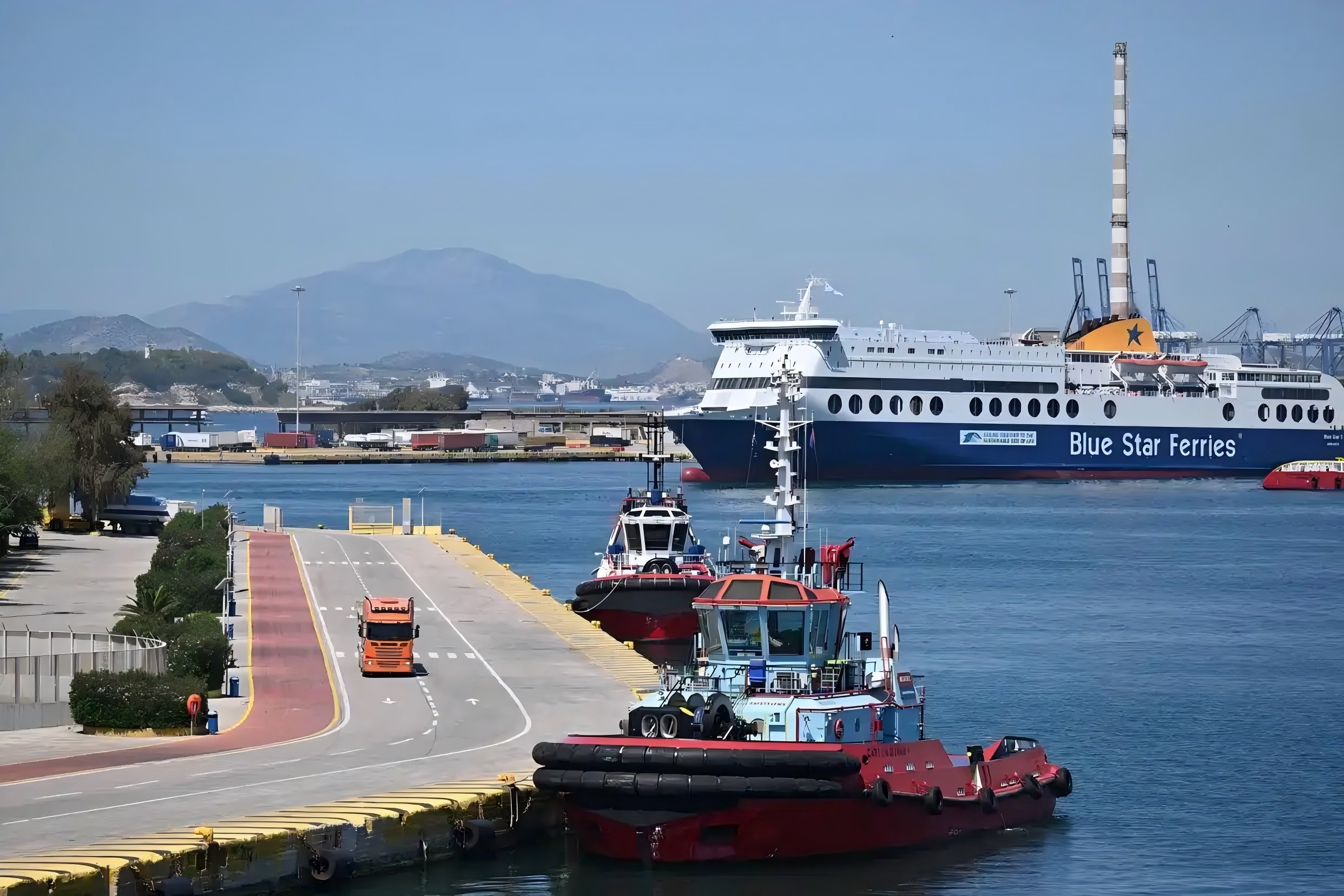
Normalization of China-U.S. trade would reduce uncertainty across the global economy. According to the World Trade Organization, global trade in goods and commercial services reached US $34.65 trillion in 2025, growing by seven percent. Even modest improvement in China-U.S. relations could therefore generate significant spillover effects. Europe would benefit indirectly through lower shipping risk, more stable energy prices, and stronger investor confidence.
This scenario would also strengthen Eurasian logistics. China-Europe Railway Express services handled 5,460 train trips and 546,000 TEUs in the first quarter of 2026, up 29 percent and 22 percent year-on-year respectively. Sustained growth at this pace could make rail freight a significant shock absorber for Europe by 2031, particularly when maritime routes face geopolitical disruption.
Beyond zero-sum thinking
Many Europeans increasingly recognize China not merely as a trading partner, but as a stabilizing force in the global economy. China’s emphasis on infrastructure connectivity, long-term industrial planning, and diplomatic engagement offers an alternative to zero-sum confrontation. The rapid expansion of Eurasian rail connectivity illustrates this approach. Freight routes linking China and Europe are reshaping continental trade by cutting transport times, diversifying logistical channels, and deepening economic interdependence across Eurasia.
For Europe, these rail corridors represent more than commercial efficiency. They symbolize the possibility of a more connected Eurasian future in which economic integration reduces incentives for conflict. In this sense, connectivity itself becomes a form of peace-building.
During the twentieth century, technological competition was often driven by military rivalry and national prestige. Today, another path may be possible. Many Europeans instead envision a collaborative model inspired by European Organization for Nuclear Research (CERN), where scientists from multiple nations jointly develop knowledge as a public good for humanity.
If the United States, China, and Europe pursue isolated AI technology blocs, each side may duplicate costs, restrict knowledge flows, and slow overall innovation. By contrast, cooperation through shared research platforms, standardized safety protocols, academic exchanges, and joint investment mechanisms could dramatically accelerate global productivity growth.
China would benefit from collaborative scientific ecosystems and international trust-building. The U.S. would sustain innovation edge while sharing costs. Europe would gain greater strategic autonomy by participating actively in AI development rather than merely importing technologies developed elsewhere.
This matters because AI is not simply another commercial technology. It is becoming a general-purpose infrastructure comparable to electricity or the Internet. Productivity gains from AI-assisted medicine, logistics, education, climate modeling, and scientific discovery could raise global living standards for decades.
European hopes for the China-U.S. summit are therefore clear. It should help stabilize the situation around the Strait of Hormuz and support greater stability in international trade. What the world needs is not a new technological race, but a CERN-like framework for AI cooperation. In such a structure, AI could evolve not merely as a competitive technology, but a public good serving a global community of shared future.
Thomas Karlsson is a researcher with the Belt & Road Institute in Sweden.