Can China trust Trump?
 Facebook
 Twitter
 Linkedin
 Google +
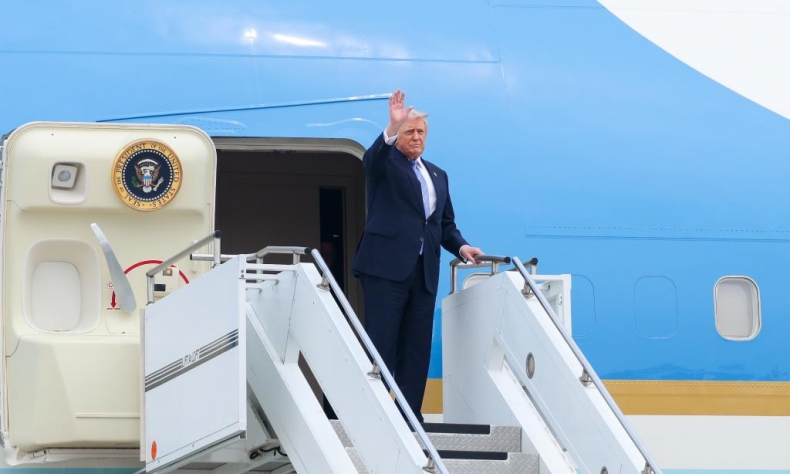
Still, given Trump’s track record, the world is watching closely to see whether the U.S. president will be more predictable and more consistent.
U.S. President Donald Trump’s visit to China was far more than a routine ceremonial event. In the talks with Chinese President Xi Jinping, the two leaders discussed a wide range of issues — from economic cooperation, trade and artificial intelligence to Taiwan, energy security and the conflict in the Middle East. But what comes next in relations between the world’s two most powerful nations?
As President Xi Jinping emphasized, one of the key questions facing the two countries is whether they can avoid the “Thucydides Trap” — the idea that tensions between a rising power and an established one have historically often led to war. To prevent such an outcome, which could have disastrous consequences not only for the United States and China but also for the rest of the world, Xi stressed that Washington and Beijing must be partners rather than rivals. But is Trump interested in a true partnership with China?
His visit to China came at a difficult moment for him. Despite tariffs he imposed on Chinese goods and the anti-Chinese rhetoric he adopted during the COVID-19 pandemic, the American people want their country to have good relations with Beijing. A Chicago Council on Global Affairs survey released in October 2025 found that 53% of Americans favor “friendly cooperation and engagement” with China, up from 40% in 2024. Trump’s China policy, therefore, does not appear to enjoy strong public support.
His popularity at home has also been significantly undermined by the U.S.-Israeli strikes on Iran and the rising inflation triggered by the conflict. Initially scheduled to visit Beijing in March — with discussions on tariffs reportedly at the top of the agenda — Trump’s plans appear to have been disrupted by U.S. military action in Iran.
Trump most likely hoped to achieve a swift victory in Iran and then negotiate with Xi from a position of strength. That did not happen. The United States failed to accomplish any of its strategic objectives in the Islamic Republic, and this may have contributed to the delay of his visit to Beijing.
The two leaders finally met from May 13 to 15. Reports suggest Iran was one of the major topics they discussed. Weeks before his meeting with Xi, Trump repeatedly asked China to help ease tensions with Tehran. But shortly before departing for Beijing, he said he “does not need” China’s assistance in ending the war on Iran.
Such reversals are consistent with Trump’s often unpredictable political style. His latest statement suggests that he once again sought to approach negotiations from a stronger bargaining position. Moreover, his repeated references to Xi a “great leader” could be part of his negotiation strategy.

“The relationship between China and the USA is going to be better than ever before,” Trump told Xi.
But the Chinese leadership is not naive. They know Trump and are familiar with his tactics and unpredictable policies. While seeking to improve relations with Beijing, he simultaneously announced an arms sale package to Taiwan worth around $14 billion. At the same time, he expects China not to sell weapons to Iran.
Such an approach is unlikely to result in warmer ties. China has reiterated that the Taiwan question is the very core of China’s core interests.
That does not mean Beijing will close the door to cooperation with the United States. In a highly globalized world, the two countries’ economies are closely intertwined. It is therefore no surprise that Trump was accompanied by top CEOs of major American corporations. He publicly encouraged them to expand cooperation with China.
Trump is also a businessman. As such, he is aware of the importance of the Chinese market for U.S. companies. That is why he reportedly asked China to “open up.” But China is already open. Thousands of American firms operate in China, and despite Trump’s tariffs, the two countries continue to trade.
“U.S. companies are deeply involved in China’s reform and opening up, and both sides have benefited from this,” Xi said during a meeting with major American business leaders.
The Chinese leadership has on several occasions stressed the importance of normalizing economic relations with the United States, one of China’s major trading partners. At the Beijing summit, Xi said the two sides had made progress on trade talks, pointing out that “trade wars have no winner.”
Following their meeting in South Korea last October, communication channels between the two countries appear to have improved, cooperation has expanded and disagreements have narrowed. During the Beijing summit, the two sides agreed to work toward building a constructive bilateral relationship of strategic stability.
The Chinese leader posed three questions during the talks with his U.S. counterpart on May 14: Can China and the United States overcome the Thucydides Trap and create a new paradigm of major-country relations? Can we meet global challenges together and provide greater stability for the world? Can we build a bright future together for our bilateral relations in the interest of the well-being of the two peoples and the future of humanity? He stressed that the leaders of the two major countries “must jointly provide answers to these questions.”
Beijing is expected to keep pressing for improved ties with Washington to avoid confrontation. Still, given Trump’s track record, the world is watching closely to see whether the U.S. president will be more predictable and more consistent.
Nikola Mikovic is a freelance journalist in Serbia, covering mostly Russian, Ukrainian and Belarusian foreign policy issues.