Why Cuba Could Be America’s Next Target?
 Facebook
 Twitter
 Linkedin
 Google +
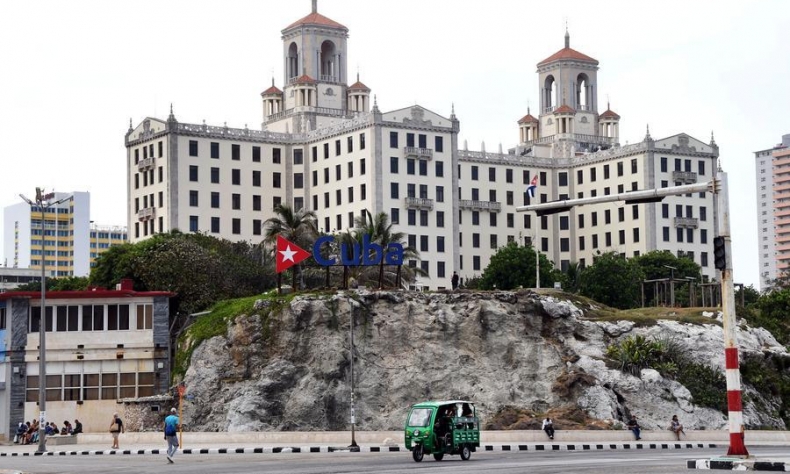
The preparations for an attack on Cuba are a threat not only to Cuba, but to all countries who value sovereignty and the emergence of the multipolar world.
Since the 1959 Revolution, the United States has sought to overthrow Cuba’s socialist government by any means possible. From the Bay of Pigs invasion and hundreds of assassination attempts against the late leader Fidel Castro to the six-decade blockade, the relationship has been defined by U.S. aggression.
Cuba is a central node in the operation to return the Americas to being the docile “backyard” of the U.S., which was outlined in the Monroe Doctrine. Since this has intensified with President Donald Trump’s presidency, many analysts are labeling it the Donroe Doctrine.
The U.S. is facing a period of deep crisis. Its existence as a state for decades has been intertwined with its geopolitical position as global hegemon. But as the world transitions into multipolarity, a transition spearheaded by China, Russia and others, the U.S. experiences this as an existential threat to its global power, that is, to the force it could exert over countries to give up their raw materials and mineral wealth through imposed unilateral trade “deals.”
It would be erroneous to think that for the U.S. this is merely a problem of “foreign policy.” It hits at the very center of what the American state is. The crisis is not just one the U.S. faces abroad but at home too.
The failure of the U.S.-NATO proxy war against Russia and the U.S.-Israeli war on Iran is accelerating this decline in the U.S.’ global power. More countries in West Asia, Africa and the Americas are turning to China and Russia as key trading partners who offer them mutually beneficial deals, not unilaterally imposed arrangements. Under this predicament the U.S. has tried even harder to secure its influence in the Americas, which it considers to be the last global hemispheric region it could have virtually total control over.
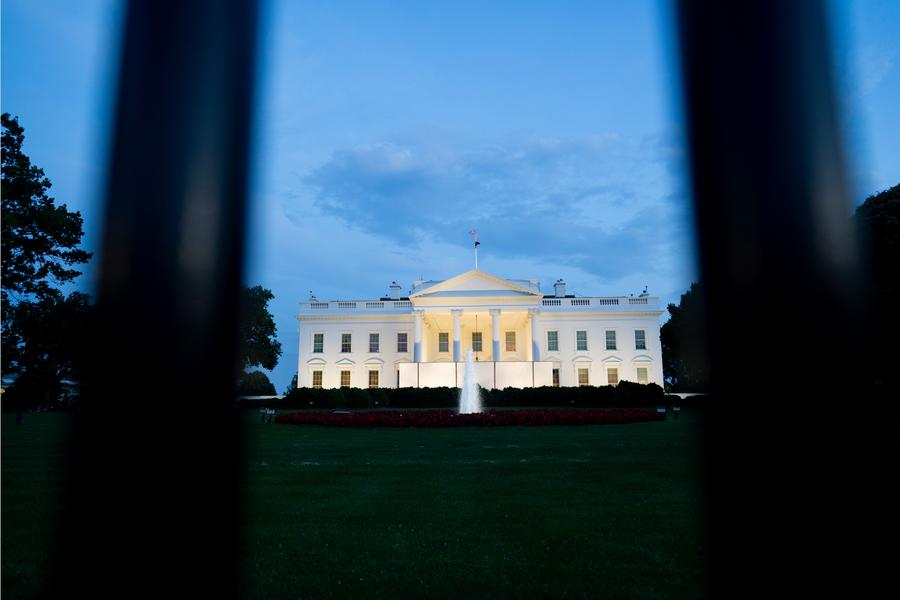
So, why a renewed and more intensified pressure on Cuba? There are two reasons, both tied to this objective crisis.
The first is economic. In 2025, a report by the U.S. Government Geological Survey outlined the most important minerals for national security and new economies. Among those listed are nickel and cobalt, which Cuba just so happens to have one of the largest reserves in the world, ranking fifth in cobalt and third in nickel. Combined with the reserves Cuba has of oil and gold, and with its strategic geographic positioning in the intersection of the Gulf of Mexico, the Caribbean Sea and the Atlantic Ocean, there are clear economic motives for a U.S. declining in global influence to be turning its attention more aggressively toward Cuba.
In addition to what Cuba provides in terms of crucial minerals, resources and geographical positioning, the country, as a result of the crippling sanctions, has a labor force which, under conditions of U.S. control, could be employed for pennies on the dollar of what companies could pay Mexican or American workers. The cost of producing with a Cuban labor force could be extremely low if Cuba’s sovereignty is lost in U.S. aggression.
The second reason is symbolic. Since the fall of the Soviet Union, Cuba has been seen as a bastion of resistance to capitalism and U.S. imperial aggression. The symbols of the Cuban revolution, such as the Cuban flag and the faces of Castro and Che Guevara, are flown across the world, from West Asia, Africa to the Americas. For hundreds of millions of people around the world, Cuba’s existence as a socialist state some 150 km off the U.S. coast is a sign of almost biblical resistance, of David resisting Goliath. If Cuba falls, the global forces of anti-imperialist resistance would be terribly demoralized.
It is for such reasons that the preparations for an attack on Cuba are a threat not only to Cuba, but to all countries who value sovereignty and the emergence of the multipolar world. How the world, especially those spearheading the transition to multipolarity, decides to react to American aggression toward Cuba will dictate how bold the U.S. will be in exerting its will unilaterally across the world.
The author is a Cuban American philosophy instructor at Southern Illinois University, Carbondale, the United States, and Secretary of Education for the American Communist Party.