
The COVID-19 Counter-Narrative
By working closely with India, the EU and others, China can and must play a leadership role in reforms that strengthen international organizations and multilateralism.
By working closely with India, the EU and others, China can and must play a leadership role in reforms that strengthen international organizations and multilateralism.

China’s approach to address problems including those triggered by the novel coronavirus pandemic is people-oriented, a philosophy that is deeply rooted in its culture
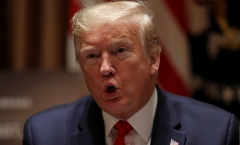
It is not only building a cold wall between the US and China, but also pushing the two countries into a cold war. Trump’s China strategy is simply short- sighted and un-strategic.

Hong Kong is unfortunately being used as a political football against China by certain outside forces. It is urgently necessary for the HKSAR financial sector to hedge against this move by the U.S. in order to maintain Hong Kong’s status as an IFC.

Although the continent accounts for only a small proportion of confirmed cases in the world so far, the pandemic has dealt a heavy blow to the African economy

The outbreak of the pandemic in early 2020 has led to a global recession. Would the economic downturn help combat climate change? From a scientific perspective, the answer is not as simple as yes or no.

Let us hope for successful missions that contribute to human progress without invoking war or fire or plague. Let us work for global peace and cooperation and ensure that the “giant leaps for mankind” are truly moving us all forward and not backward.

Staying connected, entertained and moved by online artforms has become more important than ever, something which is reflected by the rapid pace of an industry unrelenting even in the face of a worldwide pandemic.

Almost half of companies around the world had suffered a cybersecurity issue amid COVID-19
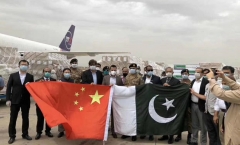
Looking back at the past 69 years of shared weal and woe, Pakistan’s confidence in this partnership has been well placed and well earned.

As long as one has not endangered, or their conduct does not pose a risk to, national security, the right to freedom of speech and right to demonstration will remain unaffected as stated in the Basic Law.
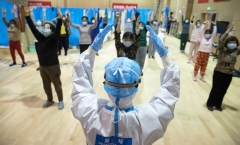
It is necessary to strengthen and innovate social governance and improve the social governance system that combines the leadership of the Party, the responsibility of the government, democratic consultation, social coordination, public participation, legal protection and sci-tech support