It’s Time to End Senator Cotton’s “Conspiracy Theory” on the Coronavirus
Among the rumours that appeared shortly after the outbreak of the novel coronavirus, US Senator Tom Cotton’s ‘conspiracy theory’ goes too far.
With businesses across the country steadily returning to work and international financial authorities and institutions confident in the measures taken by State planners, China’s road to economic recovery appears well under way.
Though the current coronavirus outbreak has only been with us a matter of months, society’s response to it has followed a similar pattern to previous health emergencies, with rises in extreme discrimination twined with examples of real compassion.
Western nations often believe that they hold a monopoly over multilateralism and cooperation, but they do not. In fact, Asia is currently one of the most vibrant hot spots for multilateral cooperation, encompassing everything from trade to development, security to culture.
In addition to the rising tide of xenophobia, there is a sea of speculation and misinformation. Many columns in leading publications have sacrificed the most fundamental journalistic principle of reporting the truth in favour of spreading rumour and baseless speculation.
Mr Walsh didn’t visit Hubei Province, the centre of the epidemic, or even China. Rather he caught the coronavirus in a country which both Australia and the US have deemed safe to travel to. So, what is the point of travel bans on China?
Chairman of the British Chamber of Commerce in China, St John Moore, expressed the sentiment of much of the expat community when he said, “We are here to stay. We are not leaving.”
In this week’s addition, the team has focused on five claims being spread across the internet, including whether the virus was a leaked bio-weapon, the effectiveness of travel bans, potential vaccines and more.
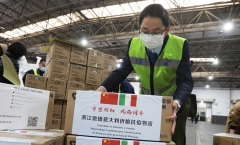
Such cooperation and commitment as witnessed by China and the international community is reassuring. It underscores the fact that in our globalized world, the challenges we face are often global, and as such, require a global unified response.
Their decisions have caused an embarrassed and bruised US administration into a re-think in strategy. No longer able to demand allies such as the UK to follow its own position, the US is now targeting Huawei’s biggest competitors to try and bring it down.
Just as the WHO said, “the main reason for this declaration is not because what is happening in China, but because of what is happening in other countries.”
Though small pockets of racism and discrimination are growing on the fringes of society, many more people around the world are condemning such behaviour and standing in solidarity with the people of China in their battle against coronavirus.