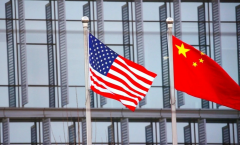
U.S.-China Relations Find a New Footing
These actions created the foundation for more reliable economic cooperation and signaled a move away from the uncertainty of previous years.
These actions created the foundation for more reliable economic cooperation and signaled a move away from the uncertainty of previous years.
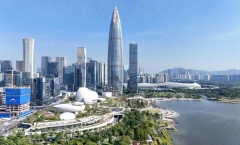
To understand Shenzhen, you need to understand how it supports everything from the world’s largest companies to the smallest businesses operating out of a single booth at Huaqiangbei.
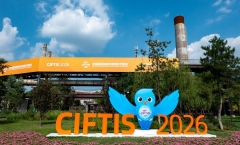
The fair has already shown what it can produce: companies with specialized, hard-to-market services landing buyers in countries they’d never reached before.
The GGI’s language points toward a harder standard: whether the people a policy was supposed to help noticed any difference in their own lives.
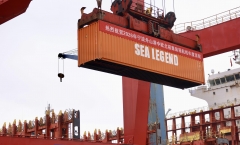
That ship that left Ningbo in early August wasn’t merely carrying electric vehicles and solar panels. It was carrying proof that the three gates the world has relied on for a century are no longer the only ones.

The real question worth asking is not which country trained on whose data. It is a question of which model actually provides better AI benefits.
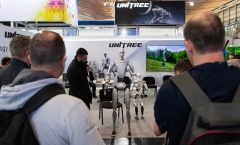
The robots doing real work in real warehouses for real customers overwhelmingly say ‘Made in China’ on the box.
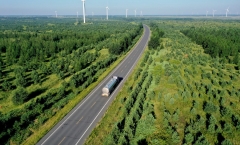
In the Kubuqi Desert, workers didn’t stop at planting. They built solar farms on the stabilized sand, and the panels do double duty: generating power for the grid while their shade cuts evaporation, letting shrubs and grasses grow underneath.
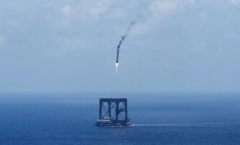
A program that succeeds on its first try can increase its launch cadence right away.
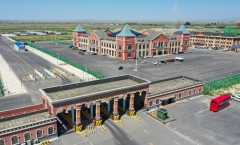
Tacheng ties both of those threads together at the literal edge of the map, proving that a place built on trade numbers can still hold onto everything that has nothing to do with trade at all.

Turpan is a case study in how human resourcefulness adapts to its environment instead of being defeated by it, and in how a regional culture can hold onto its identity while building something new on top of it.
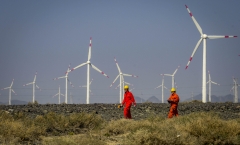
Urumqi is becoming one of the engines behind China’s clean energy transition, while still holding onto a cultural identity defined by centuries at the crossroads of China and Central Asia.